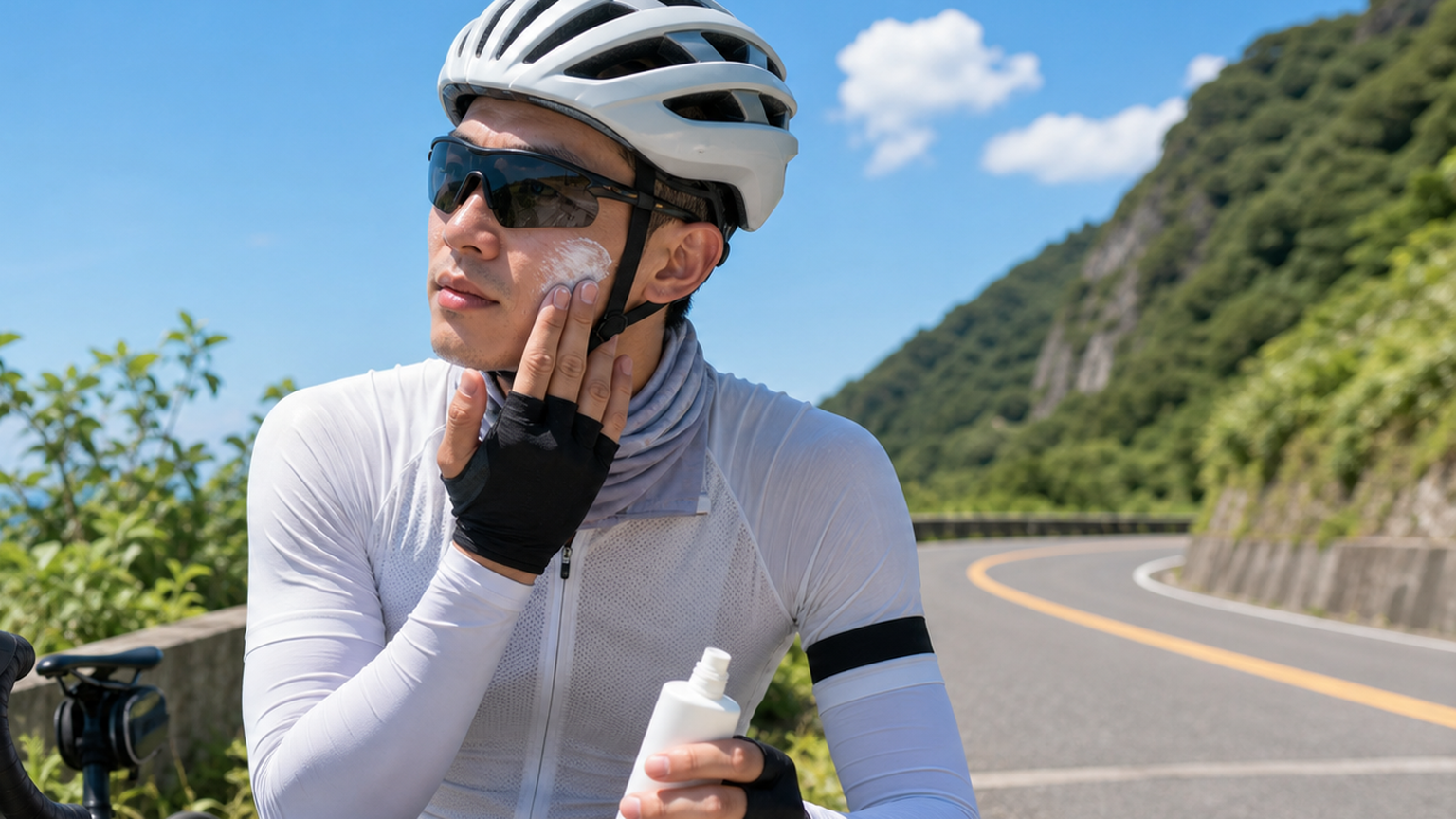
Cyclists’ Sun Protection Strategies: Protective Measures Under Taiwan’s UV Index
Located in the subtropics, Taiwan’s summer UV Index frequently reaches 10–12, the “extreme” level, posing a significant threat to the skin of outdoor enthusiasts. Because cyclists are exposed to sunlight for particularly long periods (a single 100 km ride can last 5–8 hours), sun protection is an indispensable part of healthy riding.
The Current State of Taiwan’s UV Index
According to data from the Central Weather Administration, the UV Index distribution across Taiwan:
| Region | Highest Summer UV Index | Peak Hours |
|---|---|---|
| Taipei | 10–11 | 11:00–14:00 |
| Taichung | 11–12 | 11:00–14:00 |
| Tainan/Kaohsiung | 11–13 | 11:00–15:00 |
| Kenting/Hengchun | 12–14 | 10:00–15:00 |
| High Mountains (Wuling, etc.) | 14–16 | 10:00–14:00 |
A UV Index of 11 or above is classified as “extreme.” The World Health Organization recommends no more than 20 minutes of outdoor activity at this level (without protection). For riders on a 4–8 hour ride, a comprehensive sun protection strategy is absolutely essential.
Choosing and Correctly Using Sunscreen
The Meaning of SPF and PA
- SPF (Sun Protection Factor): Protects against UVB (the ultraviolet rays that cause sunburn). SPF50 means it extends the time before sunburn by 50 times.
- PA (Protection Grade of UVA): Protects against UVA (which causes skin aging and deep tissue damage), indicated by “+” signs, with PA++++ being the highest grade.
Recommended for cycling: A full-protection formula with SPF50+ (or higher) and PA++++
Criteria for Choosing Cycling Sunscreen
Cyclists’ sunscreen needs differ from those of the general public:
- Water resistance: Sweating is the norm during rides; you must choose a “Water Resistant” formula
- Non-comedogenic: Long rides cause heavy sweating; choose a “Non-comedogenic” formula
- Texture: Lotions or sprays are the norm during rides; use oil-free formulas for the face
- Easy reapplication: Choose small bottles (30–50ml) that are easy to carry in a saddle bag for reapplication
Recommended Formula Types
- Mineral sunscreen (containing zinc oxide, titanium dioxide): Effective immediately, not absorbed into the skin, suitable for sensitive skin
- Chemical sunscreen: Lightweight texture, suitable for large-area application (body), but must be applied 20 minutes before going out to be effective
- Hybrid formulas: Combine the advantages of both; currently the market mainstream
Application Amount and Reapplication Frequency
The most common mistake is applying too little. Research shows that most people apply only 20–50% of the recommended amount, resulting in actual protection far below the labeled SPF value.
Recommended amounts:
- Face: An amount the size of a coin (approximately 0.5ml)
- Full body (arms, neck, legs): The “two-finger strip” method (place index and middle fingers together and squeeze out two strips of sunscreen to represent the amount for one area)
Reapplication timing:
- 20 minutes before departure (for chemical sunscreens)
- Reapply every 2 hours
- Reapply immediately after heavy sweating (even if 2 hours have not passed)
Physical Sun Protection: Protection from Clothing and Accessories
Sunscreen alone is not enough; the physical protection provided by clothing is more reliable.
Sun Protection Arm Sleeves
This is the most common and practical sun protection accessory for cyclists in Taiwan:
- Choose materials with UPF50+ (ultraviolet protection factor of 50 or above)
- Choose lightweight, breathable, moisture-wicking fabrics (to avoid overheating)
- Color: White reflects heat better, but if the riding environment is polluted, darker colors resist dirt better
Cycling Caps (Helmet Visor Caps)
Caps or visor caps worn under the helmet:
- Dual function of sweat absorption and sun protection
- The visor protects the eyebrows and upper face from direct sunlight
Gloves
Long-finger cycling gloves provide sun protection for the backs of the hands while reducing friction from prolonged handlebar gripping.
Sunglasses
Eye protection is equally important. Choose:
- UV400 (100% UVA+UVB protection) lenses
- Wraparound designs to reduce UV rays entering from the sides
- Polarized lenses: Particularly useful in environments with strong reflections from water surfaces or asphalt roads
Time Management: Avoiding the Strongest UV Rays
The most effective sun protection strategy is to avoid the hours of strongest UV radiation:
- Ideal departure time: In Taiwan’s summer, it is recommended to depart at 5:30–6:00 AM and complete high-intensity riding segments before 11:00 AM
- Midday break strategy: Rest at a restaurant or convenience store from 11:00–14:00 to avoid the strongest UV rays
- Evening rides: UV intensity begins to decrease after 4:00 PM; consider evening rides for shorter distances
Post-Ride Skin Care
- Cleansing: Use a gentle cleanser to wash off sunscreen and sweat
- Moisturizing: Skin tends to dry out after riding; apply moisturizing lotion
- Observation: If sunburn redness occurs, use aloe vera gel or after-sun repair products
- Long-term monitoring: Get an annual skin cancer screening from a dermatologist, especially for long-term outdoor athletes
Riding in Taiwan, sun protection is not an option—it is a necessity. Comprehensive sun protection allows you to enjoy every ride without paying a price with your skin’s health.
Related Reading
- Riding Sunburn Protection: A Complete Guide to Taiwan’s UV Intensity and Sunscreen Selection
- Cyclists’ Sunburn and Skin Protection: Sun Protection Advice for Taiwan Summer Long-Distance Rides
- Skin Protection for Cyclists: Sunscreen, Road Rash, and Skin Care
- Riding Sun Protection Strategies: UV Protection and Essential Knowledge for Taiwan Summer Cycling
2026 車錶排行榜!誰是最多車友正在使用?練家子最愛哪款?🏆 (2萬名車友數據) / 公路車 / CT Yeh
5 個月前
2025 自行車錶排行榜 兩萬車友大數據 / Garmin Bryton 排名會大洗牌嗎? / 全新的碼表前身分析 /公路車 / CT Yeh
1 年前
半日 小台灣 極限單車路線挑戰實錄
7 年前
單車 一日北高 ( 雙城 ) 肥宅雙人瘋狂行 紀錄片 REACTO
10 年前
2024公路車車錶排行榜!2萬車友調查統計!今年黑馬是.../街頭車友民調/CT Yeh
2 年前
2022 前十五大自行車錶 !? 兩萬名車友大數據統計 | 你的上榜了嗎? | 菁英車友都用哪些錶? | Bryton Garmin 誰能拔得頭籌?| 車錶推薦 | 公路車 CT Yeh
4 年前
再快都跟的上!? 單車跟隨攝影機之王 HOVERAir X1 PROMAX 全面實測 / 唯一!8K畫質&自行車專用模式和跟蹤信標&前後避障 / DJI Neo 可參考/ 公路車 / CT Yeh
1 年前
2023自行車展!與環台賽選手一同表演賽 / 全自動AI Fitting?/ TIME新車發表/神秘充電桌等 精華分享 VLOG | CT Yeh | 公路車
3 年前