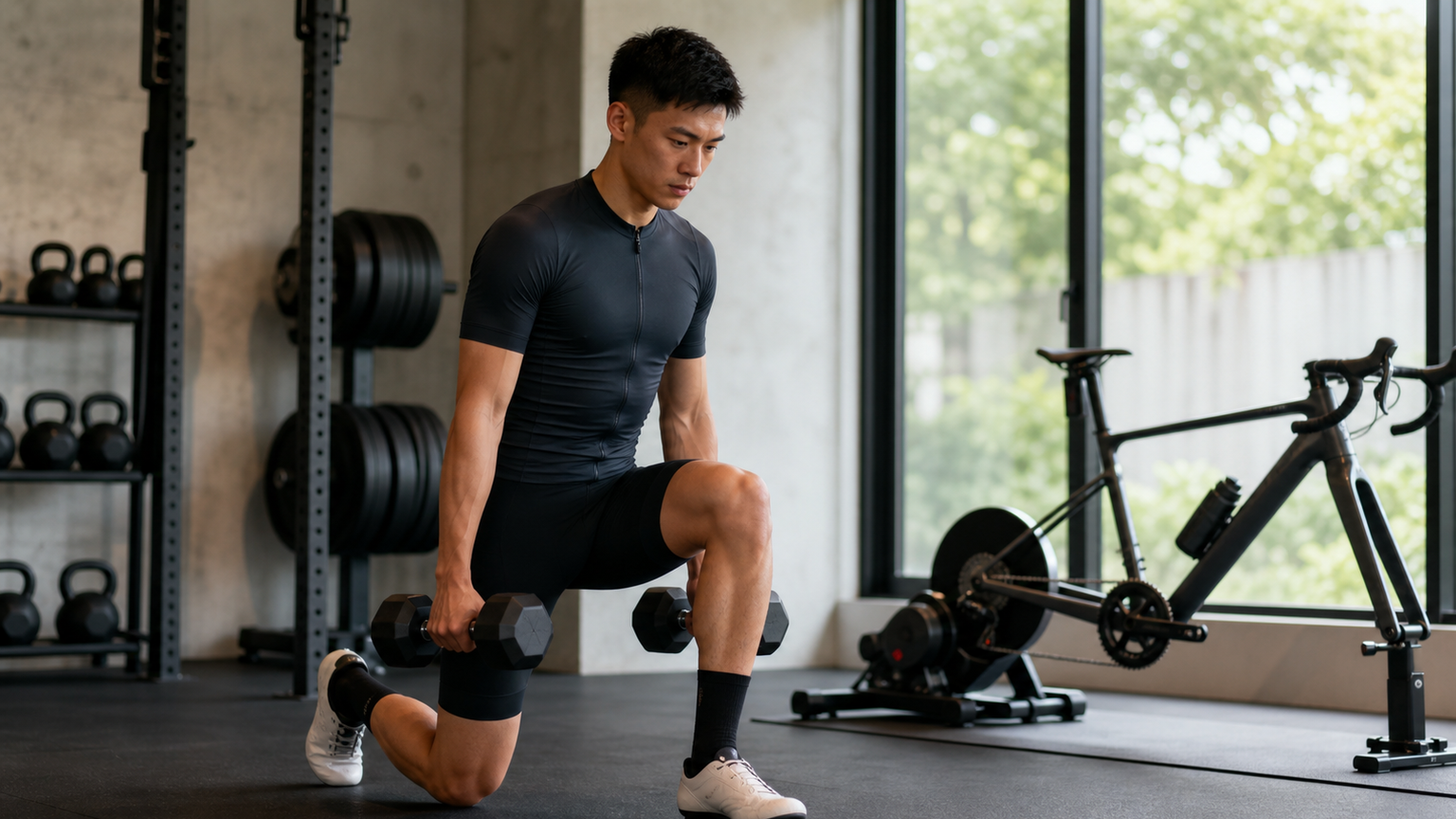
Combining Resistance Training with Endurance Sports: How to Train Strength and Cardiorespiratory Fitness Simultaneously
The Concurrent Training Effect
In 1980, Robert Hickson published a landmark study finding that when strength training and endurance training are performed simultaneously, strength gains are interfered with by endurance training (the interference effect). This discovery made many endurance athletes worry: will lifting weights affect cycling or running performance?
The answer is: If arranged properly, not only will they not interfere with each other, but they can complement each other.
The Mechanism of the Interference Effect
Conflict at the Cellular Level
Strength training primarily activates the mTORC1 pathway (promoting muscle hypertrophy), while endurance training primarily activates the AMPK pathway (promoting aerobic metabolic adaptations). When AMPK is activated, it suppresses mTORC1—this is the core mechanism of the interference effect.
Practical Impact
Research shows the interference effect mainly impacts:
- The magnitude of maximal strength (1RM) gains (reduced by approximately 20-30%)
- Improvements in power output
- Increases in muscle cross-sectional area
But what matters most for endurance athletes: strength training barely affects endurance adaptations and, in most cases, actually enhances endurance performance.
Benefits of Strength Training for Endurance Athletes
1. Improved Exercise Economy (Running/Cycling Economy)
Exercise economy refers to the amount of oxygen consumed at a given speed. Stronger muscles can recruit a smaller proportion of muscle fibers at the same power output, reducing overall oxygen consumption.
Multiple studies show that 8-12 weeks of strength training can improve running economy by 2-8%, equivalent to significant performance gains.
2. Delayed Onset of Fatigue
A strong core and lower-body strength help maintain better posture in the latter half of long rides or runs, reducing compensatory injuries.
3. Reduced Injury Risk
Strength training directly strengthens tendons, ligaments, and the muscles surrounding joints, making it one of the most effective methods for preventing overuse injuries.
4. Enhanced Power Output
For cyclists, sprinting and attacking on climbs require explosive power. Strength training can directly improve short-duration maximal power (W/kg).
How to Structure a Concurrent Training Plan
Training Order
If performing both types of training on the same day, order matters:
Recommended order: Strength first, endurance second
Within the same training session, doing strength training first allows you to:
- Complete high-quality strength stimuli before the nervous system fatigues
- The AMPK activation during subsequent aerobic training will not suppress the protein synthesis signals that have just been initiated (the signal has already been transmitted)
Training Interval
The ideal arrangement is to separate the sessions, with at least 6-8 hours in between. The best scenario is to schedule them on different days.
Sample Weekly Plan
Using a cyclist as an example (5 days per week):
| Day | Training Content |
|---|---|
| Monday | Strength training (lower body focus, 60 minutes) |
| Tuesday | Aerobic ride Z2 (90 minutes) |
| Wednesday | Interval training (VO2max training) |
| Thursday | Strength training (core + upper body, 45 minutes) + Easy ride (30 minutes, at least 8 hours apart) |
| Friday | Rest or easy activity |
| Saturday | Long ride (120-180 minutes) |
| Sunday | Rest |
Strength Training Choices for Endurance Athletes
Exercise Selection Principles
- Prioritize compound multi-joint movements (squats, deadlifts, single-leg squats)
- Match sport-specific biomechanics
- Include core stability training
- Avoid excessive isolation exercises (bicep curls, triceps, etc.)
Recommended Exercises
Lower Body (Key for Cycling/Running):
- Bulgarian Split Squat
- Romanian Deadlift (RDL)
- Single-Leg Squat (Pistol Squat or Box Squat)
- Leg Press (safe alternative to squats)
Core:
- Plank (Plank variations)
- Dead Bug
- Farmer’s Walk
Upper Body (to reduce fatigue while riding):
- Pull-Ups
- Rowing movements
- Push-Ups
Training Volume Recommendations
Off-Season (Base Phase)
- 2-3 sessions of strength training per week
- 3-4 sets × 6-8 reps per exercise (heavier, targeting neuromuscular efficiency)
In-Season (Maintenance Phase)
- 1-2 sessions of strength training per week
- 2-3 sets × 8-12 reps per exercise (maintain adaptations without excessive fatigue)
2 Weeks Before Competition
- Stop or significantly reduce strength training to allow full muscle recovery
Common Questions
Q: Will lifting weights make my legs bigger and increase my body weight?
A: The high training volume of endurance athletes suppresses muscle hypertrophy (the aforementioned interference effect), and combined with the fact that they typically do not consume high protein intake with a large caloric surplus, the degree of muscle thickening is very limited. In reality, strength training brings more improvements in neuromuscular efficiency rather than large increases in muscle mass.
Q: I’m already very busy—is strength training worth the investment?
A: Two sessions of 45 minutes of strength training per week can bring significant performance and injury-prevention benefits—an extremely high return on investment.
Conclusion
Strength training is an indispensable training tool for modern endurance athletes. As long as it is arranged sensibly—strength before endurance, adequate intervals, and maintaining the minimum effective dose during the season—you can significantly enhance performance and reduce injury risk without interfering with endurance adaptations.
Related Reading
- The Interference Effect of Concurrent Strength and Endurance Training and How to Resolve It
- The Interference Effect Between Muscle Gain and Endurance: Why These Two Goals Pull Against Each Other and How to Schedule Training
- The Interference Effect of Concurrent Training: The Molecular Conflict Mechanism When Resistance and Endurance Training Coexist
- The Interference Effect of Strength and Endurance Training: How to Schedule Sessions Without Sacrificing Either Goal
西進武嶺 免費訓練分析服務 Intervals | 練不夠還是練過頭?你哪一種類型選手?AI模型告訴你! | 備戰神器 | 公路車 訓練 | CT Yeh
4 年前
一個測試有沒有認真練車的方法😂 #公路車
10 個月前
Fitting訓練兩用功率車 ! Thinkrider ST900 完整實測!/ 坡度升降 / 鄰居測試/ smart bike/公路車/ CT Yeh
2 年前
戰略) Zwift Race 如何咬在第一集團 如何評估自己要開多少推力 (請開1.5倍速看)
7 年前
福隆鐵人團練隨拍
8 年前
一日北高/長距離團騎 常見問題補充篇 / 組團或跟團的眉角 / 壯車友容易被瘦車友慢性拉爆 / 原來屁股痛可能是這個原因...? / 風場配速法 / 公路車 / CT Yeh
2 年前
#公路車 #Vo2Max #最大攝氧量 測驗 體驗 | 心肺測試
6 年前
Stages功率計 和 智騎 X7 Pro 訓練檯同時騎兩個 Rouvy 角色會一起進終點嗎?最後來點數據分析 | 公路車
5 年前