Cycling Weather Strategy: A Safety Guide for Rain, Strong Wind, and Heat
Taiwan’s weather is highly variable — scorching summers, powerful northeast monsoons in winter, and endless plum rains in spring and autumn. For cyclists, understanding how to ride under different weather conditions is essential for protecting your safety and improving your riding experience.
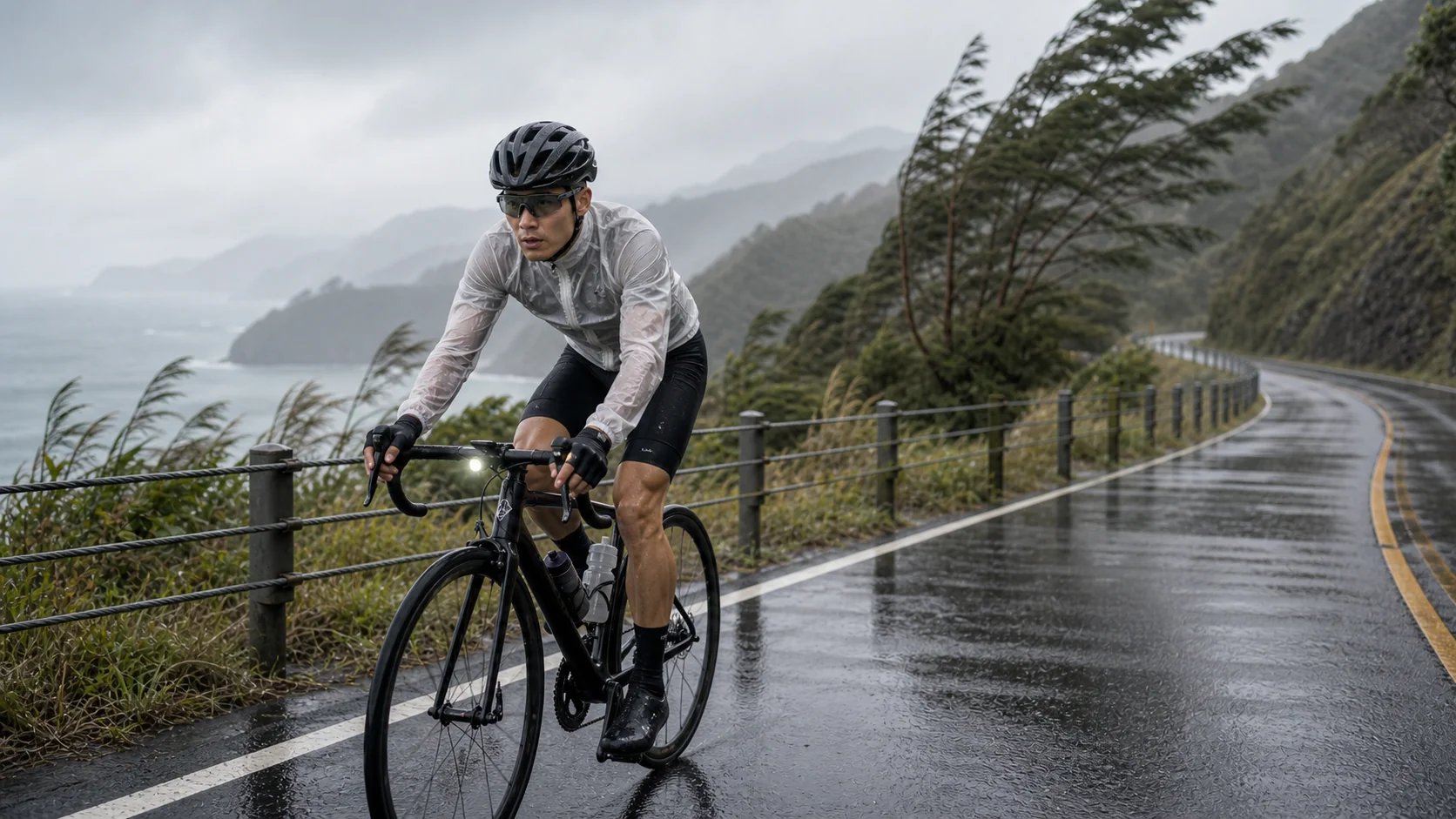
Riding in the Rain: Mastering Slippery Roads
Visibility and Lights
Visibility drops sharply in the rain, and using front and rear lights is no longer just a nighttime necessity. When it rains during the day, it’s recommended to turn on Day Flash mode so drivers and pedestrians can spot you more easily.
Changes in Braking Distance
Braking distance on wet roads can be more than double that on dry ground. Practical principles:
- Slow down early — don’t wait until the last moment to grab the brakes hard
- Tap the rear brake lightly first to stabilize the bike, then apply the front brake gradually
- Complete most of your deceleration on the straight before a corner
- Disc brakes clearly outperform traditional rim brakes in the rain
Tire Choice and Pressure
| Weather Condition | Recommended Tire Pressure | Notes |
|---|---|---|
| Sunny, dry ground | Normal pressure | Per manufacturer’s recommendation |
| Light rain, wet ground | Reduce by 5-10 PSI | Increases contact area |
| Heavy rain, standing water | Reduce by 10-15 PSI | Improves grip |
Rain Gear
When choosing a waterproof jacket, breathability (Gore-Tex or a similar membrane) matters more than pure waterproofing — otherwise trapped sweat inside will be just as uncomfortable. For gloves, thin waterproof gloves are recommended to maintain feel for the brakes and shifters.
Riding in Strong Wind: Dance With It or Retreat Wisely
Common Strong Wind Scenarios in Taiwan
- Northeast monsoon (October to March): Strongest along the east coast and in the north, especially in Yilan and Keelung
- Afternoon southwest airflow: Strong gusts before summer afternoon thunderstorms in western Taiwan
- Typhoon outer circulation: A typhoon doesn’t need to make landfall directly — its outer bands alone can bring strong winds
Crosswind Techniques
- Lower your center of gravity: Bend forward to stay closer to the frame and reduce wind resistance area
- Relax your arms: Don’t tense up — let the bike make small natural adjustments in direction
- Anticipate strong gusts: If roadside trees are shaking violently, grip the handlebars firmly in advance
- Avoid riding beside large vehicles: The turbulent wake after a truck passes is more dangerous than headwind
Wind Speed Guidelines
| Wind Speed (km/h) | Beaufort Scale | Recommendation |
|---|---|---|
| <20 | 1-3 | Suitable for riding |
| 20-40 | 4-5 | Ride cautiously, watch your direction |
| 40-60 | 6-7 | Consider shortening your route |
| >60 | 8+ | Riding is not recommended |
Riding in High Heat: Preventing and Handling Heat Exhaustion
Taiwan’s Summer Temperature Challenge
In Taiwan, summer lowland temperatures often exceed 35°C, and with humidity factored into the perceived temperature, the risk of heat stress while riding should not be underestimated.
Hydration Plan
Before riding: Drink 500ml of water 30 minutes before departure — don’t wait until you’re thirsty.
During riding (per hour):
- 25-30°C: 500-700ml
- 30-35°C: 700-1000ml
- Above 35°C: over 1000ml, including electrolyte drinks
The importance of electrolytes: Drinking large amounts of plain water can dilute sodium levels in the blood, potentially leading to hyponatremia (water intoxication). For long rides, it’s recommended to take electrolyte drinks or salt tablets every 1-2 hours.
Warning Signs of Heat Exhaustion
- Dizziness, headache
- Sweating heavily and then suddenly stopping (dangerous!)
- Heart rate rising while power output drops
- Nausea or hot, flushed skin
If any of these symptoms appear, stop immediately, move to shade, drink electrolyte fluids, and contact a riding partner or seek help.
Cooling Strategies
- Clothing: Choose lightweight, sweat-wicking, light-colored jerseys
- Helmet: Choose a model with plenty of ventilation
- Cooling sleeves/cooling fabric: Cover your arms for sun protection and cooling
- Ice bottle: Fill a bottle with ice and press it against your neck externally
Decision Framework for Severe Weather
Finally, the most important strategy is knowing when to stop. Here’s a simple decision checklist:
- Is there a lightning forecast? → If yes, don’t ride
- Is wind speed above 60km/h? → If yes, don’t ride
- Is visibility below 50 meters (heavy fog)? → If yes, don’t ride
- Is there standing water on the road deeper than 5cm? → Detour or stop riding
The core spirit of weather strategy: courage means facing manageable risk, not ignoring danger signs. A smart rider knows how to ride safely in bad weather — and also knows when it’s time to head home.
Related Reading
下雨天就是要改車 #ceramicspeed #bike
1 年前
單車賞雪 裝備準備及注意事項分享 | 公路車
5 年前
單車 一日北高 ( 雙城 ) 肥宅雙人瘋狂行 紀錄片 REACTO
10 年前
高雄綠園道鐵路自行車道 / 外地人能輕鬆駕馭 還是整路崩潰? / 2025 全線開通 春節實地探索一次!(附GPS連結)/ 公路車 / CT Yeh
1 年前
碟煞公路車 銑面器 !? 原來銑完差這麼多! 降低蹭碟機率! | TIME 公路車 保養小記錄 | CT Yeh
3 年前
#公路車 #Fitting 靠人工智慧APP 幫你調整單車
6 年前
大武山後門26%歡樂陡坡!JJSC南台灣單車行Day2 / 被颱風追著跑 / 公路車 / CT Yeh
2 年前
碟煞公路車 優缺點?換車一年半實際經驗分享 / 公路車 / CT Yeh
2 年前