Triathlon Swim Training: Key Techniques for Open Water Swimming
For many triathletes, swimming is the most nerve-wracking of the three disciplines. The controlled environment of a pool is a world away from the reality of open water: no lane lines, no visible bottom, contact with other swimmers, currents, and waves. However, with systematic training and technical preparation, open water swimming is completely masterable.
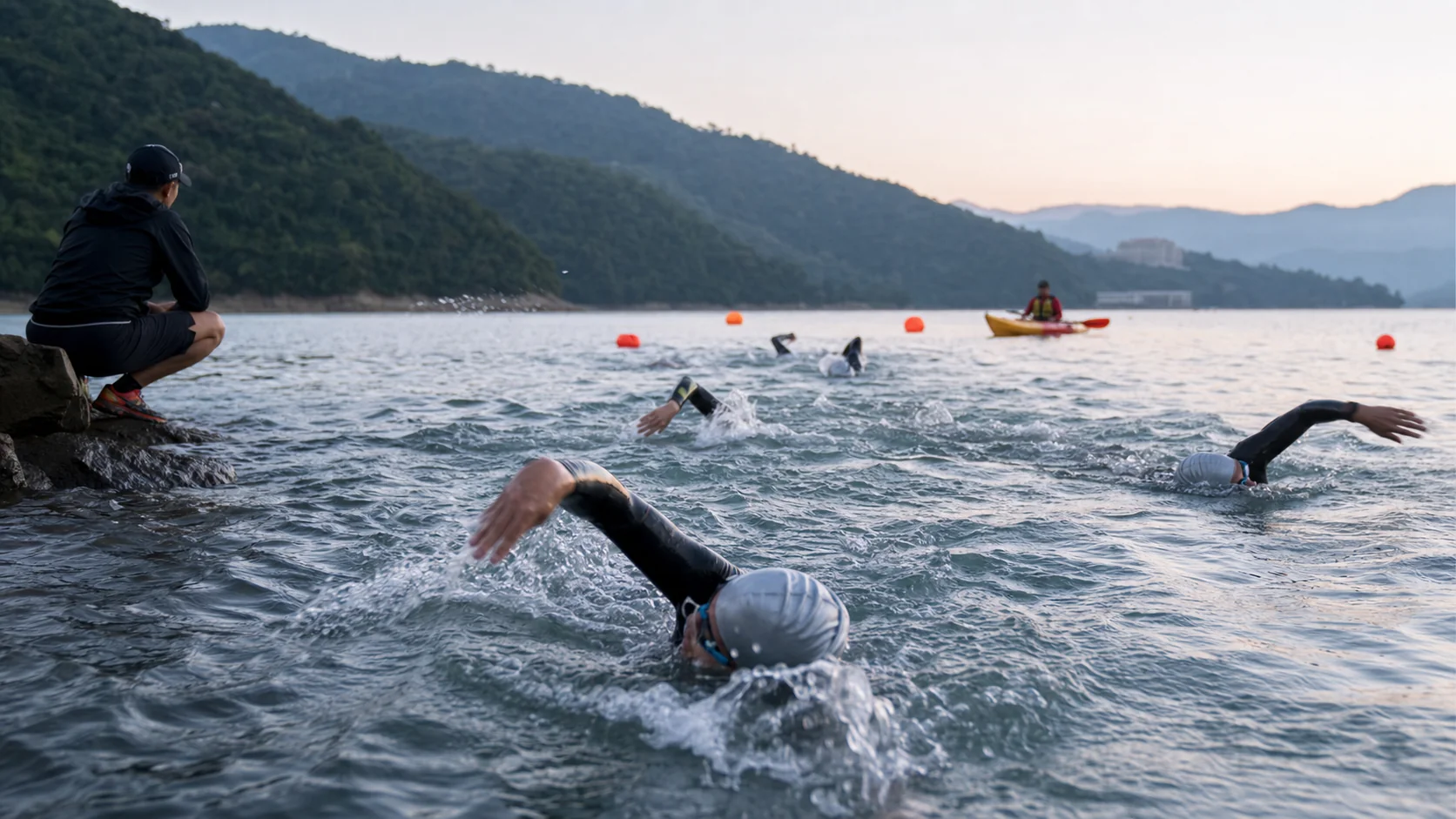
Key Differences Between Open Water and the Pool
| Factor | Pool | Open Water |
|---|---|---|
| Navigation | Guided by lane lines | Guided by buoys and landmarks |
| Water temperature | Constant (about 27°C) | Highly variable (18-30°C) |
| Visibility | Clear | Murky or tinted |
| Crowding | Separated by lanes | Dense contact with others |
| Currents | None | May be present |
| Psychological stress | Low | High |
Core Technique: Sighting
The single most important skill in open water swimming is sighting — briefly lifting your head to check your direction and the position of the target buoy without breaking your swim rhythm.
Key Points
- Timing: Sight roughly once every 6-10 stroke cycles
- Movement: Lift your head slightly higher than usual just before your final stroke into a breath, keeping your eyes above the surface for 1-2 seconds
- Breathing: Turn your head to breathe immediately after sighting (don’t breathe facing straight forward — stay streamlined)
- Target selection: Prioritize tall landmarks (buildings, bridges) over buoys, which sit low on the water
Practice Method
In the pool, place a distinctive object (a water bottle, a cap) at the end of the lane and practice lifting your head to spot it, so the motion becomes muscle memory you can perform without conscious thought.
Survival Skills for the Mass Start
The start of a triathlon is the most chaotic moment — hundreds or even thousands of athletes enter the water at once, and kicks and contact are unavoidable.
Choosing Your Position
| Position | Characteristics | Best For |
|---|---|---|
| Front and center | Shortest line, most contact | Strong swimmers |
| Outside wing | Less contact, slightly longer line | Intermediate swimmers |
| Toward the back | Least contact, longest line | Beginners |
Mass Start Coping Techniques
- Don’t panic: Getting kicked or grabbed is normal — staying calm and breathing steadily matters most
- Adjust proactively: If the crowd feels too dense, pause briefly and let the wave of swimmers pass
- Protect your breathing side: Choose to breathe on the side with fewer swimmers
- Use drafting: Swimming behind another swimmer’s feet or 1-2m to their side can save 15-20% of your energy
Managing Water Temperature
Using a Wetsuit
Wetsuits are typically permitted when water temperature is below 24°C and provide:
- Increased buoyancy: Lowers effective body density, reducing leg sink
- Warmth: Prevents muscle stiffness and performance decline from cold exposure
- Speed gains: Reduces drag, potentially improving swim speed by 5-10%
Selection Tips:
- Fit is the most important factor (too loose lets water in, too tight restricts breathing)
- Shoulder flexibility: choose a suit with thinner material at the shoulders
- Quick transitions: zipper placement and removal technique require practice
Suggested Training Plan
Pool Training (3x per week)
Technique day: Focus on stroke improvement (high-elbow catch, body rotation)
Endurance day: Long continuous swims (1500-2000m without stopping)
Speed day: Interval training (e.g., 10x100m, holding target pace for each set)
Open Water Training
Begin incorporating open water sessions 8 weeks before race day:
- At least one open water swim every 2 weeks (500-1500m)
- Practice swimming in your wetsuit
- Practice sighting technique
Race Day Swim Mindset
For many athletes, the biggest opponent during the swim leg is their own mind. Remember:
- Open water swim times are typically 10-20% slower than pool times: This is completely normal — the chaotic environment affects pace
- Getting out of the water is the goal: Don’t let a slower pace cause excessive anxiety
- Recover with deep breaths: If you start to panic, roll onto your back and float for 30 seconds to let your heart rate settle
Swimming is one of the triathlon disciplines that can improve quickly with focused effort. Invest in the training, and you’ll find that open water is no longer a source of fear, but an energizing start to your race.
Related Reading
FTL 與 SYB 車隊專訪 西進武嶺 實用攻略分享! 2小時 如何練?!你不知道的眉角!新手準備武嶺必看 EP1 | 實力派女車友 | 精華版 | 公路車 | CTYeh
4 年前
[防寒衣體驗] 鐵人魂 三鐵 防寒衣試穿會 於松運 深水游泳池 鯨魚池
8 年前
CT 喇低賽) 武嶺牽車 才是王道 西進牽車四小時內秘訣 攝手位置 如何判斷 防抽筋小秘訣
7 年前
福隆鐵人團練隨拍
8 年前
西進武嶺 免費訓練分析服務 Intervals | 練不夠還是練過頭?你哪一種類型選手?AI模型告訴你! | 備戰神器 | 公路車 訓練 | CT Yeh
4 年前
CT Talk) 數據面窺看 武嶺大神們 平時的備戰 共通點 (娛樂性質XD)
7 年前
大禹嶺 到 武嶺牌樓 全程前後實況錄影 | 北進武嶺 | 東進武嶺 | KOM | 訓練台 | 坡度分析 | Taiwan KOM Last 10 km HARD | 公路車
6 年前
Zwift 元宇宙單車世界 如何與全世界同步騎車運動
6 年前