Training Diary of a Professional Runner: A Week in the Life of an Ethiopian Runner
Ethiopia and Kenya stand together as the two great meccas of world marathon running. From Haile Gebreselassie to Kenenisa Bekele, the dominance of Ethiopian runners in distance events is astonishing. How they train has long been a mystery that fascinates running enthusiasts worldwide.
The Background of Ethiopian Running Culture
Geographic Advantage
Addis Ababa: The capital of Ethiopia, sitting at an altitude of 2,355 meters, where nearly all of the country’s top runners train.
Benefits of altitude training:
- Stimulates red blood cell production (increased natural EPO secretion)
- Improves the blood’s oxygen-carrying capacity
- Produces a brief “supercompensation” effect when descending to lower altitude for races
| Training Location | Altitude | Benefit |
|---|---|---|
| Addis Ababa | 2,355m | Long-term altitude adaptation |
| Senkele | 2,400m | Altitude training base |
| High-peak training (various mountains) | 2,800-3,400m | Intensive altitude stimulus |
A Typical Week of Training for a Professional Ethiopian Runner
Basic Training Volume
Weekly training volume for top marathon runners: 160-220 km/week (Elite). For reference, amateur runners: 60-100 km/week
Weekly Training Diary (Elite Runner Example)
Monday: Easy Long Run
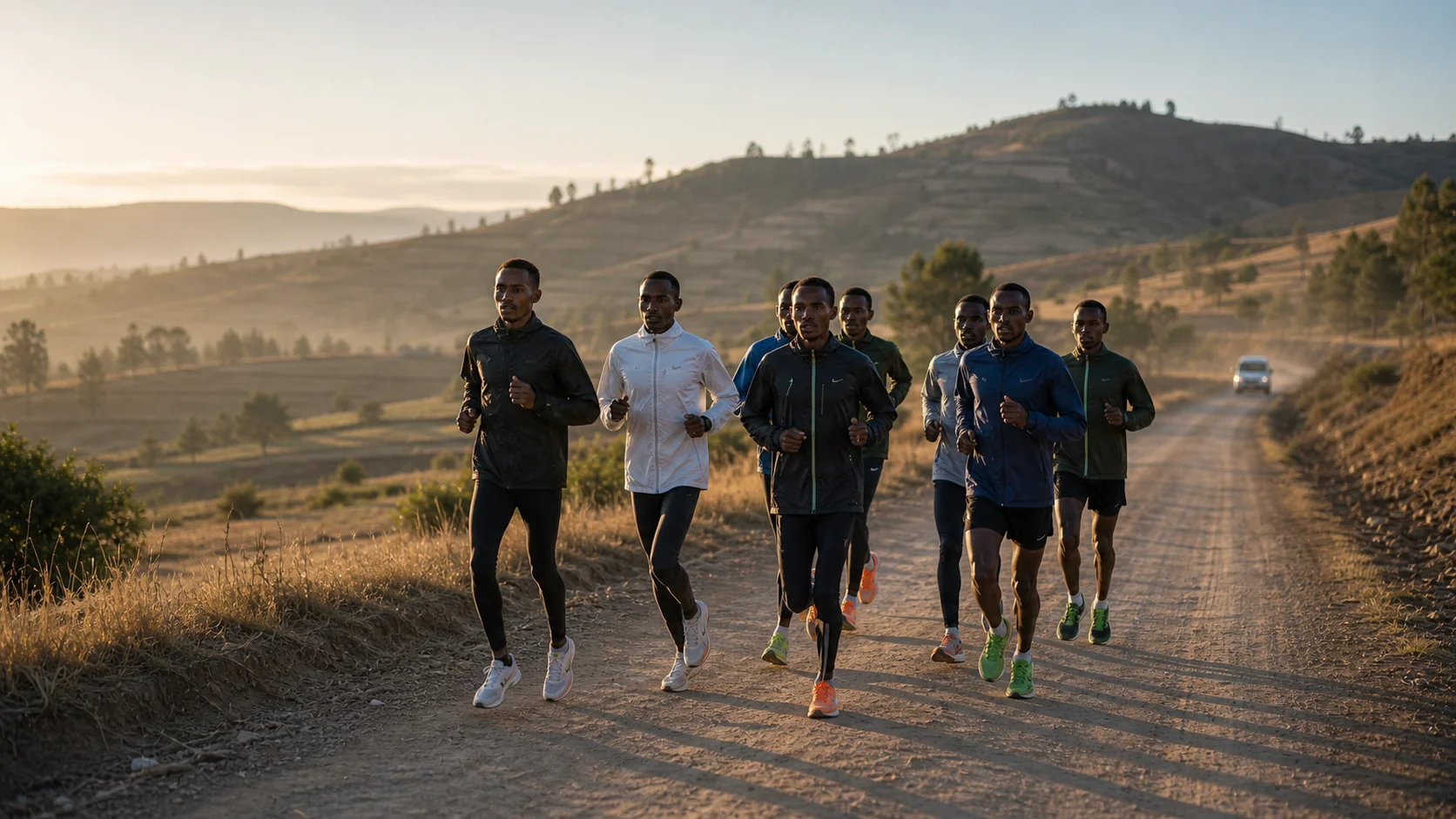
- 5:30 AM, on the slopes of Entoto Mountain in Addis Ababa
- Distance: 24km, Pace: 4:30-5:00/km (easy rhythm)
- Notable feature: run on dirt mountain trails, often barefoot or in lightweight training shoes
Tuesday: Tempo Run
- 6km warm-up + 16km tempo run (3:00-3:10/km) + 4km cool-down
- Location: standard track or a familiar road surface
- Heart rate: near lactate threshold (approximately 83-88% HRmax)
Wednesday: Easy Recovery Run
- Morning: 16km easy run
- Afternoon: 8km easy run or strength training
Thursday: Interval Training (Track Session)
- 8km warm-up + main set: 10×1km, with 400m easy jog recovery between reps
- Target pace: 2:42-2:48/km (close to 5km race pace)
- 8km cool-down
Friday: Easy Recovery Run
- 22km, completely easy, heart rate below 55% HRmax
Saturday: Long Run
- Distance: 32-36km
- Pace: 4:00-4:20/km (easy through the early-to-middle portion, marathon pace in the later stages)
- Final 8km completed at or slightly faster than marathon goal pace
Sunday: Rest or Very Easy
- Complete rest, or a 6-10km “shakeout jog”
The Core of the Training Philosophy: Simplicity and Consistency
Compared to the more technology-driven training approach common in the West, the training plans of Ethiopia’s top runners are relatively simple, but they follow several core principles:
1. Easy Runs Are Truly Easy
Most Ethiopian runners’ easy-run pace is genuinely easy — roughly 1.4 to 1.6 times their race pace. Many amateur Western runners’ “easy runs” are actually run at moderate intensity, which prevents true recovery.
2. Two-a-Days
Elite runners typically train twice a day (a primary session in the morning plus a supplementary session in the afternoon). This is uncommon among amateur runners in the West, but it is standard practice among professionals.
3. Group Training
Ethiopian runners rarely train alone. Large training groups provide:
- Pacing partners, especially for difficult workouts
- Social support and competitive motivation
- Mentorship and knowledge transfer from more experienced runners
Diet Culture
The diet of Ethiopia’s top runners is far less technical than one might imagine:
- Injera: A fermented flatbread made from teff, the staple food
- Shiro: A chickpea-based stew, rich in plant protein
- Large amounts of vegetables and legumes: A high-carbohydrate, low-fat diet
- Small amounts of meat: Mainly chicken and lamb
This diet’s carbohydrate ratio is exceptionally high, well suited to the energy demands of endurance athletes.
Takeaways for Amateur Runners
- Increase the proportion of easy running: 80% of training volume should be completed at easy intensity
- One long run per week: This is the single most important workout
- Find training partners: Group training is more sustainable than training alone
- Embrace simplicity: A training plan doesn’t need to be complicated — consistency is what matters
Related Reading
- The Secret Behind Professional Marathoners’ Training Volume: A World of 200 Kilometers a Week
- Altitude Adaptation for Runners: How Altitude Training Stimulates Red Blood Cell Production and Boosts Endurance
- The Altitude Effect on Swimming: How Altitude Training Improves Swimming Endurance
- [Research Digest] Heat Acclimation Training and Plasma Volume Expansion and Core Temperature Adaptation in Marathon Runners: An International Research Literature Review and Guide (Article 964)
#雙崎部落 單車挑戰賽 心跳破200 #公路車 Neko's Fun
6 年前
FTL 與 SYB 車隊專訪 西進武嶺 實用攻略分享! 2小時 如何練?!你不知道的眉角!新手準備武嶺必看 EP1 | 實力派女車友 | 精華版 | 公路車 | CTYeh
4 年前
台北大雁西飛 約騎挑戰 feat. Doris | 公路車 | CT Yeh
3 年前
一個測試有沒有認真練車的方法😂 #公路車
10 個月前
2019 柯P 超越北高 第一集團實錄 (11小時實錄請參考另一部影片) 一日雙城 一日北高 NeverStop Taiwan Long Distance Cycling Challenge
7 年前
CT趣訪 西進武嶺 2小時組 EP2 全村的希望 蔣緯緯! 訓練菜單&技巧公開 |公路車 |CT Yeh
4 年前
一日北高前的高裝檢 | 北高 360 | 挑戰11小時的裝備 | 一日雙塔 | 補給
6 年前
大武山後門26%歡樂陡坡!JJSC南台灣單車行Day2 / 被颱風追著跑 / 公路車 / CT Yeh
2 年前