The Timeline of Muscle Soreness After Cycling: The Repair Physiology of DOMS from Hour 24 to Hour 96
What is DOMS
DOMS (Delayed Onset Muscle Soreness) is the muscle soreness, stiffness, and reduced function that appears 24–48 hours after exercise. Its mechanism is not the traditionally believed “lactic acid accumulation” (lactic acid is metabolized within 1 hour after exercise), but rather:
- Microtrauma: Tearing of the Z-discs in muscle fibers
- Eccentric Contraction is the primary trigger
- Inflammation: White blood cell accumulation, release of IL-6, TNF-α
- Neural sensitization: Lowered pain receptor threshold
Hours 0–6: Acute Phase
Body State:
- Muscle glycogen depleted by 60–80%
- Micro muscle fiber damage has occurred, but no pain yet
- Inflammatory response initiated, IL-6 elevated 5–10 fold
- Cortisol still elevated
Recommended Actions:
- Within 30 minutes, consume carbohydrates (1–1.2 g/kg) + protein (0.3–0.4 g/kg)
- Rehydrate + electrolytes (1.5L water per kg of weight lost)
- Light stretching (not excessive)
- Not recommended: Ice baths (they block adaptation signals)
Hours 6–24: Inflammatory Phase
Body State:
- Inflammatory cells (neutrophils, macrophages) accumulate at the damaged site
- Interstitial fluid increases, muscles slightly swollen
- Pain begins to emerge (palpation > active use)
- Glycogen replenished 30–50%
Recommended Actions:
- Second high-protein meal (25–30g)
- 8 hours of sleep (maximizing GH secretion)
- Protein + slow carbs: brown rice + chicken breast + vegetables for dinner
- Consume anti-inflammatory foods: turmeric, ginger, Omega-3, berries
- Avoid alcohol (inhibits muscle repair by 30–40%)
Hours 24–48: DOMS Peak
Body State:
- Pain is most intense (palpation, passive stretching, and active contraction all hurt)
- Muscle strength reduced by 20–40%
- Joint range of motion limited by 10–25%
- CK (creatine kinase) peaks in the blood
Recommended Actions:
- Light active recovery: 30 minutes of Zone 1 riding or walking
- Warm water bath (40°C × 15 minutes): promotes blood circulation
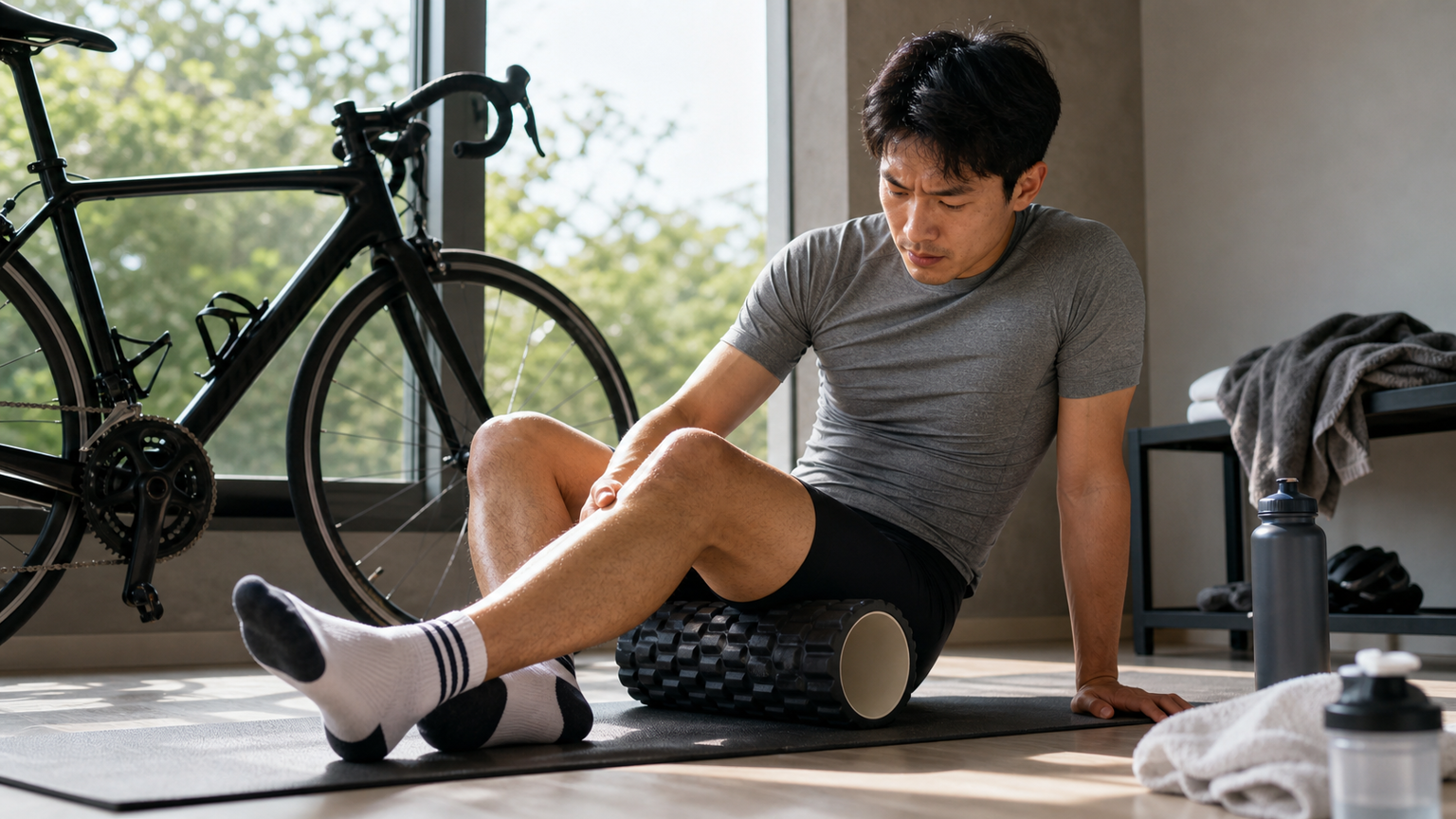
- Foam rolling: quadriceps, iliotibial band, calves
- Dynamic stretching (rather than static): avoid straining already damaged tissue
- Consume tart cherry juice: reduces pain by 20–30% (research-supported)
Avoid:
- High-intensity training (prolongs recovery time)
- Deep tissue massage (can worsen damage)
- High-dose NSAIDs (ibuprofen): blocks adaptation signals, reduces long-term training gains
Hours 48–72: Repair Phase
Body State:
- Pain begins to subside (peak has passed)
- Satellite cells begin to proliferate
- Protein synthesis rate elevated by 50–100%
- Glycogen replenished 80–95%
Recommended Actions:
- Zone 2 moderate-intensity training is possible (60–70% FTP)
- Increase protein intake (1.6–2.0 g/kg)
- Sleep remains critical (deep sleep secretes GH)
- Contrast baths: 1 minute cold + 2 minutes hot × 5 rounds
Hours 72–96: Supercompensation Phase
Body State:
- Pain has almost disappeared
- Muscle strength returns to pre-training levels
- Entering the “supercompensation” window
- Protein synthesis rate still above baseline
Recommended Actions:
- High-intensity training is possible (sprints, Threshold)
- Training effectiveness is highest at this point
- Maintain protein intake and sleep
Specific Strategies to Accelerate Recovery
Diet
- Protein 1.6–2.0 g/kg
- Omega-3 2–3g/day
- Vitamin D 2000–4000 IU/day
- Antioxidant foods: berries, dark leafy greens, nuts
- Avoid alcohol, processed sugar, fried foods
Sleep
- 7–9 hours
- Deep sleep > 90 minutes
- Fall asleep before 23:00
Active Recovery
- Hours 24–48: 30–45 minutes Zone 1
- Hours 48–72: 60 minutes Zone 2
Passive Recovery
- Foam rolling, massage gun
- Warm water baths, contrast baths
- Compression garments
- Stretching
When It Is “Overtraining” Rather Than DOMS
DOMS should completely resolve within 96 hours. If pain persists beyond 4 days, or is accompanied by the following symptoms, it may be overtraining or a strain:
- Persistent redness, swelling, heat, and pain
- Localized sharp pain (rather than widespread muscle soreness)
- Restricted joint range of motion
- Subjective fatigue RPE > 8 lasting more than 3 days
- Abnormally elevated heart rate (morning pulse 10 bpm+ above baseline)
If any of the above occur, seek medical attention or consult a physical therapist.
DOMS is part of the training adaptation process—understanding the timeline and supporting recovery allows you to return to training in 4 days, rather than 7–10.
Related Reading
- The True Causes of Muscle Soreness (DOMS) and How to Treat It
- The Neuroscience of Muscle Soreness (DOMS): Mechanisms and Management of Delayed Onset Muscle Soreness
- The Science of Post-Run Muscle Recovery: Mechanisms of DOMS (Delayed Onset Muscle Soreness)
- Managing Muscle Soreness After Running: Causes of DOMS and Methods to Accelerate Recovery
一日北高/長距離團騎 常見問題補充篇 / 組團或跟團的眉角 / 壯車友容易被瘦車友慢性拉爆 / 原來屁股痛可能是這個原因...? / 風場配速法 / 公路車 / CT Yeh
2 年前
一日北高常見問題大集合 | 攻略 | 路線 | 訓練 | 補給 | 自行車 單車 | 一日雙城 | 雙塔 | TWB北高360 | 屁股痛
6 年前
西進武嶺 免費訓練分析服務 Intervals | 練不夠還是練過頭?你哪一種類型選手?AI模型告訴你! | 備戰神器 | 公路車 訓練 | CT Yeh
4 年前
摔車後補裝備: 好市多新款單車安全帽& Specialized Romin 北高整路屁股都不痛的坐墊 | 一千元居然有MIPS | CT Yeh | 公路車
4 年前
2019 夏季KOM 5小 完賽心得 準備攻略 東進武嶺 夏季登山王之路 Taiwan KOM Challenge
7 年前
#公路車 #Fitting 靠人工智慧APP 幫你調整單車
6 年前
車錶新黑馬? / 超狂續航 / 超好用錶冠 / 無敵準定位 / Dash圖表合成!?/ COROS DURA 評測!/ 公路車 / CT Yeh
2 年前
2023 環花東365 挑戰 Day1 含著煞車騎完!ft. Doris 最美的風景 最香的妹子 最潮的太陽能充電 | 公路車 | CT Yeh
3 年前