Post-Exercise Hypoglycemia: The Mechanism and Prevention of Reactive Low Blood Sugar After 90+ Minutes of Endurance Training
Post-Exercise Hypoglycemia: The Mechanism and Prevention of Reactive Low Blood Sugar After 90+ Minutes of Endurance Training
What Is Reactive Hypoglycemia
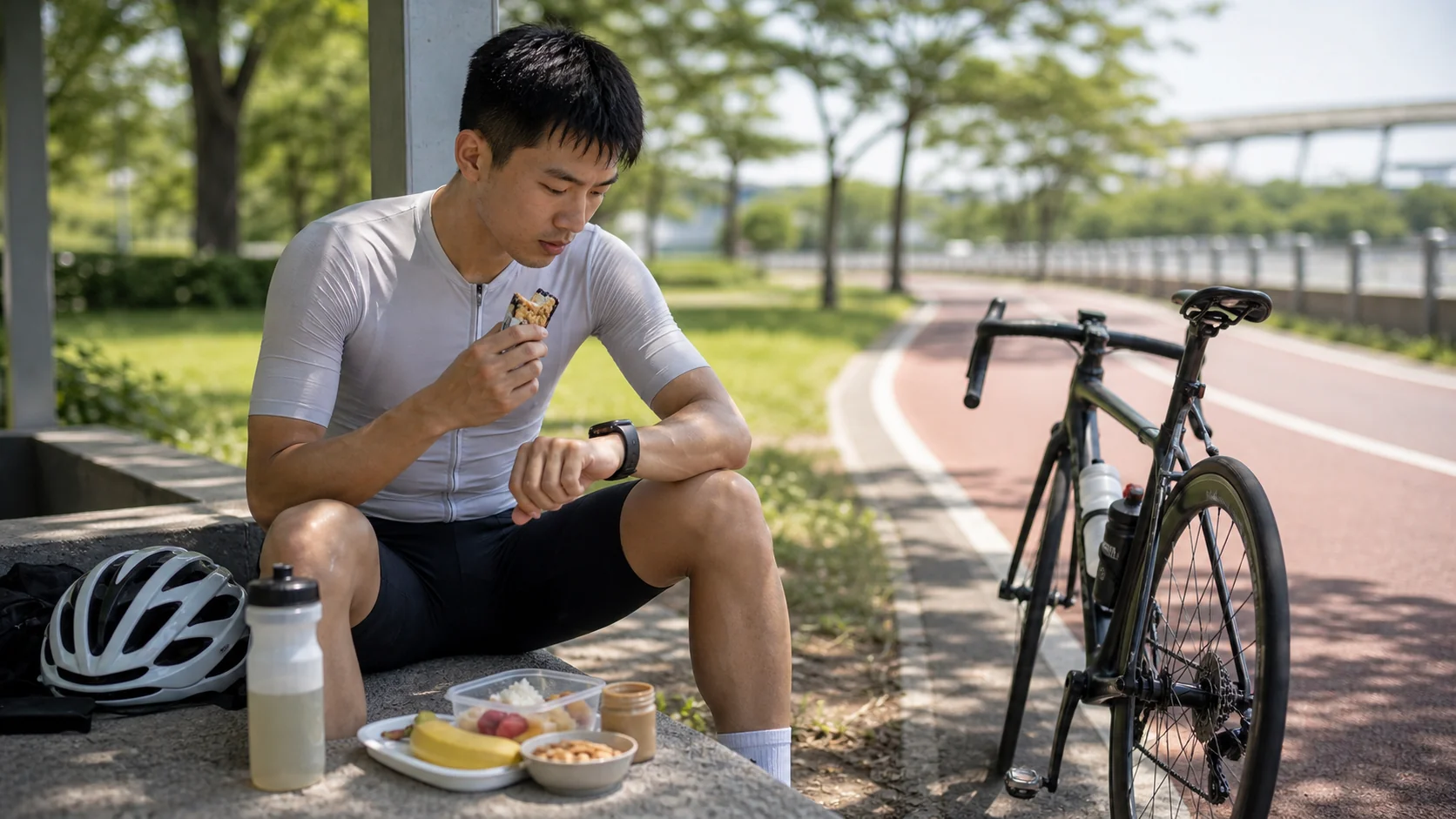
If your blood sugar suddenly drops below 70 mg/dL (3.9 mmol/L) 30-90 minutes after finishing training, causing dizziness, cold sweats, heart palpitations, and difficulty concentrating, this is Reactive Hypoglycemia.
How It Happens
Stage 1: Glycogen Depletion During Training
After more than 2 hours of moderate-intensity endurance training (Zone 2-Zone 3), liver glycogen stores drop below 30%.
Stage 2: High-GI Fueling After Training
Many cyclists drink a sugary beverage or eat white toast immediately after finishing, causing blood sugar to spike rapidly to 180 mg/dL.
Stage 3: Insulin Overreaction
The pancreas senses the blood sugar spike and releases a large amount of insulin — up to twice the normal amount.
Stage 4: Blood Sugar Crash
Under the effect of insulin, blood sugar drops below 70 mg/dL within 30-60 minutes, triggering symptoms of hypoglycemia.
Stage 5: Adrenal Response
The body releases adrenaline and cortisol to try to raise blood sugar back up, causing cold sweats and heart palpitations.
High-Risk Groups
- Those training fasted for over 90 minutes: glycogen stores are already low to begin with
- Those who eat high-GI food immediately after training: white toast, sugary drinks, candy
- Men with body fat under 12% / women under 16%: limited glycogen storage capacity
- Those with prediabetes (Type 1): excessive insulin sensitivity
- Those who eat too quickly after training: gulping down 500 calories within 3 minutes
Prevention Strategies
Strategy 1: Steady Carb Intake During Training
Consume 30-60g of carbohydrate per hour to avoid completely depleting glycogen.
- 0-60 minutes: 30g carbohydrate
- 60-120 minutes: 60g carbohydrate/hour
- Beyond 120 minutes: 90g carbohydrate/hour (glucose + fructose combination)
Strategy 2: The 30-Minute Golden Window After Training
What NOT to do:
- Drink 500ml of cola right away (55g of sugar)
- Eat 2 slices of white toast with jam right away
- Eat 2 convenience-store rice balls right away
Recommended approach:
- Drink 250ml of chocolate milk immediately after finishing (25g carbohydrate + 8g protein)
- Eat a full meal within 30 minutes: brown rice + chicken breast + vegetables (60g carbohydrate + 30g protein + 10g fat)
Strategy 3: The Carb-to-Protein Ratio
Fueling during the post-training golden window should follow the 3:1 rule: carbohydrate to protein = 3:1.
Example: 90g carbohydrate + 30g protein.
Protein slows carbohydrate absorption and helps prevent blood sugar spikes.
Strategy 4: Choose Low-GI Carbohydrates
If more than 30 minutes have passed since training ended, switch to low-GI foods:
- Oats (GI 50)
- Pasta (GI 44)
- Brown rice (GI 50)
- Sweet potato (GI 50)
- Apple (GI 38)
Emergency Response for Hypoglycemia
Recognizing the Symptoms
- Cold sweats, trembling
- Heart palpitations, dizziness
- Hunger, nausea
- Difficulty concentrating, blurred vision
- Severe: seizures, loss of consciousness
The 15-15 Rule
- Immediately consume 15g of fast-acting carbohydrate: 4 sugar cubes, 150ml of fruit juice, half a can of sports drink
- Wait 15 minutes
- Check blood sugar again — if still below 70 mg/dL, repeat
Follow Up with Slower-Acting Carbohydrate
Once blood sugar stabilizes, eat a full meal containing both carbohydrate and protein to avoid a second episode of hypoglycemia.
Sample 4-Hour Post-Training Meal Plan
Example 1: Morning Ride, 6:00-8:00
- 8:00: 250ml chocolate milk (25g carbohydrate)
- 8:30: Breakfast — 80g oatmeal + protein powder + banana + berries (70g carbohydrate + 35g protein)
- 10:30: Snack — 200g Greek yogurt + 20g oat bran (25g carbohydrate + 18g protein)
- 12:00: Lunch — 80g pasta + 150g chicken breast + salad (60g carbohydrate + 40g protein)
Example 2: Evening LSD Run, 17:00-19:00
- 19:00: Recovery drink + 1 banana (35g carbohydrate + 25g protein)
- 19:30: Dinner — brown rice + 200g salmon + vegetables + miso soup (65g carbohydrate + 40g protein)
- 21:00: Snack — 1 slice whole wheat toast + peanut butter (18g carbohydrate + 6g protein + 8g fat)
3 Common Mistakes
- Drinking only water after training: failing to replenish carbohydrate makes hypoglycemia worse
- Drinking only protein powder: lacking carbohydrate delays glycogen replenishment
- Taking a hot shower on an empty stomach: a hot shower can worsen hypoglycemia — eat something first
Conclusion
Reactive hypoglycemia is a common problem for long-distance endurance cyclists and runners. By following the principles of “steady carbohydrate intake during training” and “a 3:1 carb-to-protein ratio during the post-training golden window,” you can avoid post-training grogginess and dizziness, and keep your recovery on a positive track.
Related Reading
- Pre-Race Meal: Timing, Portions, and Personalized Solutions for ‘Reactive Hypoglycemia’
- Nutrition Management for Diabetes and Exercise: A Coach’s Field Notes on Blood Sugar, Carb Adjustment, and Hypoglycemia Prevention
- Managing Hunger on Long Rides: Balancing Hypoglycemia Panic and Mental Clarity
- Post-Swim Hypoglycemia: The Metabolic Risk You’re Ignoring
CT暗黑廚房) 車友必備 宇宙無敵鮮蚵湯 幫助訓練恢復 天然食補 好市多 超肥鮮蚵 破PR
7 年前
西進武嶺 免費訓練分析服務 Intervals | 練不夠還是練過頭?你哪一種類型選手?AI模型告訴你! | 備戰神器 | 公路車 訓練 | CT Yeh
4 年前
一日北高前的高裝檢 | 北高 360 | 挑戰11小時的裝備 | 一日雙塔 | 補給
6 年前
一日北高常見問題大集合 | 攻略 | 路線 | 訓練 | 補給 | 自行車 單車 | 一日雙城 | 雙塔 | TWB北高360 | 屁股痛
6 年前
2016/4/20 - 中社路 夜騎 半年甩肉14KG 後測
10 年前
FTL 與 SYB 車隊專訪 西進武嶺 實用攻略分享! 2小時 如何練?!你不知道的眉角!新手準備武嶺必看 EP1 | 實力派女車友 | 精華版 | 公路車 | CTYeh
4 年前
一日北高/長距離團騎 常見問題補充篇 / 組團或跟團的眉角 / 壯車友容易被瘦車友慢性拉爆 / 原來屁股痛可能是這個原因...? / 風場配速法 / 公路車 / CT Yeh
2 年前
實景訓練台) 彰化經典百K 高強度喵團 90分鐘 跟著一起練功 2019 Indoor workout Changhua Classic 100 Taiwan
7 年前