Aging of Tendons and Connective Tissue in Older Athletes: Why Progression Should Be Slower and Eccentrics Matter More
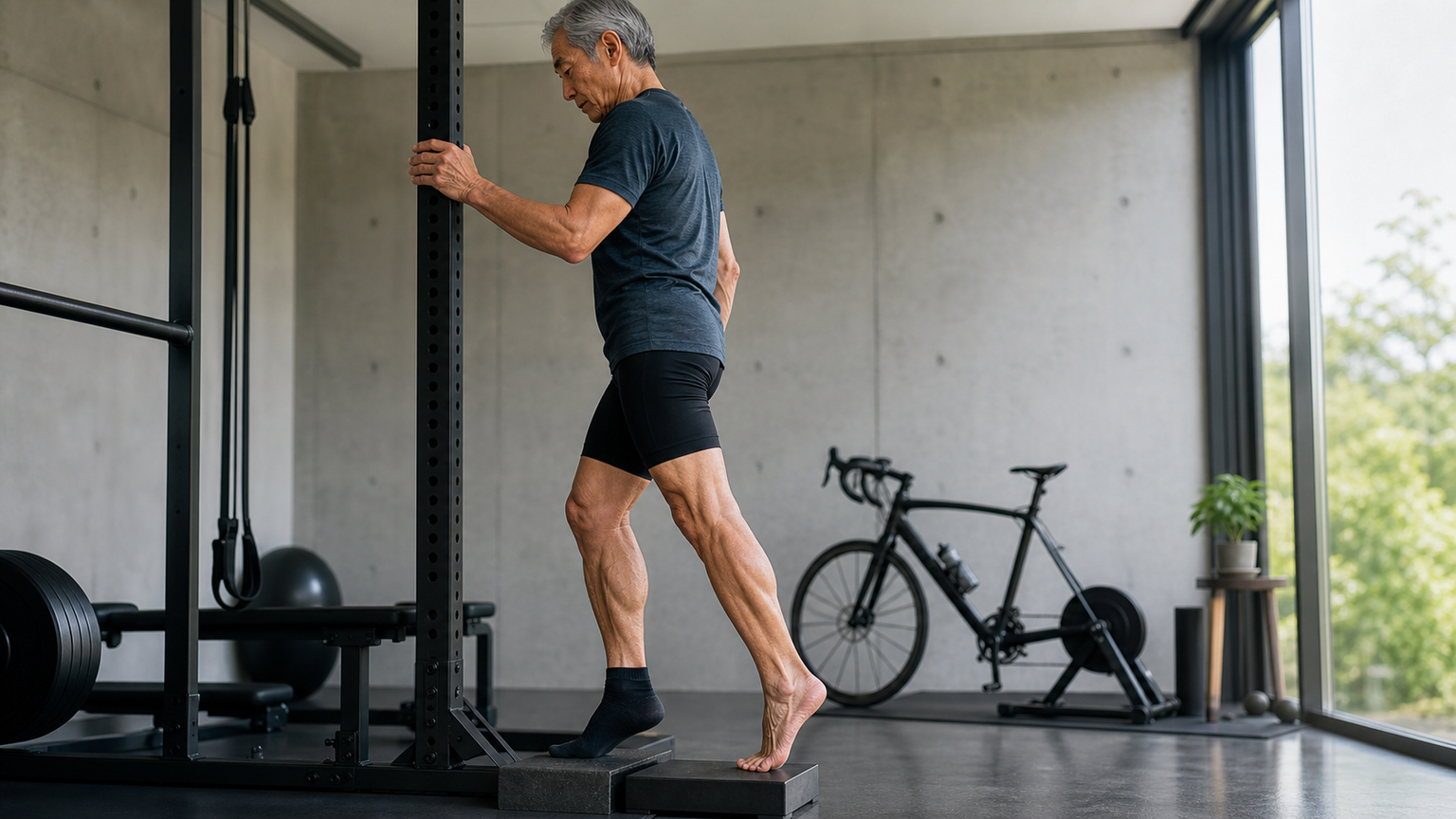
The Real Front Line of Aging Sports Injuries Is Often the Tendons
When discussing aging athletes, the focus is always on the cardiovascular system and muscles, but clinically, what forces aging endurance athletes off the field is often tendon and connective tissue issues—Achilles tendinopathy, patellar tendinopathy, and plantar fascia problems. The reason is that age-related tendon degeneration not only affects performance (force transmission efficiency) but also significantly increases the risk of overuse injuries, and tendons repair much more slowly than muscles. Understanding this front line is the key to knowing why the progression pace and training choices for aging athletes must be different.
What Happens During Tendon Aging
| Aspect | Age-Related Change | Consequence |
|---|---|---|
| Tendon stiffness | Tends to decline | Reduced force transmission efficiency and rate of force development, affecting economy |
| Collagen turnover/remodeling | Rate declines | Slower repair and adaptation after loading |
| Speed of adaptation to load | Becomes blunted and delayed | Tendons are the first to “fall behind” when volume spikes |
| Recovery after injury | Significantly prolonged | Once tendinopathy develops, the return timeline is greatly extended |
Key consequence: In aging tendons, adaptation to increased load is slower and more delayed than that of muscles and the cardiovascular system. This is why “the cardiovascular system is fine, the muscles are fine, but adding volume triggers tendon problems” is the classic injury scenario for aging athletes.
Implication One: Progression Must Be Slower
Since tendons are the slowest-adapting component in aging, all load progression must accommodate them:
- Weekly volume/intensity increases should be more conservative and incremental than in younger years.
- The frequency of similar high-impact/high-tension stimuli should be reduced, with longer intervals between sessions (tendons repair slowly and need longer refill time).
- Large volume jumps (sudden increases in volume, sudden added incline/intensity) are high-risk events for aging tendons and should be deliberately avoided.
- Use “localized tendon discomfort” as an early braking signal—don’t wait for obvious pain to act. Once tendinopathy is established, the return timeline for aging athletes is very long.
Implication Two: Eccentric and Isometric Training Become More Important
For aging athletes, tendon-specific training is not optional—it is a key tool for maintaining tendon resilience and function:
- Eccentric training: Applies prolonged high tension to tendons under control, making it the core stimulus for tendon remodeling and tendinopathy rehabilitation; for aging athletes, it also serves to maintain tendon load tolerance and function.
- Isometric training: Can apply high tension with low joint impact, and is particularly effective for improving tendon stiffness while placing low stress on joints—for aging individuals whose joints already have mileage and cannot tolerate high impact, this is a low-risk, high-reward path for tendon maintenance.
(For detailed prescription parameters of eccentric and isometric training, see the related articles in this series; the point here is “why they are especially critical for aging athletes.”)
In practice, incorporating targeted eccentric/isometric stimuli (such as eccentric heel drops, isometric wall-sit holds, isometric heel-raise peak holds) into an aging athlete’s program is not just for rehabilitation—it is about proactively maintaining tendon load tolerance, slowing stiffness loss, and reducing overuse injuries—the most underestimated line of defense for aging endurance athletes.
A Conceptual Integration
- Progression: Use tendon adaptation speed as the limiting factor—increase volume in small steps, lengthen intervals between similar stimuli, and brake at the first sign of discomfort.
- Tendon maintenance: Include targeted eccentric and/or isometric stimuli weekly (low-impact, progressive).
- Recovery: Aging tendons repair slowly; allow sufficient recovery time after high-tension/high-impact stimuli (longer than in younger years).
- Strength foundation: Maintain overall muscular strength (see aging strength priorities) to distribute tissue stress and improve force transmission.
Mindset
The story of aging tendons is not “you can’t train anymore,” but “your limiting factor has changed.” In youth, the cardiovascular system or willpower is the bottleneck; in aging, the bottleneck is often the tendons—by handing the pace of training decisions to this slowest component, you can actually train longer and more steadily.
“When aging athletes get injured, seven times out of ten it’s not the muscles and not the heart—it’s the tendons that can’t keep up. The cardiovascular system improves in three weeks, but tendons take months to adapt—if you increase volume at the pace of your cardiovascular system, you’re writing a medical record for your tendons. For old tendons, slow is fast.” —A sports tendon medicine and aging prevention expert
Related Reading
- Recovery Mechanics for Aging Athletes: Why the Same Workout Is Harder to Digest
- Strength Training Priorities for Aging Endurance Athletes: What to Train First When Time Is Limited
- Neuromuscular Aging in Aging Endurance Athletes: Muscle Maintenance Strategies for Riders Over 60
- Tendon and Ligament Adaptation: Why Connective Tissue Is Slower Than Muscle and How to Train Accordingly
一日北高/長距離團騎 常見問題補充篇 / 組團或跟團的眉角 / 壯車友容易被瘦車友慢性拉爆 / 原來屁股痛可能是這個原因...? / 風場配速法 / 公路車 / CT Yeh
2 年前
西進武嶺 免費訓練分析服務 Intervals | 練不夠還是練過頭?你哪一種類型選手?AI模型告訴你! | 備戰神器 | 公路車 訓練 | CT Yeh
4 年前
[教學] Premiere 影片 手震 修正 教學 防抖 單眼 影像 GoPro 穩定 Video Stabilization
8 年前
滑雪新手們慘摔學習全紀錄(請開字幕),滑雪好好玩 | Snowboard + Ski | 岩原 スキー場 | 滑雪APP使用 | GoPro Max
6 年前
白沙屯媽祖進香在家走!UREVO 坡度自調走步機 / 可連接訓練遊戲APP MyWhoosh / 邊看直播邊走起來 / CT Yeh
11 個月前
多機位拍片神器 DJI Action 2 拍出速度張力感 | 類空拍機視角 4陣列麥克風超強降風噪 實測! | 公路車 | CT Yeh
3 年前
福隆鐵人團練隨拍
8 年前
西進武嶺 自製新版AI配速表產生器 x 賽前攻略 抱佛腳! 沒有功率計也可以產生配速表嗎?有什麼其他眉角賽前要注意的呢? | 西進武嶺 / 東進武嶺 KOM 攻略 | 公路車 | CT Yeh
4 年前