2026 Winter and Rainy Season Riding Gear: Layering and Protection Systems for Taiwan's Cold, Humid Weather
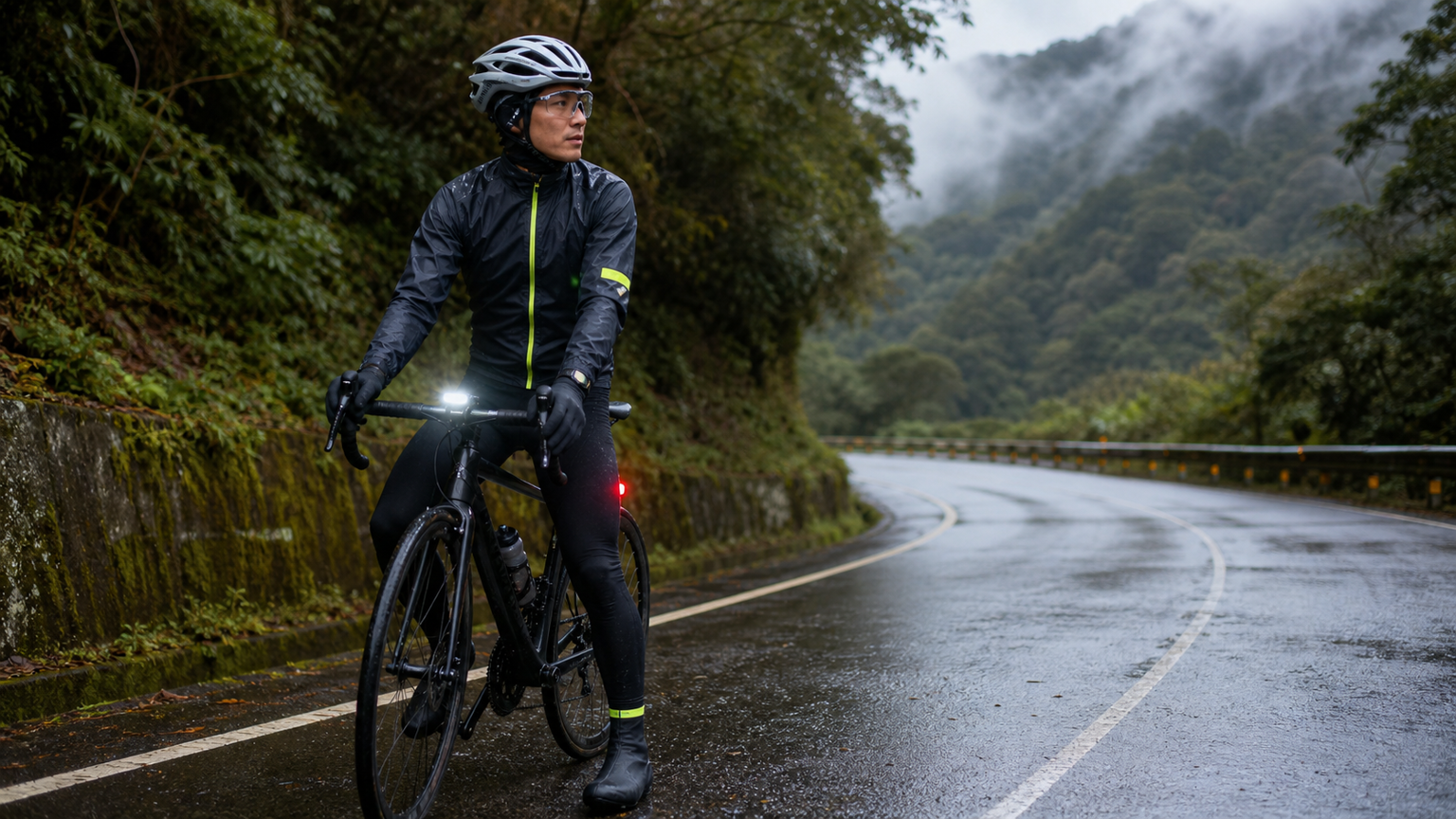
Taiwan’s Winter Cycling Enemy Isn’t the Cold—It’s “Wet + Wind”
Taiwan’s winter temperatures aren’t extreme, but the combination of “low temps + rain + downhill wind chill” can cause perceived temperatures to plummet and hypothermia risk to spike. The core of winter/rainy-season riding gear isn’t about dressing thick—it’s about “managing moisture and wind through layers.” Dressing wrong is worse than not dressing at all (soaked through and then hit by wind).
The Three-Layer System Logic
| Layer | Function | Material Priorities |
|---|---|---|
| Base layer | Wicks sweat, keeps skin dry | Technical moisture-wicking fabric; absolutely no pure cotton (absorbs sweat without drying = hypothermia) |
| Mid layer | Insulates, retains body heat | Fleece/thermal cycling jersey, adjust by temperature |
| Shell layer | Windproof, waterproof, releases moisture | Windproof/water-repellent or waterproof-breathable jacket |
Why the Base Layer Matters Most
You sweat heavily on climbs; if sweat stays on your skin and clothing, the downhill headwind will instantly strip body heat and cause hypothermia. A moisture-wicking base layer that moves sweat away from the skin is the foundation of the entire system. This layer can’t be skipped, and you must never wear cotton.
Windproof vs. Waterproof Trade-offs
- Fully waterproof jackets block rain but are often less breathable; on climbs you’ll get so stuffy that “it’s not wet outside, but you’re soaked in sweat inside”
- Windproof + water-repellent offers better breathability, suitable for damp cold but not heavy rain
- A common practical strategy for Taiwan winters: windproof-breathable jacket as the main piece + a packable rain jacket for light rain, switching flexibly based on the day’s rainfall
The Extremities Are the First to Go Hypothermic
Fingers, toes, and the head lose heat quickly and are often the first body parts to freeze into dysfunction on winter rides (numb fingers affect braking and shifting—a safety issue):
- Long-finger windproof gloves (handlebars face the wind directly on descents)
- Windproof shoe covers (cleat vents are cold-air inlets in winter)
- Headband/thin cap (head warmth under helmet vents)
Visibility in the Rainy Season = Safety
Visibility is poor on overcast, rainy days, and dark clothing is nearly invisible on the road. In winter and rainy seasons, be sure to add high-visibility elements + turn on lights (even during the day). Being seen is more directly life-saving than staying warm.
Practical Setup Recommendations
- Damp cold, dry day: moisture-wicking base + insulating mid + windproof jacket + long-finger gloves + shoe covers
- Low temp, light rain: swap the outer layer for waterproof-breathable, keep the inner layers moisture-wicking
- Heavy rain/low temp: prioritize safety; consider switching to an indoor trainer instead of pushing through
The Packing Philosophy
Mountain weather is unpredictable. Items like the outer layer and thin gloves—pieces you “add or remove as you climb/descend”—should easily fit in pockets for on-the-fly changes. The essence of layering is “dynamic adjustment,” not wearing everything at once.
The highest principle of winter/rainy-season riding gear is just one sentence: staying dry matters more than staying thick. The person who can honestly judge “should I switch to indoor training today?” understands the long-term path of this sport better than the one with the most complete gear kit.
Related Reading
- Winter Cycling Training Clothing Guide: Cold-Weather Tips for Riding in Taiwan January–February
- The Art of Cold-Weather Cycling Attire: Complete Guide to Layering Systems and Gear Selection
- Windbreaker and Insulation Layer Pairing Principles: Taiwan Four-Season Road Cycling Attire
- Winter Cycling Gear Guide: Keeping Your Riding Passion Alive in the Cold
2024單車追雪全記錄,大屯山/助航台 衝山囉! / 裝備準備分享 / 很厲害的冰雕藝術 / 公路車 / CT Yeh
2 年前
3D 列印車褲墊 / 舒適改善? / 無痕 x 分區壓縮 / ATK & Decider系列 / JE22黑科技 / #公路車 #CTYEH
11 個月前
鉅齒紋輪組!? ControlTech MEG-T50 EVO 碳纖維幅條輪組/ 功率對比實驗 / 公路車 / CT Yeh
2 年前
水金九不厭五分 10度寒流冷到不願停!feat. 卡卡 / 公路車 / CT Yeh
6 個月前
碟煞公路車 銑面器 !? 原來銑完差這麼多! 降低蹭碟機率! | TIME 公路車 保養小記錄 | CT Yeh
3 年前
再快都跟的上!? 單車跟隨攝影機之王 HOVERAir X1 PROMAX 全面實測 / 唯一!8K畫質&自行車專用模式和跟蹤信標&前後避障 / DJI Neo 可參考/ 公路車 / CT Yeh
1 年前
單車 一日北高 ( 雙城 ) 肥宅雙人瘋狂行 紀錄片 REACTO
10 年前
單車賞雪 裝備準備及注意事項分享 | 公路車
5 年前