A Neglected Chain Means Replacing the Entire Drivetrain
The chain is the cheapest consumable in the drivetrain, yet it’s the most overlooked. Once it’s excessively worn (commonly called “chain stretch”), it will in turn wear down the expensive cassette and chainrings—at that point, you’re not just replacing a chain, but the entire drivetrain. Maintaining your chain is the highest cost-performance “money-saving investment.”
Essential Inspection and Maintenance Tools
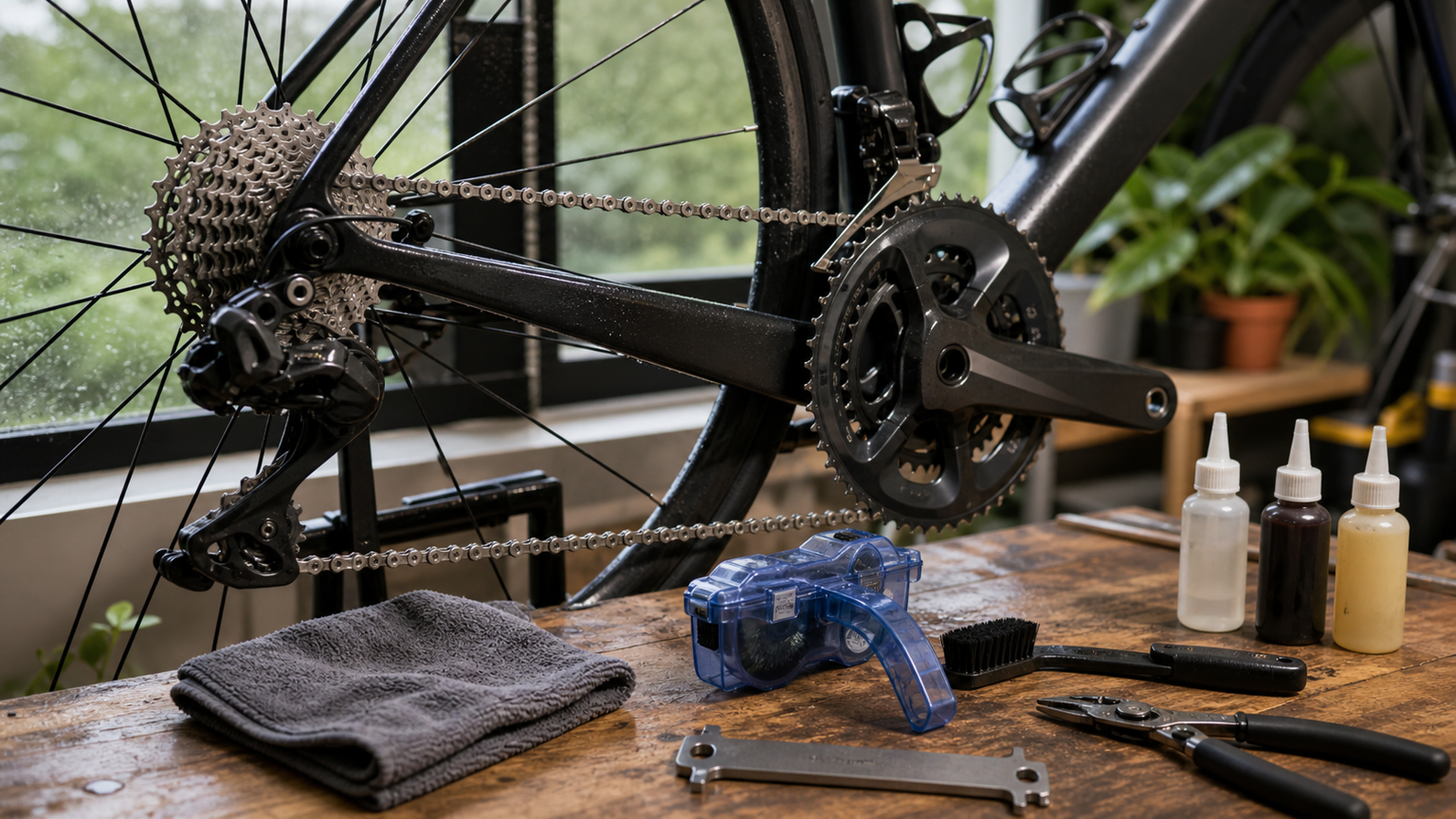
| Tool | Purpose | Cost of Neglect |
|---|---|---|
| Chain wear indicator | Measures whether the chain needs replacing | Dragging it out → cassette and chainrings are ruined together |
| Chain cleaner/brushes | Removes abrasive grime | Dirt accelerates wear on the entire group |
| Chain lube (wet/dry/wax) | Reduces friction, prevents rust and wear | No lube → dry metal grinding, lost efficiency, more noise |
| Chain tool/quick-link pliers | Removing and installing the chain | Can’t replace it yourself |
Why “Chain Stretch” Affects the Whole Group
As the chain wears, its pitch increases and no longer matches the tooth profile of the cassette and chainrings, acting like a file to bend the teeth. If you monitor it regularly with a wear indicator and “replace only the chain” when it reaches the wear limit, the cassette and chainrings can last a long time; if you wait until it skips and slips before replacing, you’ll often have to replace the whole group, costing many times more. Measuring your chain regularly is the most cost-effective habit.
How to Choose Chain Lube
| Type | Characteristics | Best For |
|---|---|---|
| Wet lube | Lasts longer, withstands rain | Rainy, long-distance, humid conditions |
| Dry lube | Doesn’t attract dirt easily, clean | Dry, mostly sunny weather |
| Chain wax | Cleanest, low friction | Those willing to put in the effort and chasing efficiency |
Taiwan is rainy and humid, so wet lube offers better protection but attracts grime; on dry, sunny days, dry lube keeps things clean; for ultimate efficiency and cleanliness, chain wax is the way to go (though prep work is more involved). The key is “use the right lube for the right conditions, and reapply regularly.”
Basic Maintenance Process
- Clean before lubing (adding lube to a dirty chain = abrasive paste, the more you lube, the more you wear)
- Drip oil on each link, turn the cranks to let the oil penetrate the rollers
- After letting it soak in, be sure to wipe off excess surface oil (surface oil only attracts dirt; lubrication comes from what penetrates inside)
- Clean and lube promptly after riding in the rain to prevent rust
Common Mistakes
- Adding lube directly to a dirty chain (most common, most damaging)
- Not wiping off excess oil after lubing (turns into a dust magnet)
- Never measuring the chain, only dealing with it once it skips (the most expensive oversight)
- Using non-chain-specific lubricants (like WD-40 as lube—fine for degreasing, but insufficient for long-term lubrication)
Return on Investment
A wear indicator and a bottle of chain lube don’t cost much, yet they can multiply the lifespan of the expensive cassette and chainrings several times over, while maintaining drivetrain efficiency and quietness. This is the item in whole-bike maintenance with the least input and the highest return.
Chain maintenance is a lot like saving money: spending ten minutes each time to clean and lube seems trivial, but one day when you don’t have to replace the entire drivetrain, it pays back everything you’ve accumulated at once. Take care of the cheap parts, and the expensive ones won’t break.
Related Reading
- Maintenance Frequency for Chains and Drivetrains: A Scientific Approach to Extending Lifespan
- The Complete Guide to Road Bike Chain Maintenance and Lubrication: Secrets to Extending Drivetrain Lifespan
- The Complete Chain Maintenance Guide: Cleaning, Lubing, Knowing When to Replace, and Common Mistakes
- The Complete Road Bike Chain Maintenance Guide: Cleaning, Lubrication, and Replacement Timing
洗單車神器 吹水機! 實際洗車用用看 暴力洗鍊條大法 | 公路車 | CT Yeh
4 年前
自助洗車場 洗單車 50元有找 清鍊條大法 居然還有小小兵
7 年前
碟煞公路車 銑面器 !? 原來銑完差這麼多! 降低蹭碟機率! | TIME 公路車 保養小記錄 | CT Yeh
3 年前
把帶被我推爛,換新的防推爛款💪 #cycling #公路車 #曜越單車
2 年前
再一組! 全碳幅條 碟煞/無內胎輪組 開箱! 到底好騎嗎? UNAAS X40 | 公路車 | CT Yeh
4 年前
鉅齒紋輪組!? ControlTech MEG-T50 EVO 碳纖維幅條輪組/ 功率對比實驗 / 公路車 / CT Yeh
2 年前
2025崇越「西進武嶺」挑戰VLOG / 賽前改短成165曲柄會如何? / 選手昏倒? / 公路車 / CT Yeh
1 年前
公路車 BB培林大升級! / 備戰海鷗繞圈賽 Canyon Aerod & TIME 一起改 / MIT大廠 CEMA對鎖式陶瓷培林BB & 導輪 / 公路車 / CT Yeh
2 年前