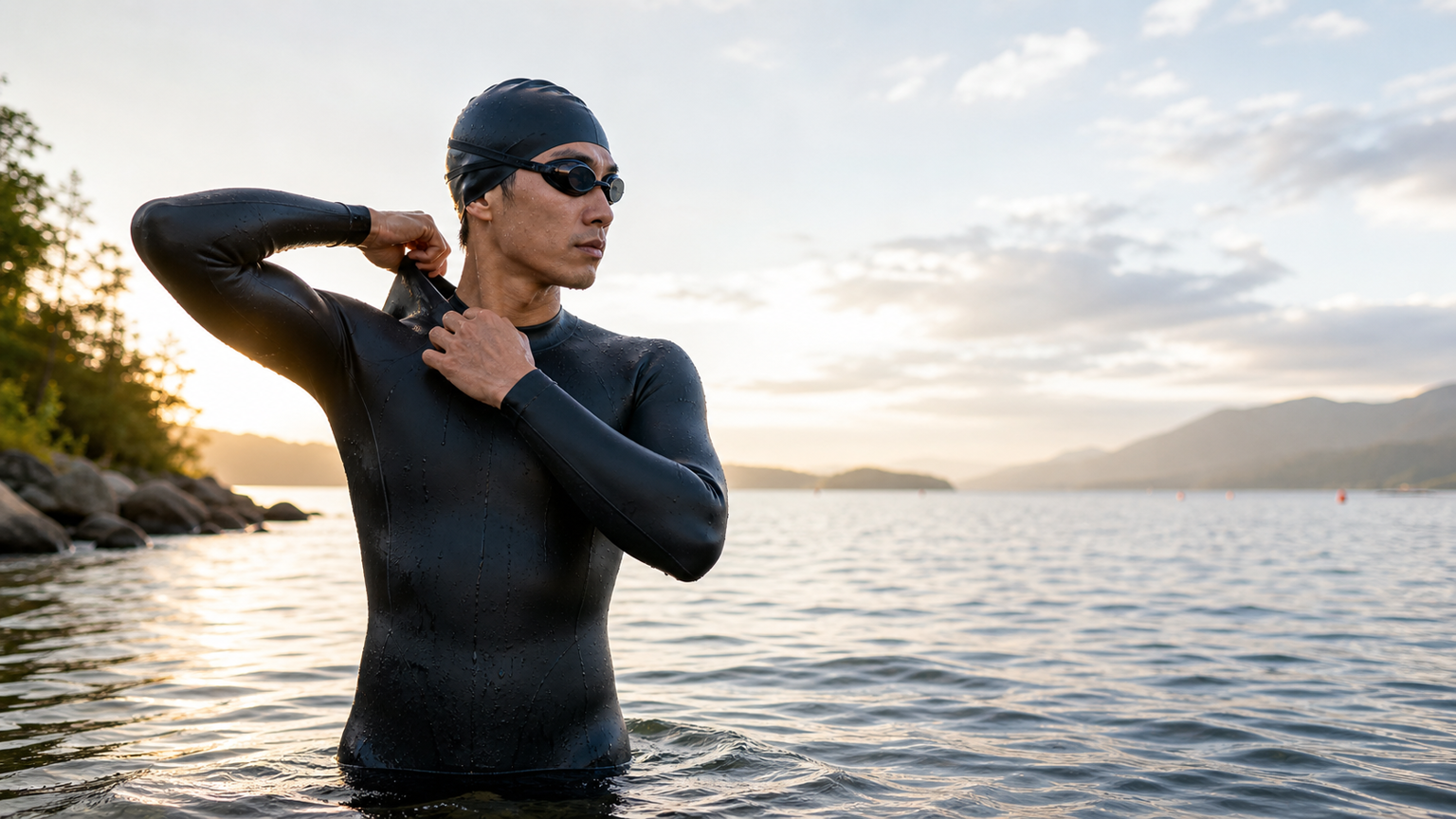
Wetsuit = Rule-Approved Free Buoyancy
A wetsuit lifts your body through torso buoyancy, reduces drag, and can save 5%–10% of your energy. But whether you can wear one and whether it counts toward rankings is determined by water temperature rules—always check before race day.
General Framework of Water Temperature Rules (Subject to Official Race Announcements)
| Water Temperature Range | General Handling |
|---|---|
| Low (near lower limit) | Mandatory to wear; if too low, swim is shortened or canceled |
| Moderate | Allowed to wear and counts toward results |
| High (above upper limit) | Prohibited, or allowed but not counted for rankings/age-group awards |
Actual thresholds vary by race distance and event regulations; age-group and professional categories may also have different standards.
Thickness Configuration Principles
The torso is thicker (for buoyancy), while the shoulders and arms are thinner (to preserve stroke mobility). Shoulders that are too thick increase stroke energy cost, which is counterproductive.
Buying Considerations
- Fit comes first: too loose lets water in and increases drag; too tight restricts breathing
- Shoulder/arm flexibility: simulate swimming arm circles when trying on
- Neck seal: prevents water entry without choking
- Easy-removal design: larger ankle openings save T1 time
Maintenance
After every use in seawater, rinse with fresh water, dry in the shade, and store flat or on a wide-shouldered hanger to avoid creases and high heat. Chlorine and sunlight are rubber killers.
Backup Plan for No-Wetsuit Days
When high water temperatures prohibit wetsuits, switch to a swimskin (non-buoyant speed suit), and adapt to a no-buoyancy swimming posture during training so you don’t discover your form has completely changed on race day.
Quantifying the Speed Benefit of Wetsuits and the Logic of Thickness
A wetsuit uses torso buoyancy to lift your body into a more horizontal position, reducing form drag. Testing shows it can save 5%–10% of swimming energy, which translates to roughly 60–120 seconds faster over 1500m—one of the few areas in triathlon where “spending money directly makes you faster.” But thickness distribution is key: the torso uses 4–5mm for buoyancy, while the shoulders and arms use 1.5–2mm to preserve stroke mobility. Shoulders that are too thick add energy cost per stroke, which is counterproductive.
General Framework of Water Temperature Rules (Subject to Official Race Announcements)
| Water Temperature Zone | General Handling | Backup Plan |
|---|---|---|
| Low (near lower limit) | Mandatory to wear; if too low, swim shortened/canceled | Wear a thermal swim cap |
| Moderate | Allowed to wear and counts toward results | Standard setup |
| High (above upper limit) | Prohibited, or worn but not counted for rankings | Switch to swimskin |
Common Mistake: Only Comparing Buoyancy Numbers, Ignoring Shoulder Flexibility and Ease of Removal
Many people only ask “is the buoyancy enough” when choosing a wetsuit, but overlook two things that affect the entire race even more: poor shoulder flexibility causes stroke energy cost to spike in the latter half, and ankle openings that are too small mean 30–60 seconds wasted struggling to pull the suit off in T1. When trying on, be sure to simulate arm circles, confirm the neck seal is watertight without choking, and that the ankles can come off quickly—these details often affect your performance and mood more than those few percentage points of buoyancy.
A wetsuit is one of the few things in triathlon where “spending money directly makes you faster.” But don’t just look at thickness—whether the shoulders are flexible and whether it’s easy to take off often affects your race performance and mood more than the buoyancy numbers.
Related Reading
- Complete Guide to Wetsuit Rules: Water Temperature Thresholds, Thickness Limits, and Whether to Wear One
- Wetsuit Full Guide: Selection, Putting On/Taking Off, and Adjusting Your Swim Feel
- 2026 Triathlon Wetsuit Buying Guide: Buoyancy, Flexibility, and Fit for Taiwan Water Temperatures
- Wetsuit Selection and Putting On/Taking Off: The Complete Open-Water Essential Gear Guide
松運深水池拍攝 作品 防寒衣品牌
8 年前
[防寒衣體驗] 鐵人魂 三鐵 防寒衣試穿會 於松運 深水游泳池 鯨魚池
8 年前
3D 列印車褲墊 / 舒適改善? / 無痕 x 分區壓縮 / ATK & Decider系列 / JE22黑科技 / #公路車 #CTYEH
11 個月前
西進武嶺 自製新版AI配速表產生器 x 賽前攻略 抱佛腳! 沒有功率計也可以產生配速表嗎?有什麼其他眉角賽前要注意的呢? | 西進武嶺 / 東進武嶺 KOM 攻略 | 公路車 | CT Yeh
4 年前
水金九不厭五分 10度寒流冷到不願停!feat. 卡卡 / 公路車 / CT Yeh
6 個月前
單車 一日北高 ( 雙城 ) 肥宅雙人瘋狂行 紀錄片 REACTO
10 年前
FTL 與 SYB 車隊專訪 西進武嶺 實用攻略分享! 2小時 如何練?!你不知道的眉角!新手準備武嶺必看 EP1 | 實力派女車友 | 精華版 | 公路車 | CTYeh
4 年前
CT 喇低賽) 武嶺牽車 才是王道 西進牽車四小時內秘訣 攝手位置 如何判斷 防抽筋小秘訣
7 年前