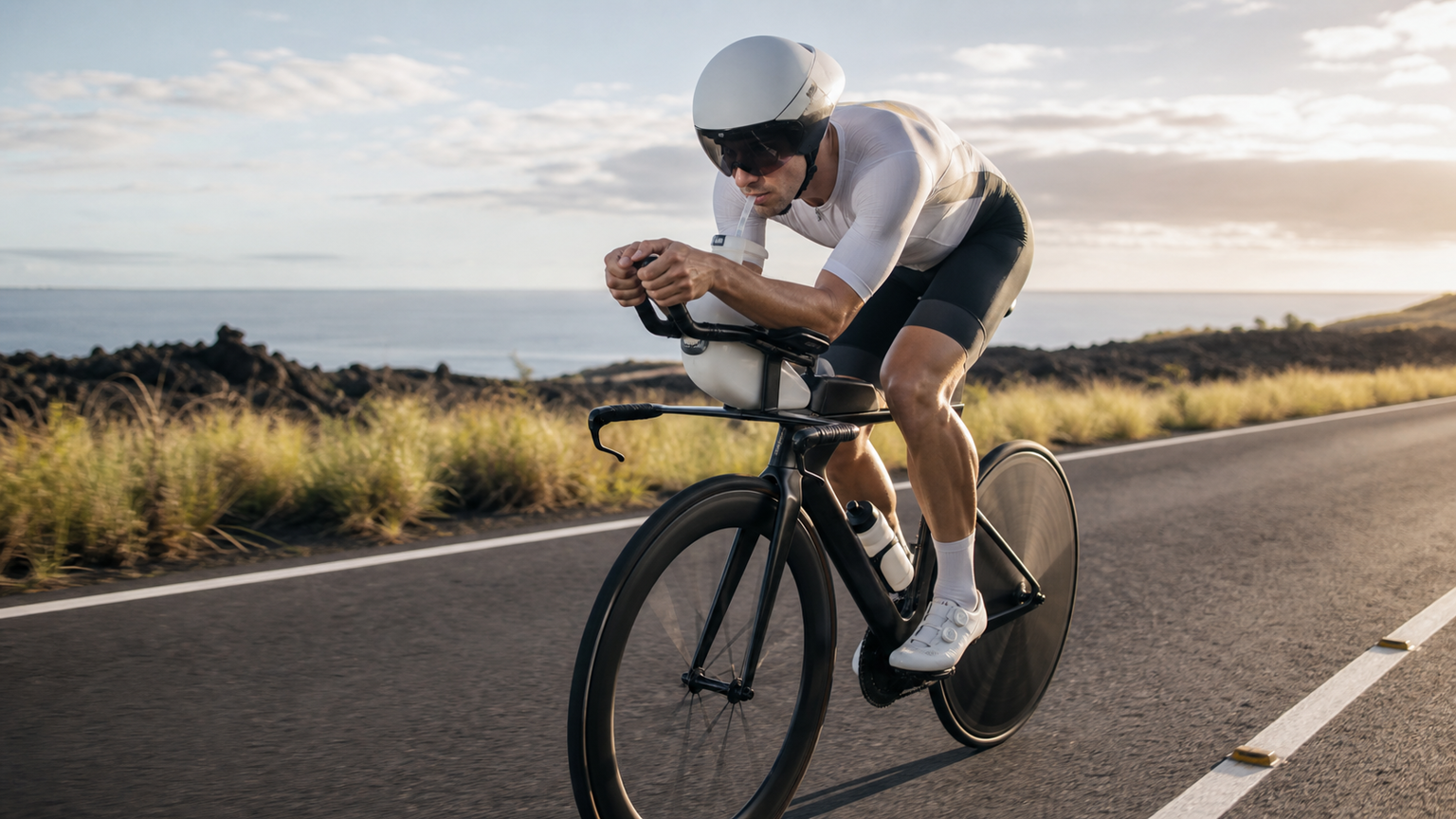
Head and Bottles: The Drag You Can’t See but Is Always There
The head and hydration setup are often overlooked, yet they affect aerodynamic drag for the entire ride. When integrated well, they can save significant watts without requiring any additional physical effort.
Aero Component Benefit Ranking (Conceptual)
| Component | Aero Benefit | Cost/Risk |
|---|---|---|
| Aero helmet | High | Poorer ventilation, requires tail design |
| Frame-integrated hydration (front BTA) | Medium-high | Installation, hydration operation learning curve |
| Rear seat-post dual bottles | Medium | Improper setup can increase turbulence |
| Loose bottles scattered randomly | Negative | Creates turbulence, penalty |
The Aero Helmet Trade-off
Long-tail designs are most effective when the head is stable and vision is forward; if you frequently look down at your bike computer, the tail tilts up and becomes a drag source. Short-tail “stubby” designs are more forgiving and suit riders with unstable positions. Poor ventilation in hot races is the trade-off, requiring water dousing to cool down.
The Aero Logic of Hydration Systems
A between-the-arms (BTA) hydration system not only makes drinking convenient but also fills the turbulence between the arms, making it actually more aerodynamic than not having one. The key is “integrating into the airflow”—scattering bottles everywhere is actually the slowest option.
Integration, Not Accumulation
Aerodynamics is a systems engineering problem: head, torso, arms, and hydration must form one clean airflow line. Buying expensive components individually while keeping a messy setup will cause the benefits to cancel each other out.
Race-Day Advice
Before race day, do a long training ride with the exact same full setup (helmet + hydration + clothing) to confirm ventilation, hydration operation, and position can hold up for the entire distance before you race.
The “Vision Assumption” Trap in Helmet Tail Selection
Long-tail aero helmets only deliver maximum benefit when “the head is stable and vision is forward”; once you frequently look down at your bike computer, the tail tilts up and creates turbulence, potentially making you slower than a short-tail design. The more forgiving stubby short-tail design suits riders with unstable positions or those who habitually look down. Poor ventilation in hot races is a common trade-off of aero helmets, and you must douse your head and neck with water at every aid station; otherwise, the watts saved will be eaten back by overheating and slowing down.
Aero Benefit Ranking of Hydration Configurations
| Configuration | Aero | Risk/Cost |
|---|---|---|
| Between-the-arms (BTA) hydration | High (fills turbulence between arms) | Requires practicing hydration operation |
| Frame-integrated down-tube bottle | Medium-high | Installation, cleaning |
| Rear seat-post dual bottles | Medium | Improper setup can increase turbulence |
| Loose bottles scattered randomly | Negative | Creates turbulence the whole ride, penalty |
Common Mistake: Stacking Components Like Building Blocks, Ignoring Airflow Continuity
The most common aero waste is spending big money on a top-tier helmet while scattering three or four bottles randomly on the bike, leaving the airflow between head, torso, arms, and hydration fragmented, with benefits canceling each other out. Aerodynamics is a systems engineering problem—the goal is to connect the entire body from head to bottles into one clean airflow line. Before race day, be sure to do a long training ride with the “helmet + hydration + clothing” full setup to confirm ventilation and hydration operation can hold up for the entire distance before you race.
Helmets and bottles may not seem worth fussing over, but they are stealing or saving your watts the entire ride. Triathlon aerodynamics isn’t about buying the most expensive single item—it’s about connecting your whole body from head to bottles into one smooth airflow. String the details together, and that’s the real free speed.
Related Reading
- Aero Time-Trial Helmet Buying Guide: From Wind Tunnel Data to Race-Day Choices
- Bike Bottle Cages and Bottles: Aero Design and Hydration Convenience
- The Science of Cycling Apparel: How Much Wattage Can an Aero Skinsuit Actually Save?
- The Science of Aero One-Piece Cycling Suits: How a Skinsuit Saves You Precious Watts
西進武嶺 自製新版AI配速表產生器 x 賽前攻略 抱佛腳! 沒有功率計也可以產生配速表嗎?有什麼其他眉角賽前要注意的呢? | 西進武嶺 / 東進武嶺 KOM 攻略 | 公路車 | CT Yeh
4 年前
西進武嶺配速器 3.0更新 / NEW 免功率FTP估算! / 大數據xAI體能模型 / 如何模擬人止關前集團效應 / 配速儲存功能 / AI全台自行車賽事行事曆 / 公路車 / CT Yeh
1 年前
#公路車 #西進武嶺 配速配瓦實驗 坡度分析 四小時內攻略 建大盃 NeverStop #西進武嶺攻略
6 年前
風櫃嘴 衝刺慢動作回放!
8 年前
西進武嶺各路段 前8000名 大數據分析 配速攻略/功率/心律/推力比/維持率/踏頻/踏瓦比/牽車率 大公開 | 建大盃 NeverStop 可參考 | 公路車 | CT Yeh
5 年前
摔車後補裝備: 好市多新款單車安全帽& Specialized Romin 北高整路屁股都不痛的坐墊 | 一千元居然有MIPS | CT Yeh | 公路車
4 年前
風櫃嘴! 現實與虛擬騎乘 會有誤差嗎? 背著iPad邊騎一趟風櫃嘴實際測試一次 | 公路車 | CT Yeh
3 年前
西進武嶺 免費訓練分析服務 Intervals | 練不夠還是練過頭?你哪一種類型選手?AI模型告訴你! | 備戰神器 | 公路車 訓練 | CT Yeh
4 年前