2026 Power Meter Buying Guide: A Comparison of Crank-Based, Pedal-Based, and Spider-Based Options
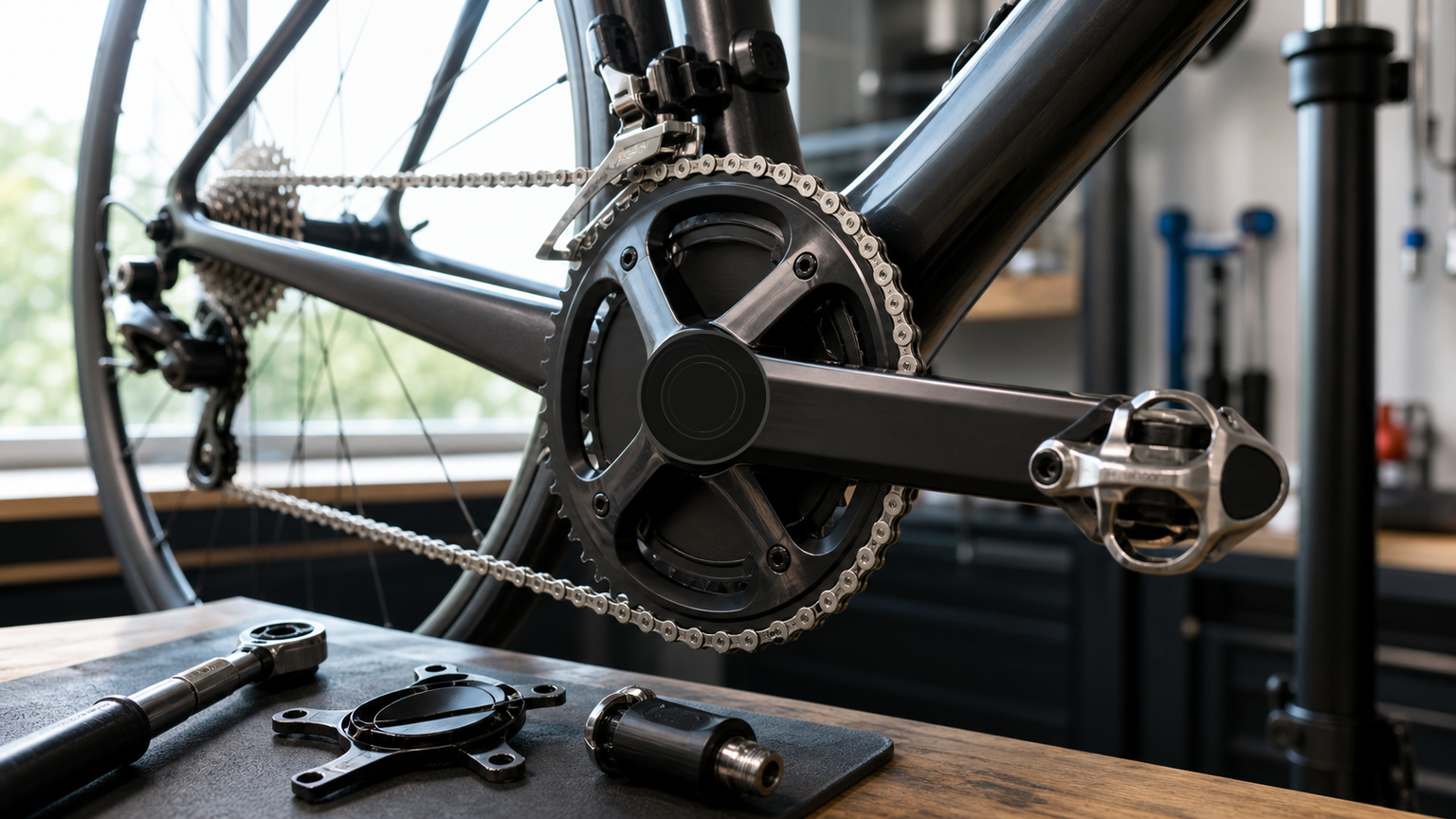
Without Power, Training Is Just Guessing
Heart rate lags and is affected by temperature and fatigue; power (watts) is an immediate, objective measure of output. For structured training (FTP tests, interval zones, long-term load management), a power meter is almost essential. But choose the wrong mounting type, and you may have to buy a new one when you switch bikes.
Three Main Types
| Type | Accuracy | Transferability | Price Range | Best For |
|---|---|---|---|---|
| Pedal-based | High, dual-sided available | Best (swap directly between bikes) | Mid-to-high | Multi-bike riders, frequent bike changes |
| Crank-based | High | Medium (limited by bottom bracket standards) | Mid | Riders with one primary bike |
| Spider-based | High, stable total power | Low (tied to a specific chainring) | Mid-to-high | Riders with a single dedicated bike |
| Hub-based | Medium | Low | Entry-level | Budget-first riders |
Single-Sided vs Dual-Sided
Single-sided power meters (usually mounted on the left crank) estimate total power by doubling the left leg’s output. If your left and right legs are asymmetrical in strength (due to injury or habit), the error is amplified. Dual-sided measurement provides left-right balance data, which is valuable for correcting imbalances and post-injury rehabilitation, but it costs more.
Key Buying Considerations
1. Do You Frequently Switch Bikes?
If you often switch bikes or rotate between multiple bikes, pedal-based meters offer the highest transferability—installation and removal take just a few minutes.
2. Bottom Bracket and Chainring Compatibility
For crank-based and spider-based meters, be sure to confirm compatibility with your bottom bracket standard and chainring type. If you buy the wrong one, it won’t fit.
3. Calibration and Temperature Compensation
A good power meter should support zero offset calibration and temperature compensation. Zeroing before every ride is the fundamental practice for keeping data reliable.
4. Data Protocols
Make sure it supports both ANT+ and Bluetooth protocols so you can connect to your bike computer, trainer, and training apps simultaneously.
Four Core Metrics to Track After Buying
Buying a power meter and only looking at “max watts” is the biggest waste. What truly makes you improve are these derived metrics:
| Metric | Meaning | How to Use |
|---|---|---|
| FTP (Functional Threshold Power) | The highest power you can sustain for about 1 hour | The baseline for all training zones; retest every 4–6 weeks |
| W/kg (Power-to-Weight Ratio) | Power ÷ body weight | The most direct indicator of climbing ability; more meaningful than absolute watts |
| NP/IF (Normalized Power/Intensity Factor) | Reflects the true load of variable riding | Assesses how hard a session actually was |
| CTL/ATL/TSB (Long-Term Load) | Fitness/Fatigue/Form trends | The basis for periodization and pre-race tapering |
Treat your power meter as a “long-term load management tool” rather than a “toy for comparing numbers,” and its value will truly pay off.
How to Make the Data Meaningful
The key is using it to measure FTP, do interval training, and track long-term load metrics like CTL/TSB, making your training quantifiable and periodizable.
A power meter won’t make you stronger; it only shows you how weak you are and how much you’ve improved. Those willing to face the numbers honestly are the ones who will truly be changed by it.
Related Reading
- 2025 Ultimate Power Meter Buying Guide: How to Choose Between Pedal, Crank, and Hub Types
- Power Meter Buying Guide: Accuracy and Convenience of Hub vs Pedal vs Crank Types
- Power Meter Buying Guide: Accuracy and Cost Comparison of Pedal vs Crank vs Hub Types
- Complete Power Meter Buying Guide: Full Analysis of the Pros and Cons of Crank, Pedal, and Hub Types
全台首發!邁金P715踏板功率計!市場價格撼動者再出招 / 功率對比實測 / FAVERO ASSIOMA 可參考! / 公路車 / CT Yeh
1 年前
2025 自行車錶排行榜 兩萬車友大數據 / Garmin Bryton 排名會大洗牌嗎? / 全新的碼表前身分析 /公路車 / CT Yeh
1 年前
Stages功率計 和 智騎 X7 Pro 訓練檯同時騎兩個 Rouvy 角色會一起進終點嗎?最後來點數據分析 | 公路車
5 年前
Fitting訓練兩用功率車 ! Thinkrider ST900 完整實測!/ 坡度升降 / 鄰居測試/ smart bike/公路車/ CT Yeh
2 年前
來都來了!改好改滿 / CS大導輪 + BB 可以省幾瓦? / 同場加映 TIME XPRO卡踏 / #公路車 #ceramicspeed / CT Yeh
1 年前
2025崇越「西進武嶺」挑戰VLOG / 賽前改短成165曲柄會如何? / 選手昏倒? / 公路車 / CT Yeh
1 年前
2026 車錶排行榜!誰是最多車友正在使用?練家子最愛哪款?🏆 (2萬名車友數據) / 公路車 / CT Yeh
5 個月前
全台首發神車錶! iGPSPORT iGS630 兩趟一日北高的續航! 超強導航、功率訓練、超人性APP! Garmin & Bryton 有對手了嗎? | 公路車 |CT Yeh
3 年前