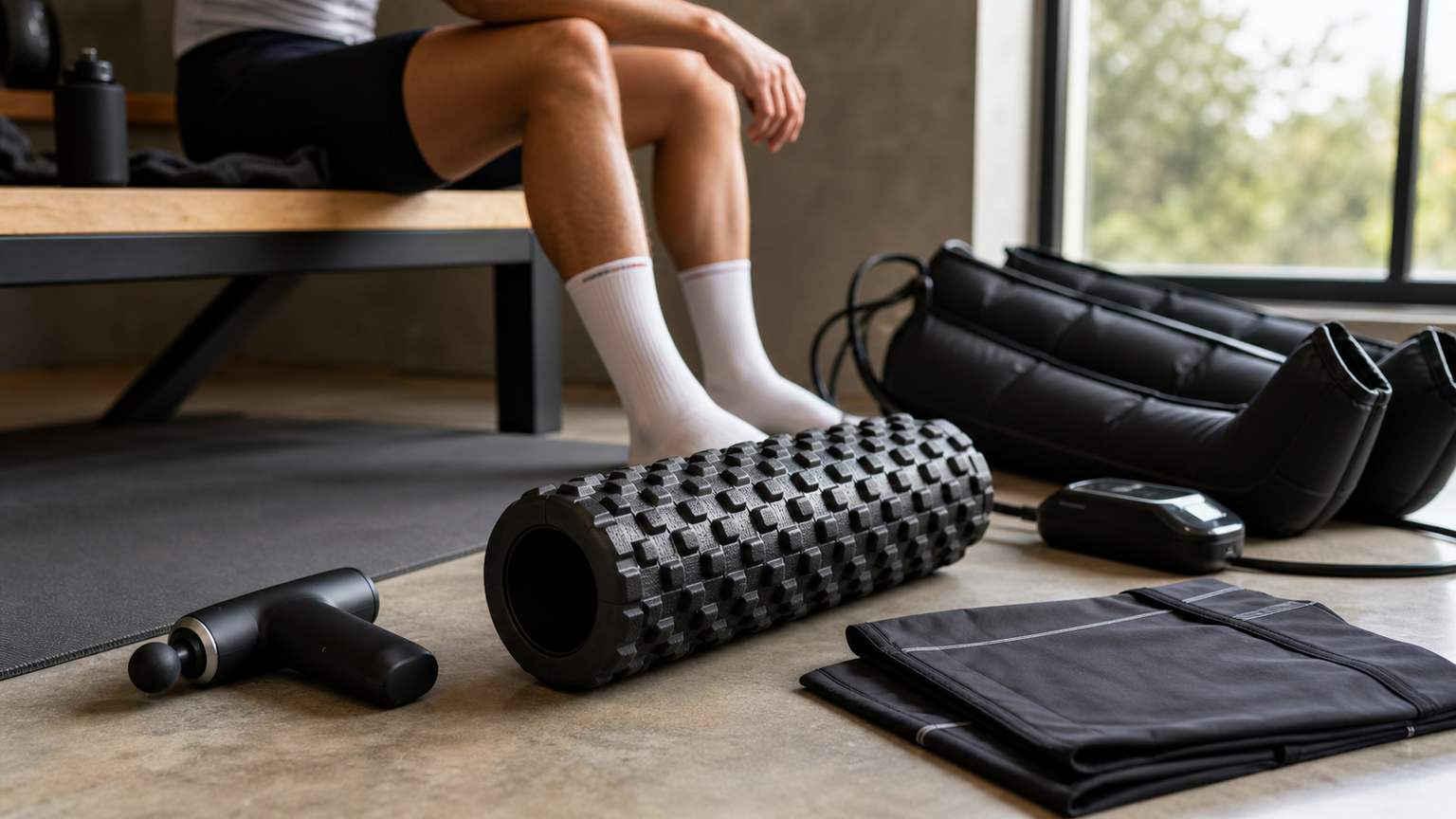
Recovery Tools: The Gap Between Marketing Hype and Scientific Evidence
The recovery industry has exploded in recent years, with massage guns, compression tights, and pneumatic recovery boots being marketed as “must-haves after every workout.” But the sports science evidence isn’t actually that impressive. Before you buy, sort out which ones genuinely work and which are expensive placebos.
Tool Positioning and Evidence
| Tool | Primary Mechanism | Evidence Strength | Price Range | True Role |
|---|---|---|---|---|
| Foam roller | Soft tissue release, increased mobility | Moderate-high (best value for money) | Low | Buy this first |
| Massage gun | Vibration therapy, short-term ROM increase | Moderate (short-term relief, limited long-term) | Medium | Supplementary, not a cure-all |
| Compression leg sleeves | Promotes venous return, reduces subjective soreness | Moderate (clear improvement in subjective feel) | Medium | Great for travel/long periods standing |
| Pneumatic recovery boots | Intermittent compression to boost circulation | Moderate (subjective recovery, high convenience) | High | A nice-to-have for high-volume athletes |
Key Truths
1. Foam Rollers Offer the Best Value
The cheapest option with the most solid evidence. They increase joint mobility and reduce the subjective feeling of delayed onset muscle soreness. If your budget only covers one item, make it this one.
2. Massage Guns Are Supplementary, Not Therapeutic
Vibration can provide short-term mobility gains and relieve tightness, but it cannot replace sleep, nutrition, or progressive overload. It offers limited help for deep or acute injuries—if you have an unclear pain point, see a doctor rather than blasting it yourself.
3. Pneumatic Recovery Boots: Convenience > Miracle Effects
Their greatest value is being “passive, comfortable, and allowing you to do other things at the same time.” Subjective recovery feels great, but don’t expect them to let you train less and still improve.
How to Spend a Recovery Budget (Situation-Based Recommendations)
Instead of asking “which is best,” ask “what does my situation lack most”:
- Student runner on a very tight budget: Buy only a foam roller (about NT$500–1,500) and put the rest of the money into eating well and sleeping enough—far better returns than expensive gear
- Office-worker runner who travels often or stands all day: Foam roller plus a pair of compression leg sleeves; the latter delivers the most noticeable subjective recovery benefit on long trips and standing-heavy days
- Serious amateur with high weekly training volume: Once you have the first two, then consider pneumatic recovery boots as a “time-saving passive recovery” option
- Those with a specific pain point: Don’t buy a massage gun and go at it yourself—see a doctor first to identify the cause. Tools are aids, not diagnostics
The Truly Most Effective “Recovery Tools”
All research consistently points to the same conclusion: the most powerful recovery tools have never been devices, but rather adequate sleep (7–9 hours per night) > sufficient protein and calories > training load management.
The biggest trap of recovery tools is making you believe that spending money lets you skip sleep. No matter how expensive your recovery boots are, they can’t beat a full week of eight hours of sleep every night—and no manufacturer will ever tell you that.
Related Reading
- Foam Rollers and Massage Balls: A Complete Comparison of Runner’s Essential Recovery Tools
- The Scientific Test of Recovery Tools: Massage Guns, Ice Baths, Compression, and Rolling—Which Actually Work?
- Evidence-Based Recovery Methods: Sleep, Nutrition, Massage, Cold Water Immersion, Compression Wear—Which Are Worth Investing In?
- Sports Medicine: Latest Research and Practical Strategies on Half-Marathon, Foam Rolling, and Massage Gun Self-Myofascial Release—Trigger Point Release and Muscle Adhesion Mechanics: 2026 Latest Sports Medicine Perspectives
2022 前十五大自行車錶 !? 兩萬名車友大數據統計 | 你的上榜了嗎? | 菁英車友都用哪些錶? | Bryton Garmin 誰能拔得頭籌?| 車錶推薦 | 公路車 CT Yeh
4 年前
2026 車錶排行榜!誰是最多車友正在使用?練家子最愛哪款?🏆 (2萬名車友數據) / 公路車 / CT Yeh
5 個月前
2025 自行車錶排行榜 兩萬車友大數據 / Garmin Bryton 排名會大洗牌嗎? / 全新的碼表前身分析 /公路車 / CT Yeh
1 年前
Unaas X50 全碳纖幅條輪 數據實測對比PK | Lun Hyper 的高階版 | 板輪爬坡也可以很厲害? ! 武嶺2小時大師一起親測! CP值超高 | 公路車 | CT Yeh
4 年前
摔車後補裝備: 好市多新款單車安全帽& Specialized Romin 北高整路屁股都不痛的坐墊 | 一千元居然有MIPS | CT Yeh | 公路車
4 年前
全台首發神車錶! iGPSPORT iGS630 兩趟一日北高的續航! 超強導航、功率訓練、超人性APP! Garmin & Bryton 有對手了嗎? | 公路車 |CT Yeh
3 年前
Nepest NOVA 碳條輪組:輕量、空力、舒適一次滿足!/ 公路車 / CT Yeh
7 個月前
單車 重低音 藍芽喇叭 音質實測 SoundBot SB525 Real Sound Test
8 年前