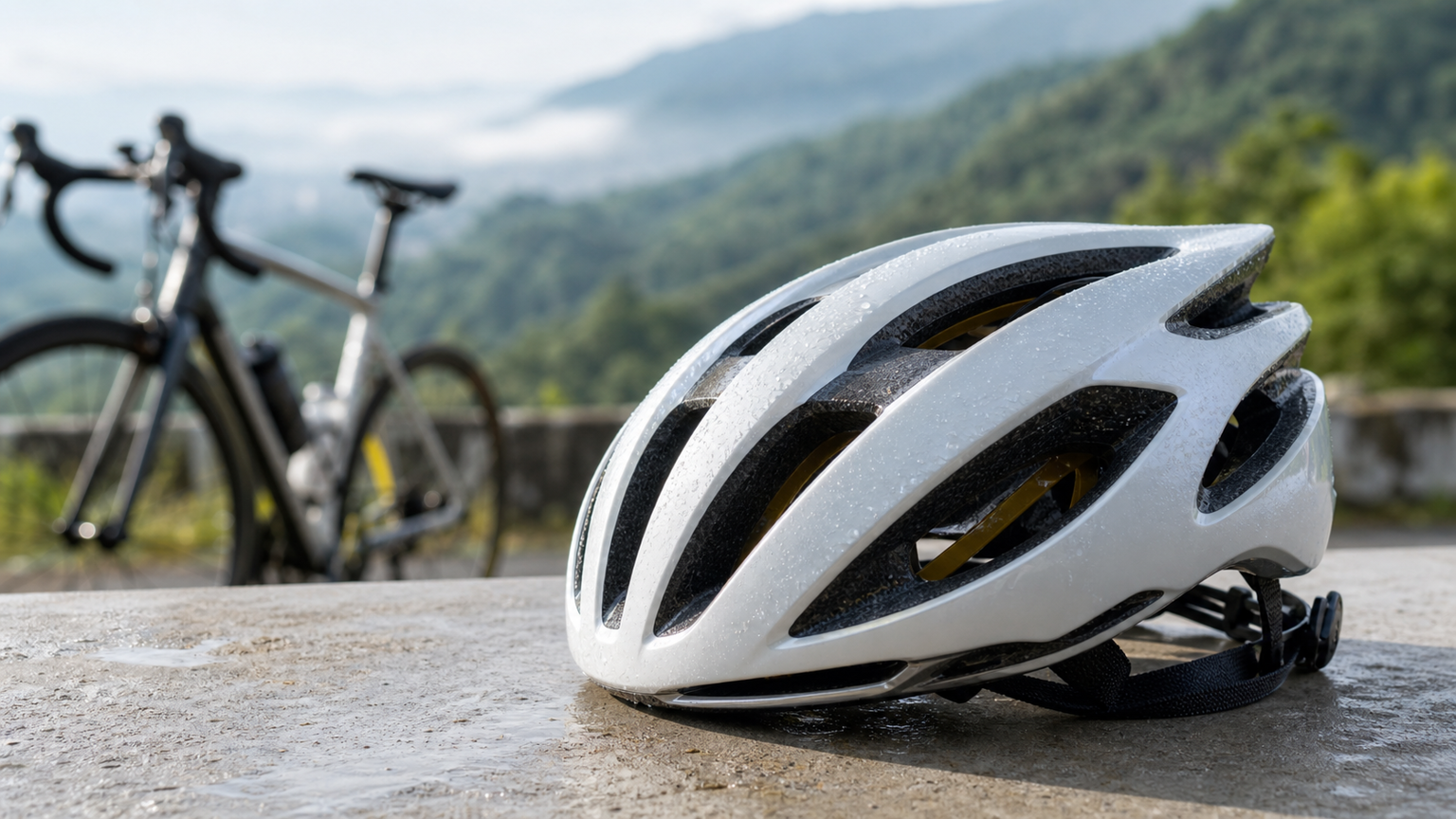
The Only Gear That Truly Saves Your Life
Of all the gear used in cycling and running, the helmet is the one item that can directly determine life or death in the instant of a crash. It is not a fashion accessory, and its protective performance should never be sacrificed for looks. Understanding the core technology behind a helmet matters far more than chasing a brand name.
Three Key Dimensions to Consider
| Dimension | What to Look For | Trade-off |
|---|---|---|
| Protection Technology | Rotational impact protection such as MIPS | Worth it in most situations, at the cost of a small weight increase |
| Ventilation | Intake/exhaust vent design, internal airflow channeling | More vents mean cooler rides but slightly weaker structure and higher cost |
| Weight | Affects neck fatigue over long rides | Lighter usually means pricier, with diminishing returns |
What Is MIPS, and Is It Worth It?
Most crashes involve an “oblique impact” rather than a direct vertical hit. MIPS (and similar rotational protection systems) add a layer inside the shell that can slide slightly, absorbing rotational forces from angled impacts and, in theory, reducing rotational brain injury. For most cyclists and runners, the protective value of this layer generally outweighs the modest increase in weight and cost it brings.
Ventilation Is More Important Than People Realize
Taiwan’s hot, humid climate means a helmet with poor heat dissipation can make climbs feel stifling, hurt your performance, and even contribute to heat exhaustion. The number of vents and the design of internal airflow channels are genuinely practical considerations for riding in Taiwan — not just numbers on a spec sheet.
Certification Is the Bottom Line
Looks and brand name are not the point. Passing a recognized safety certification (national or international bicycle helmet testing standards) is the one non-negotiable baseline. Certification means the helmet has met regulatory requirements for impact absorption and structural performance under standardized crash testing. A cheap, unbranded helmet with no certification markings has unverified impact-absorbing materials and structure — wearing it is effectively the same as wearing nothing, and it can be even more dangerous because it creates a false sense of security. Always check for a clear certification mark on the inside of the shell or on the label before buying, especially when shopping online for a bargain.
Fit Matters More Than Specs
Even the best helmet is useless if it doesn’t fit properly:
- It should not shift or wobble when you shake your head side to side after putting it on
- There should be about two finger-widths of space between your forehead and the front rim
- With the chin strap buckled, there should be about one finger-width of space between your chin and the strap
- Asian head shapes tend to be rounder, while some European helmets run longer — always try one on before buying
Six Situations That Mean It’s Time to Retire Your Helmet
A helmet is a consumable item, not a family heirloom. Replace it if any of the following apply — don’t try to save money by holding onto it:
- It has taken any impact: Even if it looks fine on the outside, the EPS foam liner may already be crushed internally, with its protective capacity reduced to zero
- The shell shows cracks, or the shell has separated from the liner: The structure has already failed
- The foam liner has developed permanent dents from prolonged pressure: Its impact-absorbing capability has degraded
- The buckle or adjustment system is malfunctioning: A helmet that doesn’t stay secure offers no real protection
- Long-term sun exposure or sweat has caused the materials to become brittle: Even without a crash, replacement is recommended after several years
- A used helmet of unknown history: You have no way of knowing whether it has taken a previous impact, so it is not recommended for use
Treating your helmet as a “consumable with a shelf life” is the responsible way to look after your own head.
A helmet is the gear you should never cut corners on, yet it’s the one most often overlooked. You may only ever need it once in your life — and that one time will decide whether you get to keep riding.
Related Reading
- Bicycle Helmet Buying Guide: MIPS, Aerodynamics, and Ventilation — Three Key Considerations
- Bicycle Helmet Buying Guide: The Trade-off Between MIPS Technology and Ventilation Design
- In-Depth Bicycle Helmet Review: MIPS Technology, Ventilation Design, and Popular Models in the Taiwan Market
- Bicycle Helmet Buying Guide: Key Considerations for MIPS Technology, Ventilation Design, and Weight
摔車後補裝備: 好市多新款單車安全帽& Specialized Romin 北高整路屁股都不痛的坐墊 | 一千元居然有MIPS | CT Yeh | 公路車
4 年前
再快都跟的上!? 單車跟隨攝影機之王 HOVERAir X1 PROMAX 全面實測 / 唯一!8K畫質&自行車專用模式和跟蹤信標&前後避障 / DJI Neo 可參考/ 公路車 / CT Yeh
1 年前
Nepest NOVA 碳條輪組:輕量、空力、舒適一次滿足!/ 公路車 / CT Yeh
7 個月前
DJI Osmo 360 全球首發!單車適合嗎?深度體驗報告/ 大疆第一台全景相機 Insta360 瑟瑟發抖? / 公路車 / CT Yeh
1 年前
車錶新黑馬? / 超狂續航 / 超好用錶冠 / 無敵準定位 / Dash圖表合成!?/ COROS DURA 評測!/ 公路車 / CT Yeh
2 年前
#公路車 #Fitting 靠人工智慧APP 幫你調整單車
6 年前
ThinkRider 智騎 XXPRO 訓練台,高階機種功能 只要 1/3價格!? 實測功率對比、噪音實測 / 公路車 / CT Yeh
1 年前
開箱!DJI Osmo Action 6 運動攝影機 2025 唯一發表旗艦新機種 / 感光元件大升級 / 直拍救星 / CT Yeh
8 個月前