Global Cycling Festivals and Culture: From Fixed-Gear Culture to Critical Mass
Cycling culture is far more than a mode of transport or a competitive sport — it is a global subculture, a social movement, and a way of life. From the fixed-gear underground of Brooklyn, New York, to Critical Mass rides held simultaneously in hundreds of cities worldwide, the bicycle has become a symbol of urban resistance, creative expression, and community solidarity.
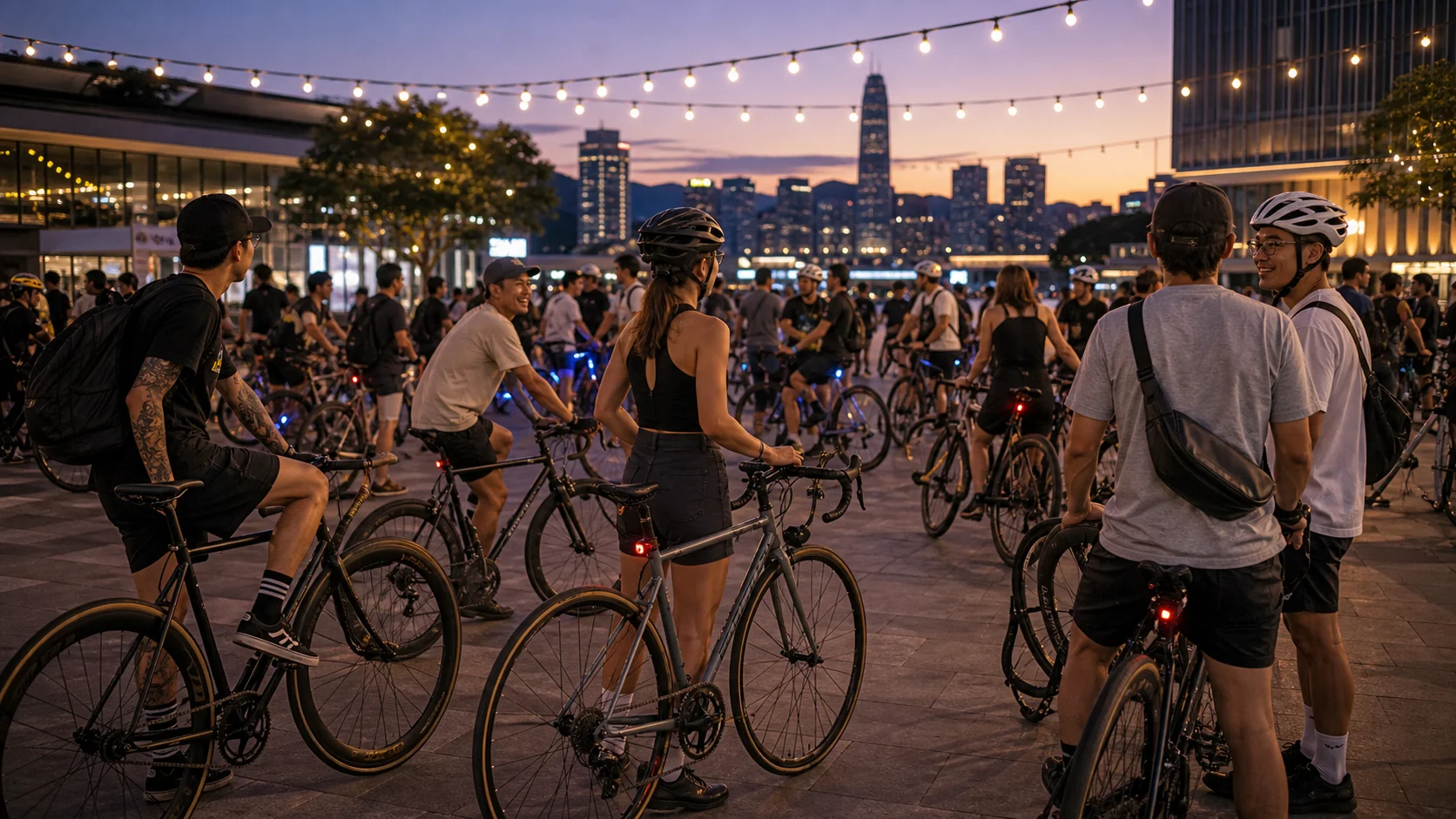
Fixed-Gear (Fixie) Culture
What Is a Fixed-Gear Bike?
The defining features of a fixed-gear bicycle (Fixie):
- No freewheel mechanism: the rear hub is directly connected to the chain, so pedaling and the rear wheel always turn together
- No coasting: when your feet stop pedaling, the bike slows down (unlike a freewheel bike)
- Usually no brakes (or only a single front brake): riders slow down by resisting the pedals
- Minimalist aesthetic: every “unnecessary” component is stripped away
The Origins of Fixed-Gear Culture
New York’s Bike Messenger Culture
Fixed-gear culture developed in New York in the 1990s, originating with bike messengers:
- Messengers needed to weave through the city quickly, and the low-maintenance, lightweight nature of fixed gears suited that need
- Urban fixed-gear bikes were often converted from discarded velodrome track bikes
- The messenger community developed a distinctive riding culture outside of work hours
The Trend of the 2000s
By the 2000s, fixed-gear culture had spread from the messenger community to young urbanites at large:
- Artists and hipsters in Brooklyn adopted fixed gears as an identity marker
- “Fixie” became an urban trend
- In Taiwan, the craze peaked around 2010–2015, with fixed-gear communities appearing in major cities
The Aesthetics of Fixed Gear
The distinctive aesthetic of fixed-gear bikes:
- Minimalist design: freewheels, extra brakes, and hydraulic systems all removed
- Monochrome or bold color schemes: contrasting frame and wheelset colors
- A culture of customization: riders often DIY their builds, making every bike a personal statement
- Repurposed track frames: built from discarded velodrome track frames
The Technical Challenges of Fixed-Gear Riding
| Skill | Description |
|---|---|
| Skid stop | Locking the rear wheel to skid to a stop (requires technique) |
| Trackstand | Balancing in place without putting a foot down |
| Uphill/downhill control | Controlling speed without brakes |
Taiwan regulation note: Taiwan’s road traffic regulations require bicycles to have a functioning brake system. A pure fixed-gear bike without brakes may run afoul of the law on public roads.
Critical Mass: Bicycles Take Over the City
What Is Critical Mass?
Critical Mass is a collective bicycle ride held on a fixed date each month, and its format is quite unusual:
- No fixed leader: no one organizes it; everyone is simply a participant
- No route planned in advance: riders gather and decide the route together
- Purpose: to “create change” rather than “protest” — when enough bicycles occupy the streets, cars naturally give way
Origins: San Francisco, 1992
The first Critical Mass ride took place in San Francisco on September 25, 1992. The name comes from a documentary about bicycle culture in China — where there were once so many bicycles that cars had to stop and yield, reaching what the film called a “critical mass.”
Global Expansion
Critical Mass now takes place in hundreds of cities around the world:
| City | Scale (estimated) | Timing |
|---|---|---|
| New York | Hundreds to thousands | Last Friday of every month |
| Budapest | Largest (20,000+) | Third Friday of every month |
| Shanghai | Hundreds | Held monthly |
| Taipei | Tens to hundreds | Irregular |
Critical Mass in Taiwan:
Both Taipei and Taichung have organized Critical Mass rides. While the scale is smaller than in Europe or the Americas, they have played a role in raising awareness of urban cycling culture.
Copenhagen’s Cycling Without Age
The Origin Story
In 2012, Danish social worker Ole Kassow noticed an elderly man in a wheelchair gazing out the window, and asked him what he wanted. The old man said he wanted to feel the wind on his face from a bicycle ride again.
Ole bought a trishaw and began taking the man out for rides. The idea quickly grew into a global volunteer organization: Cycling Without Age.
The Meaning of the Movement
- It lets seniors with limited mobility rediscover the freedom of cycling
- A volunteer rider pedals in front while the passenger relaxes and enjoys the scenery behind
- The organization now has chapters in more than 50 countries
Taiwan connection: Some counties and cities in Taiwan have already introduced similar programs, particularly at long-term care facilities.
Cycling Festivals Around the World
Tour de Cure
A series of charity cycling events held across the United States and other countries to raise funds for diabetes research:
- Distance options range from 30 miles up to 100 miles (a Century)
- Participants raise sponsorship funds
- The “Century Ride” (100 miles) is a major milestone goal for amateur riders
Bicycle Culture at Burning Man
Held every year in the Nevada desert, the Burning Man arts festival has its own cycling culture:
- In this car-free “Black Rock City,” bicycles are the only means of transport
- More than 70,000 attendees bring all manner of eccentric art bikes
- Together they create a temporary urban utopia powered by bicycles
King’s Day (Koningsdag) in the Netherlands
On the Netherlands’ King’s Day (April 27), cities across the country, including Amsterdam, transform into one giant celebration on foot and by bike:
- Cars are entirely banned from city centers
- Millions of people cycle or walk to celebrate
- It is the clearest expression of how cycling is woven into everyday Dutch life
Cycling Festivals in Taiwan
Taiwan also hosts a number of cycling-themed festivals:
| Festival | Location | Timing |
|---|---|---|
| Taipei Cycle (Taiwan International Cycle Show) | Taipei | Every two years |
| Bicycle Carnival | Various counties/cities | Irregular |
| Wuling Challenge | Puli/Wuling | Specific weekends |
| Taiwan KOM Challenge | Hualien/Wuling | Every autumn |
Types of Cycling Subculture
Beyond fixed gear, there are many other cycling subcultures around the world:
Bike Polo
- Playing polo on bicycles instead of horses
- Played in city plazas or disused parking lots
- Multiple amateur leagues exist worldwide
Artistic Cycling
- Competitions performing various stunts and tricks on a track bike
- A traditional sport in Germany and Austria
- Includes solo, pairs, and other combined formats
Bike Wrestling
- Almost nonexistent in Taiwan, but found in some cities in Europe and the Americas
- Riders try to make their opponent put a foot down within a marked circle
Japan’s “Cycling Roads”
Japan has its own distinctive “Cycling Road” culture:
- Long-distance dedicated bike paths built along rivers, coastlines, and mountain roads
- Examples include the “Kasumigaura Ikkatsu” (a loop route around Lake Kasumigaura) and others
- These attract touring cyclists from far and wide
What Cycling Culture Can Teach Taiwan’s Cities
What Can We Learn From Each Culture?
| Culture | What Can Be Learned |
|---|---|
| The Netherlands | Infrastructure development and cultural identity |
| Copenhagen | Cycling Without Age and social inclusion |
| Fixed-gear culture | Youth participation and personal expression |
| Critical Mass | Collective action and awareness of urban rights |
Taiwan’s Existing Cycling Culture Assets
Taiwan’s cycling culture already has several unique local strengths:
- The global influence of Giant and Merida: giving Taiwan an important place in global cycling culture
- Round-island touring culture: a uniquely Taiwanese meaning and spirit of cycling
- The success of UBike: a model example of a bike-sharing system
- A tradition of mountain riding: the culture of climbs like Wuling
Conclusion
Cycling culture is a rich and colorful global phenomenon — from the urban counterculture of fixed gear, to the everyday commute of Copenhagen professionals, to the social warmth of Cycling Without Age, to the Taiwanese spirit of challenge at the summit of Wuling.
Every one of these cultures is asking the same question: what can the bicycle make our lives, our cities, and our society become?
The answer: endless possibilities.
Related Reading
2023自行車展!與環台賽選手一同表演賽 / 全自動AI Fitting?/ TIME新車發表/神秘充電桌等 精華分享 VLOG | CT Yeh | 公路車
3 年前
2023時代騎輪節一分鐘預告💪 #cycling #公路車 #feiyutech
2 年前
再一組! 全碳幅條 碟煞/無內胎輪組 開箱! 到底好騎嗎? UNAAS X40 | 公路車 | CT Yeh
4 年前
高雄綠園道鐵路自行車道 / 外地人能輕鬆駕馭 還是整路崩潰? / 2025 全線開通 春節實地探索一次!(附GPS連結)/ 公路車 / CT Yeh
1 年前
「悲情男車友」創作單曲 爆笑MV / 公路車 / CT Yeh / 4K劇情版
7 個月前
鉅齒紋輪組!? ControlTech MEG-T50 EVO 碳纖維幅條輪組/ 功率對比實驗 / 公路車 / CT Yeh
2 年前
2025 台北自行車展 逛展VLOG / 新奇商品探索 居然有這些神奇小物 / TT表演賽對戰德國91 / 巧遇 EVA 廷威 AYA 小D 四爺 夏美 松哥 .. / CT Yeh
1 年前
公路車 BB培林大升級! / 備戰海鷗繞圈賽 Canyon Aerod & TIME 一起改 / MIT大廠 CEMA對鎖式陶瓷培林BB & 導輪 / 公路車 / CT Yeh
2 年前