Introduction
The meal before training determines how much fuel you bring into your workout. Eat too much, and gastrointestinal discomfort drags down performance; eat too little, and you’ll fade and lose power in the latter half. ACSM recommends planning the calories, carbohydrates, and protein ratio of your pre-training meal in layers based on the time before training begins, achieving a balance of “storing enough energy without creating a burden.”
Timing Strategy
3–4 Hours Before Training: Full Meal
This is the window with the most time for digestion, allowing for a complete, balanced meal.
| Nutrient | Recommended Amount (65 kg Athlete) | Food Examples |
|---|---|---|
| Carbohydrates | 1–4 g/kg (65–260g) | 1.5 bowls of white rice + half a sweet potato |
| Protein | 15–25 g | 100g chicken breast or half a block of tofu |
| Fat | Low to moderate (10–15g) | A little olive oil, avoid fried foods |
| Fiber | Moderate, avoid excessive | One serving of vegetables, without large amounts of legumes |
Taiwanese breakfast option: Shao Bing and soy milk set (egg pancake + rice milk) provides approximately 60g of carbohydrates and 15g of protein, making it a reasonable meal 3 hours prior.
1–2 Hours Before Training: Light Meal
At this point, digestion time is limited, so choose easily digestible, low-fiber, low-fat foods.
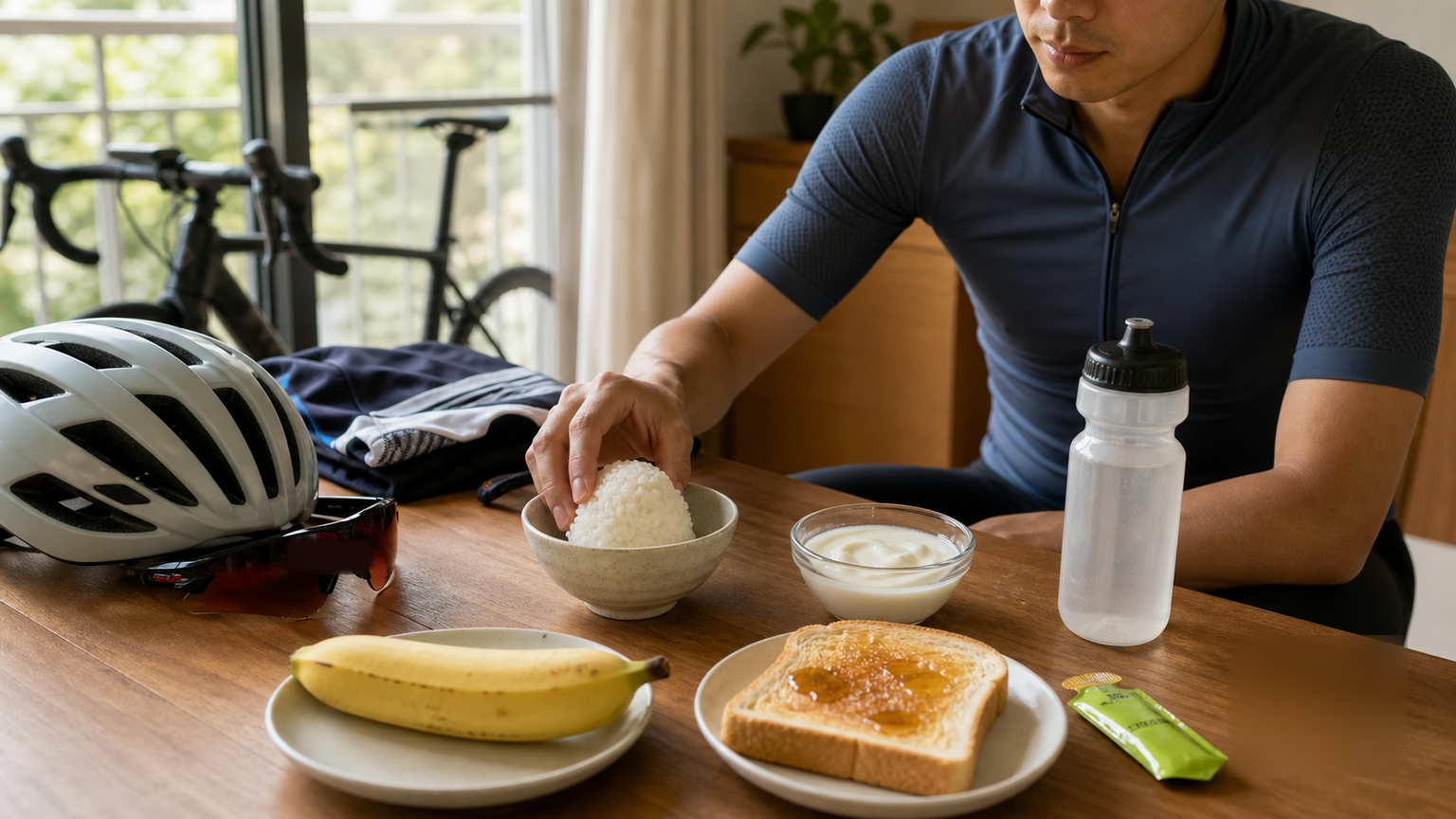
- 2 slices of white toast + jam (approximately 50g carbohydrates)
- 1–2 bananas (25–50g carbohydrates)
- 1–2 convenience store rice balls (40–80g carbohydrates)
- Low-fat yogurt + a small amount of oats (protein + carbohydrate combination)
Avoid: High-fat foods (egg yolk pastries, pork floss bread), high-fiber foods (whole grain nut bars), and large amounts of dairy products (some athletes are lactose intolerant).
30–60 Minutes Before Training: Quick Fuel
If your last meal was more than 3 hours ago, or if you’re training fasted in the early morning, you need a small amount of rapidly absorbed carbohydrates:
- 1 energy gel (approximately 22–27g carbohydrates)
- 300–500 mL sports drink
- Half a slice of white bread + a little honey
- Gummy-style energy supplements
Watch out for “reactive hypoglycemia”: For some sensitive individuals, consuming a large amount of high glycemic index carbohydrates 30–45 minutes before exercise may trigger transient hypoglycemic symptoms (dizziness, fatigue). The solution is to supplement immediately after starting to run/pedal, or choose foods with a lower glycemic index.
The Special Case of Early Morning Fasted Training
Many athletes head out before dawn and can’t eat a full pre-training meal. Research shows that 60–90 minutes of light to moderate intensity (<70% VO₂max) training can still be completed in a fasted state, but:
- Over 90 minutes or high intensity: You must supplement with at least 20–30g of carbohydrates (energy gel or a small banana).
- If pursuing fat adaptation: You can perform fasted low-intensity training under coach guidance, but it’s not suitable for everyone.
- Protein matters too: 15–20g of protein in the morning (e.g., 2 tea eggs from 7-11) can reduce muscle breakdown during training.
Hydration Preparation
Consume 400–600 mL of water 2 hours before training to achieve a hydrated state. If your urine was dark yellow before bed the previous night, you’ll need to drink an additional 500 mL of water after waking up before heading out.
Practical Tips
- Build a personalized pre-training meal list: Find 3–5 foods that don’t upset your stomach and maintain your energy, and practice them repeatedly before race day.
- Rehearse before official races: Only test new foods on training days; never try something for the first time on race day.
- Record training feelings: Note your pre-training meal in your training log and gradually optimize your personal best formula.
- Convenience store backup plan: If you forget your food when heading out, 7-11’s tea eggs (protein) + rice balls (carbohydrates) make an emergency pre-training meal combo.
Conclusion
There is no single standard answer for the pre-training meal, but there is a clear time framework to follow. Eat a full meal 3 hours before, a light meal 1 hour before, and a small supplement 30 minutes before—this three-tier strategy lets you find a suitable solution for any training time. Ultimately, practicing and recording is the only way to find your own optimal pre-training meal formula.
Related Reading
- Energy Supplementation Before Swimming: Dietary Strategies 1–2 Hours Before Training
- Dietary Strategies Before Swimming: What to Eat 1–3 Hours Before Training
- What to Eat Before Exercise: Timing and Content—A Coach’s Guide to Pre-Race Carbs, Protein, and Gut Considerations
- Pre-Race Meal Guide for Road Running: Best Food Combinations 2–3 Hours Before the Start