Hydration Vest vs Handheld Bottle vs Running Belt: A Complete Comparison of Road Running Hydration Methods
Introduction
The importance of hydration for road running performance and safety is beyond question, but the method you choose to carry water can affect long-distance running as much as your choice of shoes and clothing. Hydration packs, handheld bottles, and hydration belts each have their ideal use cases, and Taiwan’s hot, humid climate makes hydration strategy an especially critical topic.
Basic Differences Between the Three Hydration Methods
Hydration Pack / Vest
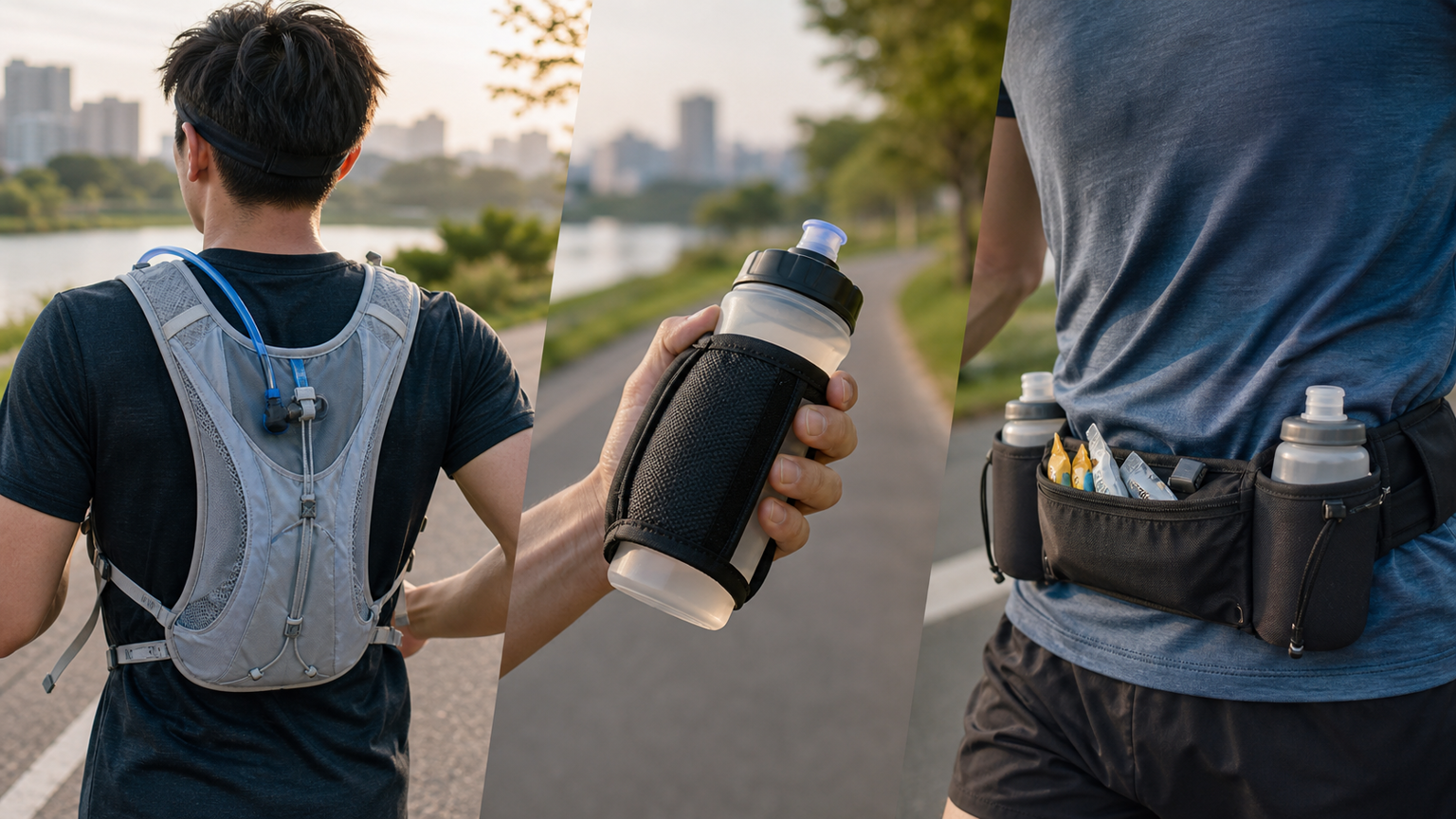
A 1–2L soft bladder is loaded into a backpack that hugs the back, allowing hands-free hydration through a drinking tube. This is the standard equipment for trail runners and ultramarathoners, and is essential for races with no aid stations or where aid stations are spaced more than 10km apart.
Advantages:
- Hands-free, ideal for trail running and runners using trekking poles
- Large capacity, carrying 1–2L or even more
- Modern designs fit snugly with stable center of gravity
- Can also store nutrition, first-aid kits, and extra clothing
Disadvantages:
- Traps heat on the back, very uncomfortable in Taiwan’s summer
- Friction between the pack and back after sweating can cause skin issues
- Cleaning the bladder and tube is troublesome and prone to mold buildup
- Added weight causes shoulder fatigue over long distances
Handheld Bottle
A 250–500ml soft or hard bottle with a hand strap, held in one or both hands while running. Suitable for half-marathon-distance urban road running, offering convenient hydration at low cost.
Advantages:
- Lightweight, does not affect upper-body heat dissipation
- Collapsible for storage after use (soft bottles)
- No need to stop or look down when drinking
Disadvantages:
- Holding on one side can cause left-right imbalance and affect running form (especially noticeable with long-term use)
- Limited capacity; refills needed beyond 1.5 hours
- Prolonged gripping can cause hand fatigue and swelling
Hydration Belt / Race Vest
A soft vest or waist pack worn around the waist, typically equipped with 2–4 soft bottles of 150–200ml or phone pockets, plus gel storage compartments. An increasingly popular middle-ground choice among urban marathon runners and ultramarathoners.
Advantages:
- Low center of gravity, minimal impact on running form
- Hands-free
- Upper-body heat dissipation unaffected
- Can carry both water and nutrition simultaneously
Disadvantages:
- Limited capacity; total bottle volume is usually only 300–500ml
- The belt may bounce during intense running (requires a well-fitted model)
- Heat accumulates around the waist in Taiwan’s summer, somewhat stuffy
Recommendations by Distance and Occasion
| Distance/Occasion | Recommended Method | Notes |
|---|---|---|
| Urban road running under 10km | No water; use aid stations along the route | Taiwan’s road races have high aid station density |
| Half-marathon urban race | Handheld bottle or belt | Depends on personal preference |
| Full-marathon urban race | Belt or none (rely on aid stations) | Depends on personal hydration strategy |
| 30km+ trail running | Hydration pack | Fewer aid stations, greater capacity needed |
| Taiwan summer long-distance training | Belt + bottle | High water demand in summer |
Major Brand Comparison
| Brand/Model | Type | Capacity | Taiwan Price | Highlights |
|---|---|---|---|---|
| Ultimate Direction Race Vibe | Belt | 600ml | NT$2,500 | Ultra-light, standard for trail races |
| Salomon Active Skin 8 | Vest | 1.5L | NT$4,500 | Front soft bottles, mature design |
| Nathan SpeedShot Plus | Handheld | 530ml | NT$800 | Large-capacity handheld, for marathons |
| Hydrapak Shape-Shift 1.5L | Bladder | 1.5L | NT$900 | Compatible with multiple packs |
| Osprey Duro 6 | Pack | 1.5L | NT$3,500 | Versatile for hiking/trail running |
Hydration Bladder Hygiene Issues in Taiwan’s Climate
Taiwan’s hot, humid environment makes hydration bladders highly susceptible to mold growth. Recommended after each use:
- Rinse the bladder and tube immediately with clean water
- Hang the bladder upside down to dry (placing it in the refrigerator can slow bacterial growth)
- Clean once a month with water purification tablets or diluted bleach
- If the bladder develops an odor, soak it in white vinegar for 30 minutes, then rinse thoroughly
Practical Tips
- Aid stations at Taiwan’s summer full-marathon races are typically spaced every 2.5km, so there is no need to carry a large-capacity bladder; a belt is sufficient.
- Trail running beginners are advised to start with a belt, then upgrade to a hydration vest once accustomed to running with gear.
- For handheld bottles, alternate hands every 5km to avoid one-sided imbalance.
- Adjust hydration pack shoulder straps to be snug but not tight, ensuring no bouncing while running—otherwise, your shoulders will definitely chafe after 20km.
Conclusion
There is no absolute right or wrong in choosing a hydration method—it comes down to making the most practical choice based on distance, terrain, and Taiwan’s climate conditions. The belt for urban half-marathons, the hydration vest for trail ultramarathons, and the handheld bottle for daily training each have their ideal use cases. Understanding the characteristics of each method is the key to making the best investment.
Related Reading
- A Complete Comparison of Road Running Hydration Belt Designs: Handheld Bottle vs Belt vs Hydration Vest
- Buying Guide for Road Running Water Bottle Packs: Long-Distance Choices Among Soft Bottles, Belts, and Packs
- Running Hydration Belts and Packs: The Logic Behind Choosing Long-Distance Running Gear
- Trail Running Packs and Bladders: 6 Key Principles for Choosing the Right Gear
單車 一日北高 ( 雙城 ) 肥宅雙人瘋狂行 紀錄片 REACTO
10 年前
類空拍神器 Feiyu Pocket 2s (有優惠連結)三軸穩定 運動攝影機 開箱!比GoPro 還強的滑順視角!三小時長時間錄影 行車記錄器 | 環花東365實測 | 公路車 CT Yeh
4 年前
大家都在開箱的...單車用藍芽對講耳機真的有幫助嗎? SENA BiKom 20 長距離旅遊 & 海鷗繞圈賽 實際體驗心得 / 公路車 / CT Yeh
9 個月前
#PUSHBIKE 原來這麼好玩! 小朋友 滑步車 初體驗 超可愛
6 年前
一日北高前的高裝檢 | 北高 360 | 挑戰11小時的裝備 | 一日雙塔 | 補給
6 年前
3D 列印車褲墊 / 舒適改善? / 無痕 x 分區壓縮 / ATK & Decider系列 / JE22黑科技 / #公路車 #CTYEH
11 個月前
單車 重低音 藍芽喇叭 音質實測 SoundBot SB525 Real Sound Test
8 年前
摔車後補裝備: 好市多新款單車安全帽& Specialized Romin 北高整路屁股都不痛的坐墊 | 一千元居然有MIPS | CT Yeh | 公路車
4 年前