Introduction
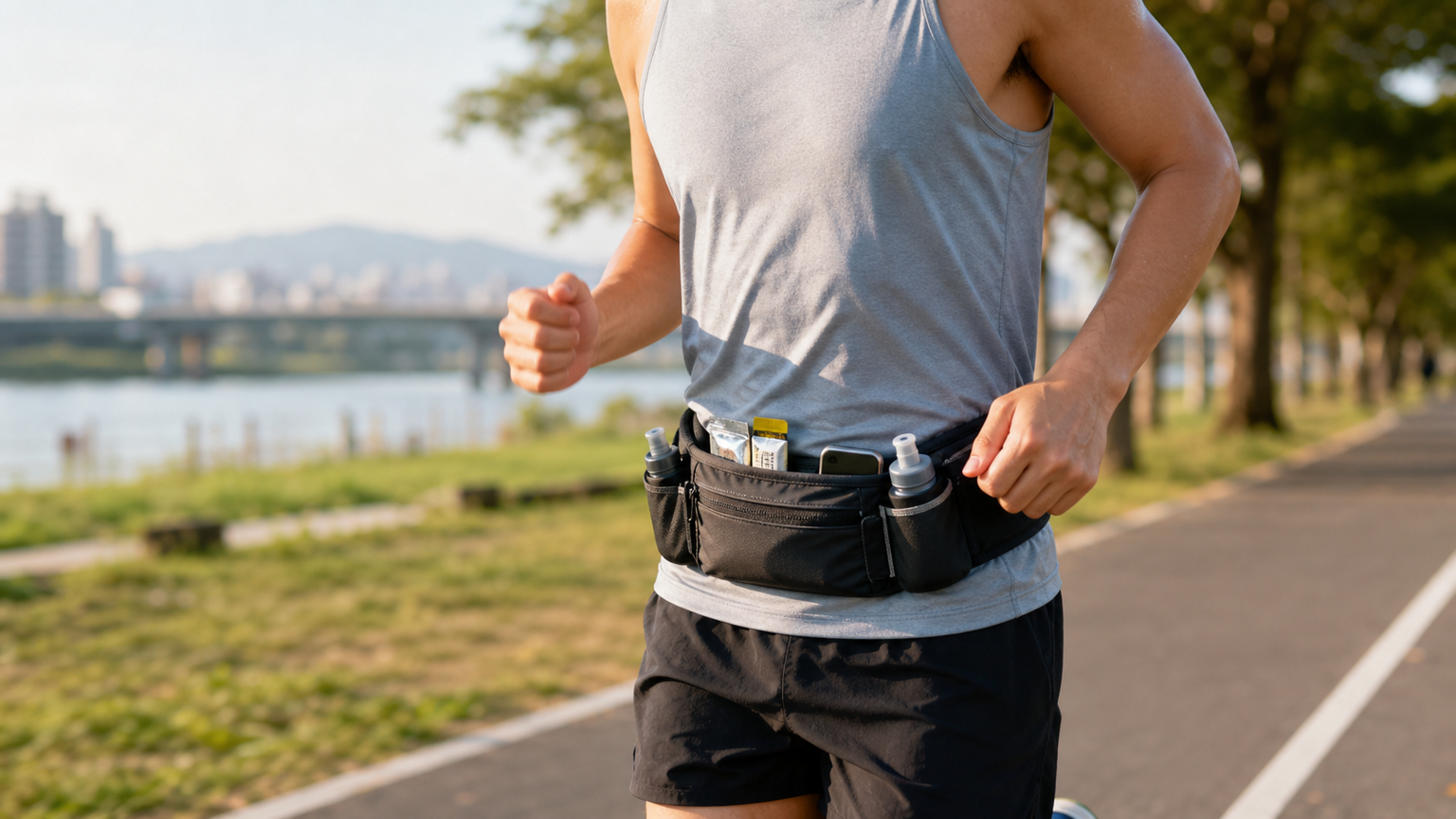
Hydration belts (補給腰帶 / Race Belt) are essential gear for road runners and ultramarathoners to carry supplies during races or long-distance training. Compared to hydration packs, belts do not affect upper-body heat dissipation; compared to handheld water bottles, belts free up your hands. However, a poorly designed belt may bounce with every step, making you want to toss it after just 10km.
Demand for hydration belts among Taiwanese marathon runners is growing, especially among “self-supply” runners who prefer carrying their own energy gels, electrolytes, and phones.
Main Design Types of Hydration Belts
Traditional Hip Belt
A wide elastic belt with 2–4 bottle holders and storage pockets. The wide design (typically 7–10cm) distributes pressure and avoids creating a single pressure point on the iliac crest.
Best for: Long-distance training with 2+ water bottles, summer road running
Front-Pocket Trail Running Vest (Running Vest / Soft Flask Vest)
Although it’s a “vest” form, most designs place the main weight in front chest pockets (one soft flask on each side), with additional pockets at the waist. Visually and functionally, it sits between a belt and a pack. It’s the mainstream choice for trail racing.
Best for: Trail races, ultramarathons, occasions requiring both water and multiple supplies
Slim Race Belt
A minimalist design mainly for carrying energy gels, a phone, and keys, without water bottles. Weight typically does not exceed 30g, minimizing impact on running form. Suitable for city marathoners who rely on official aid stations.
Stretch Running Pouch
A form-fitting pouch made of high-stretch fabric with no rigid frame. Contents are held snugly against the waist by the stretch fabric, making it almost unnoticeable. Capacity is limited (usually fits 2–3 energy gels and one phone).
The Importance of Anti-Bounce Design
The most common complaint about hydration belts is that they “bounce while running.” Design solutions include:
- Form-fitting stretch fabric: The entire belt uses four-way stretch material that conforms to body movement without shifting
- Adjustable buckles: Ensure the belt fits precisely to your waist—neither too loose nor too tight
- Bottle placement design: Bottles are positioned near the body’s center axis or at a low center of gravity to reduce lateral sway
- Soft flasks: They shrink in volume as you drink, preventing the center of gravity from being affected by sloshing half-empty bottles
Comparison of Mainstream Hydration Belts
| Brand/Model | Type | Water Capacity | Pockets | Taiwan Price | Best For |
|---|---|---|---|---|---|
| Nathan QuickStart 2.0 | Belt | 2×355ml | Energy gel slots | NT$1,500 | General long runs |
| Salomon Adv Skin 5 Vest | Vest | 2×500ml | Multiple pockets | NT$5,500 | Trail races |
| Ultimate Direction Race Belt | Race belt | None (pocket type) | Large pocket | NT$1,200 | City marathons |
| Flipbelt Classic | Stretch pouch | None | Full circumference | NT$1,000 | Short distances, phone |
| GoRace Race Belt | Race belt | None | Energy gels, phone | NT$400–600 | Great value, Taiwanese brand |
| Naked Running Band | Stretch pouch | None | Extra-large stretch | NT$1,600 | Large phone users |
Capacity Planning Guide
Using a summer full marathon in Taiwan (4-hour finish) as an example, the average runner needs to carry:
- Energy gels: 4–5 packs (approximately 400–500ml in volume)
- Electrolyte tablets: 1 tube (small, fits in a bottle)
- Phone: 1 unit (if not using a watch), approximately 160–200g
- Race bib safety pins: If the belt has a bib holder, pins can be skipped
The capacity of a typical race belt is sufficient for the above supplies; if you also need to carry emergency medication, credit cards, etc., choose a model with more pockets.
Race Bib Attachment Feature
Some hydration belts feature dedicated bib clips, allowing you to skip safety pins for attaching your race bib to your clothing (avoiding fabric punctures and deformation of lightweight, breathable shirts from pins). For runners in major Taiwanese races (which often use adhesive bibs), this feature offers practical value.
Special Considerations for Taiwan’s Climate
In Taiwan’s summer, the skin-contact area of belts tends to accumulate sweat. Recommendations:
- Choose belts with mesh contact surfaces rather than fully sealed fabric for better breathability
- For sensitive skin, apply a small amount of Body Glide on the contact area to prevent chafing over long distances
- Fully air-dry belts after washing before storing—Taiwan’s humidity increases the risk of mold
Practical Tips
- For your first belt purchase, try it on at a physical store and jog a few steps to feel whether it bounces.
- Prioritize soft flasks—hard bottles produce noticeably more sway.
- The belt should sit directly above or slightly higher than the hip bone (anterior superior iliac spine), not on the hip bone itself, or prolonged running will cause pressure discomfort.
- Taiwanese brand GoRace’s race belt offers exceptional value; beginners don’t need to start with a high-priced model.
Conclusion
Hydration belts are a high-value investment among road running gear. A well-designed belt lets you control your fueling pace during a race without depending on the location and timing of aid stations. Choose based on your primary race type—a lightweight race belt for city marathons, a vest-style pack for trail ultramarathons—and make the best decision for your needs.
Related Reading
- Running Vests and Hydration Packs: Gear Selection Strategies for Ultramarathons and Long-Distance Road Running
- Running Hydration Belts and Packs: The Logic Behind Choosing Long-Distance Fueling Gear
- Hydration Packs vs. Handheld Bottles vs. Hydration Belts: A Complete Comparison of Road Running Hydration Methods
- Road Running Hydration Pack Buying Guide: Capacity Planning and Harness System Comparison for Trail Ultramarathons
一日北高前的高裝檢 | 北高 360 | 挑戰11小時的裝備 | 一日雙塔 | 補給
6 年前
#公路車 #Fitting 靠人工智慧APP 幫你調整單車
6 年前
大家都在開箱的...單車用藍芽對講耳機真的有幫助嗎? SENA BiKom 20 長距離旅遊 & 海鷗繞圈賽 實際體驗心得 / 公路車 / CT Yeh
9 個月前
摔車後補裝備: 好市多新款單車安全帽& Specialized Romin 北高整路屁股都不痛的坐墊 | 一千元居然有MIPS | CT Yeh | 公路車
4 年前
單車 一日北高 ( 雙城 ) 肥宅雙人瘋狂行 紀錄片 REACTO
10 年前
3D 列印車褲墊 / 舒適改善? / 無痕 x 分區壓縮 / ATK & Decider系列 / JE22黑科技 / #公路車 #CTYEH
11 個月前
用了AirTag 單車就不怕被偷?盲點大測試 結果… |公路車|CT Yeh
5 年前
96聯賽 桃園市長盃 歷屆各路段大數據攻略 從菁英組到新手組的平均瓦數、均速、平均時間 x 賽前探路
5 年前