Introduction
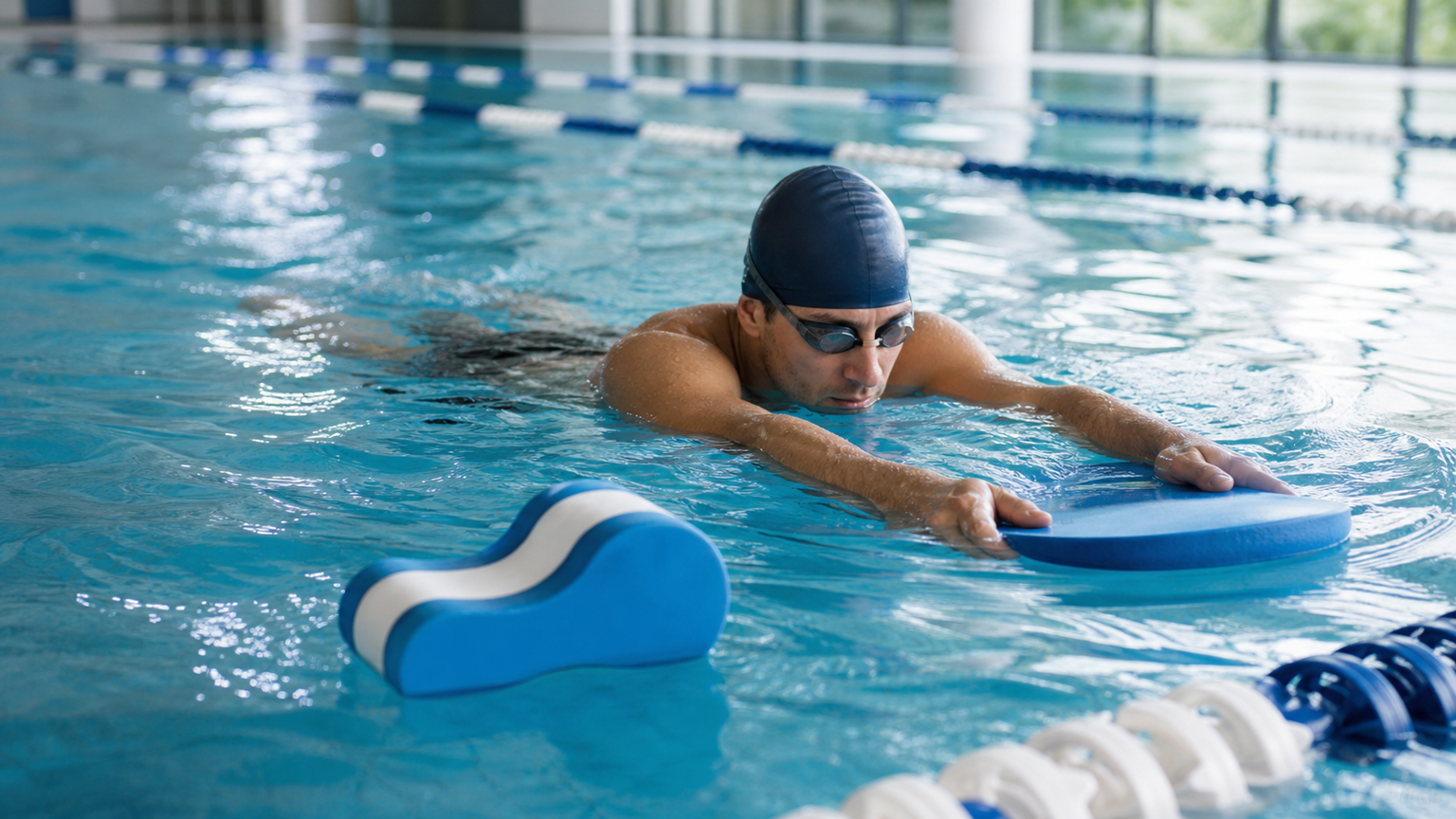
Walk into the equipment room of any swimming pool, and you will almost certainly see two tools: the kick board and the pull buoy. They are the most common swimming training aids, but surprisingly, many swimming enthusiasts have many misconceptions about how to use them correctly.
“Kick boards are for training the legs, and pull buoys are for training the arms” — this description is roughly correct, but it is overly simplistic, leading many people to misuse these tools and even unknowingly reinforce poor swimming patterns.
Kick Board: More Than Just a “Leg Training Tool”
The primary purpose of the kick board is to keep the upper body still, allowing the swimmer to focus on leg movements. However, the benefits of using a kick board go far beyond that — it is also a tool for diagnosing physical issues.
What to observe when using a kick board:
- Do the legs sink? (An indicator of insufficient ankle flexibility)
- Does the body snake side to side? (An indicator of asymmetrical kicking)
- Do the legs feel especially labored when kicking? (An indicator of kicking technique efficiency)
How to use it correctly:
- Place both hands on the front edge or sides of the kick board, with elbows naturally extended — do not bend them excessively (bending the elbows causes the shoulders to shrug, affecting the body’s horizontal alignment)
- Keep the head in a normal position; do not lift the head excessively just because you are holding the kick board
- Note: Many people hold their heads too high when using a kick board (because extending the arms to hold the board forces the head up), and this position does not represent the correct head position for swimming
Common misuses:
| Misuse | Problem |
|---|---|
| Over-reliance on the kick board (using it every session) | Lacks integrated swimming practice; fails to transfer leg technique to full swimming |
| Hips sink during kick board drills | Indicates ankle flexibility needs work, yet continuing the drill reinforces compensatory movements |
| Using the kick board for long-distance relaxed swimming | The kick board is not a relaxation tool; leg training still expends energy |
Pull Buoy: Not a “Shortcut Tool”
The pull buoy is held between the thighs, allowing the legs to float without kicking, so the swimmer can focus on arm stroke technique. However, it is often misunderstood as a “rest alternative for when the legs are tired.”
The true training purposes of the pull buoy:
- Improve feel for the water and stroke efficiency: Removing the interference of kicking lets the swimmer fully sense the propulsion generated by the arm stroke, enhancing palm sensitivity to the water
- Practice stroke technique details: Without the support of kicking, any deviation in the arm pull path is immediately reflected in speed loss, making it easier to spot problems
- Maintain technique after fatigue: In the latter stages of endurance training, the pull buoy gives the legs a brief rest while maintaining stroke training volume
How to use it correctly:
- Place the pull buoy between the upper thighs (near the hips), not between the knees (it tends to slip and alters body position)
- Let the legs relax completely, allowing the buoyancy of the pull buoy to support the lower body
- Focus on stroke rhythm, hand entry position, and catch quality
| Comparison | Kick Board | Pull Buoy |
|---|---|---|
| Primary purpose | Leg technique training | Arm stroke technique training |
| Body involvement | Upper body still, lower body active | Lower body still, upper body active |
| Assistive buoyancy | Upper body | Lower body |
| Companion tools | Often paired with goggles to observe the legs | Often paired with hand paddles to enhance effect |
| Suitable distance | Primarily 25–200m | 25–400m |
Hand Paddles: High-Efficiency Tools Prone to Injury
Note: In Chinese, “划手板” can sometimes refer to the pull buoy and sometimes to hand paddles. This section provides additional explanation on the use of hand paddles.
Hand paddles increase the surface area of the palms, significantly enhancing feel for the water and stroke power, but they also greatly increase the load on the shoulder joints. Recommendations:
- Beginners and those with shoulder injuries should avoid using them
- Even advanced swimmers should not use them for extended periods
- If shoulder discomfort occurs during use, stop immediately
The Importance of Integrated Training
Regardless of which aid is used, the ultimate goal is to improve the efficiency of full swimming. The training principle is: aid drills and full swimming should be maintained at a ratio of roughly 1:3 — over-reliance on aids can degrade the coordination between the legs and the arm stroke.
Practical Advice
- Include at least one training session per week with no aids at all: This is the most honest reflection of your actual swimming ability
- When using a pull buoy, consciously “feel the water”: Slow down the movement, feel the resistance of the hand entering the water, and develop water sensitivity
- Do full swimming immediately after kick board work: This allows the leg movement patterns just practiced to be integrated into full swimming right away
Conclusion
Training aids are tools coaches give to athletes, not shortcuts for athletes to avoid training difficulty. Correctly understanding the design purpose of the kick board and pull buoy — and using them with clear training intent every time — is the only way to truly benefit from these tools, rather than letting them become accomplices in reinforcing bad habits.
Related Reading
- How to Use Resistance Aids (Hand Paddles/Resistance Shorts) Correctly
- Hand Paddles, Kick Boards, Fins: The Correct Use of Swimming Training Aids and the Shoulder Injury Red Line
- In-Water Resistance Training: Transferring Swimming Aid Work to Functional Land Training
- Using Swimming Aids Correctly: Hand Paddles, Pull Buoys, Fins, Snorkels — A Coach Shows You How to Use the Tools Right
洗單車神器 吹水機! 實際洗車用用看 暴力洗鍊條大法 | 公路車 | CT Yeh
4 年前
訓練台體驗) 2019台北自行車展 三大家 訓練台體驗 Tacx Neo Flux 2 Xepdo Apx Wahoo Kickr
7 年前
#PUSHBIKE 原來這麼好玩! 小朋友 滑步車 初體驗 超可愛
6 年前
#公路車 #Fitting 靠人工智慧APP 幫你調整單車
6 年前
西進武嶺 免費訓練分析服務 Intervals | 練不夠還是練過頭?你哪一種類型選手?AI模型告訴你! | 備戰神器 | 公路車 訓練 | CT Yeh
4 年前
滑雪新手們慘摔學習全紀錄(請開字幕),滑雪好好玩 | Snowboard + Ski | 岩原 スキー場 | 滑雪APP使用 | GoPro Max
6 年前
一日北高常見問題大集合 | 攻略 | 路線 | 訓練 | 補給 | 自行車 單車 | 一日雙城 | 雙塔 | TWB北高360 | 屁股痛
6 年前
碟煞公路車 銑面器 !? 原來銑完差這麼多! 降低蹭碟機率! | TIME 公路車 保養小記錄 | CT Yeh
3 年前