Introduction
Fatigue, stagnant training performance, and easy breathlessness—if your swimmer experiences all of these, and training volume and sleep are not the issue, it may be a precursor to iron-deficiency anemia. Sports-related iron deficiency is extremely common among endurance athletes. While swimmers do not face the “footstrike hemolysis” problem that runners do, they still have several unique pathways of iron loss.
Iron is a core component of hemoglobin, responsible for transporting oxygen from the lungs to the muscles. When iron is deficient, even a well-trained cardiorespiratory system will see reduced oxygen delivery, directly impacting aerobic energy production.
Pathways of Iron Loss in Swimmers
- Sweat iron loss: Each liter of sweat contains approximately 0.3–1.2 mg of iron; high training volumes can lead to considerable iron loss through perspiration.
- Gastrointestinal microbleeding: After high-intensity training, intestinal blood flow temporarily decreases, which may cause microbleeding and subsequent iron loss.
- Intravascular hemolysis: The mechanical destruction of red blood cells caused by repeated muscle contractions during kicking (though milder than in running, it still occurs).
- Elevated hepcidin: The acute inflammatory response after intense training raises hepcidin levels, temporarily suppressing intestinal iron absorption.
- Inadequate dietary intake: Some athletes, particularly female athletes, restrict their diets for weight management, resulting in insufficient iron intake.
Daily Iron Requirements
| Population | Recommended Daily Intake |
|---|---|
| Adult males | 10 mg |
| Adult females (18–50 years) | 15 mg |
| Female swimmers | 18–20 mg (recommended) |
| Male swimmers | 12–15 mg (recommended) |
| During pregnancy | 27 mg |
Dietary Iron Supplementation Strategies
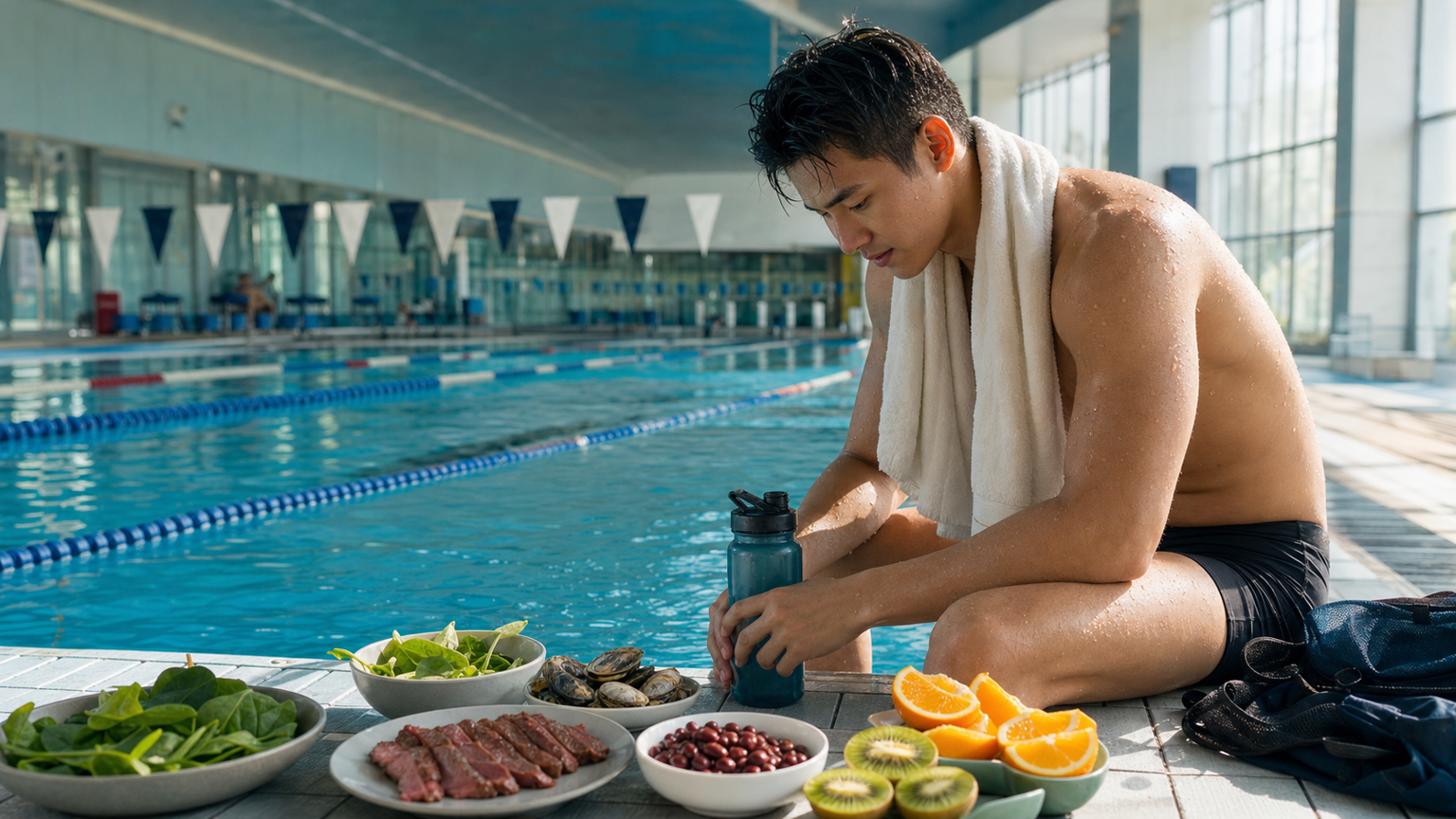
Heme Iron (animal sources, absorption rate 15–35%)
- Pork liver, chicken liver (richest sources)
- Beef, pork
- Shellfish (clams, oysters)
- Tuna, sardines
Non-heme Iron (plant sources, absorption rate 2–20%)
- Spinach, amaranth, red amaranth
- Tofu, dried tofu
- Black sesame
- Oats, red beans
Strategies to Enhance Iron Absorption
- Pair with vitamin C: Consuming iron-rich foods with kiwi, orange juice, or bell peppers can increase non-heme iron absorption by 2–6 times.
- Avoid inhibitors in the same meal: Tannins and calcium in tea, coffee, and milk inhibit iron absorption; it is recommended to space them at least 1 hour apart from iron-containing meals.
- Cook with cast iron: Using cast iron cookware to prepare acidic foods (such as tomato sauce) allows small amounts of iron to leach into the food.
Monitoring Recommendations
Swimmers are advised to undergo blood tests twice a year, including:
- Hemoglobin
- Serum ferritin: an indicator of iron stores; <30 ng/mL indicates potential deficiency
- Hematocrit
- Mean corpuscular volume (MCV)
Special note: When serum ferritin is at the lower end of the normal range (30–50 ng/mL), hemoglobin may still be normal, but training performance may already be affected—this is called “iron depletion,” which occurs earlier than anemia.
Use of Iron Supplements
If dietary adjustments fail to improve ferritin levels, iron supplementation may be considered under the guidance of a physician or sports medicine specialist:
- Oral iron supplements are best taken on an empty stomach or in a low-carb environment (for optimal absorption)
- May cause gastrointestinal discomfort (constipation, bloating); if symptoms are pronounced, switching to every-other-day dosing is an option
- Never over-supplement on your own: Excess iron (serum ferritin >300 ng/mL) is toxic to the heart and liver
Practical Recommendations
- Female swimmers, vegetarian athletes, and athletes undergoing weight management are the three high-risk groups for iron deficiency; testing every six months is recommended.
- Pre-season testing can identify problems early, avoiding the discovery of iron deficiency at the peak of the season.
- Do not consume high-iron foods immediately after training—the acute inflammation after exercise raises hepcidin, making iron absorption least efficient at that time; it is recommended to supplement before training or 3–4 hours after training.
Conclusion
Iron is the “invisible guardian” of swimmer performance—only with sufficient iron can your training efforts be fully converted into results. Incorporate regular blood monitoring into your annual plan, diversify your dietary iron sources, and you will maintain abundant energy and consistent performance throughout the season.
Related Reading
- Iron Supplementation for Swimmers: Trace Mineral Loss in Long-Term Water Training
- Iron Supplementation for Swimmers: Prevention of Anemia in Female Athletes
- Iron and Hemoglobin for Swimmers: The Nutritional Foundation of Aerobic Capacity
- Iron and Anemia: A Nutritional Issue Female Endurance Athletes Cannot Ignore
福隆鐵人團練隨拍
8 年前
CT暗黑廚房) 車友必備 宇宙無敵鮮蚵湯 幫助訓練恢復 天然食補 好市多 超肥鮮蚵 破PR
7 年前
靠單車減肥35公斤 心得分享與整理
7 年前
[防寒衣體驗] 鐵人魂 三鐵 防寒衣試穿會 於松運 深水游泳池 鯨魚池
8 年前
西進武嶺 免費訓練分析服務 Intervals | 練不夠還是練過頭?你哪一種類型選手?AI模型告訴你! | 備戰神器 | 公路車 訓練 | CT Yeh
4 年前
一日北高常見問題大集合 | 攻略 | 路線 | 訓練 | 補給 | 自行車 單車 | 一日雙城 | 雙塔 | TWB北高360 | 屁股痛
6 年前
2016/05/13 單車 冷水坑下滑
10 年前
[教學] Premiere 影片 手震 修正 教學 防抖 單眼 影像 GoPro 穩定 Video Stabilization
8 年前