Cardiopulmonary Stress of Riding in Hot Environments: Physiological Adaptation for Taiwan Summer Training
Introduction
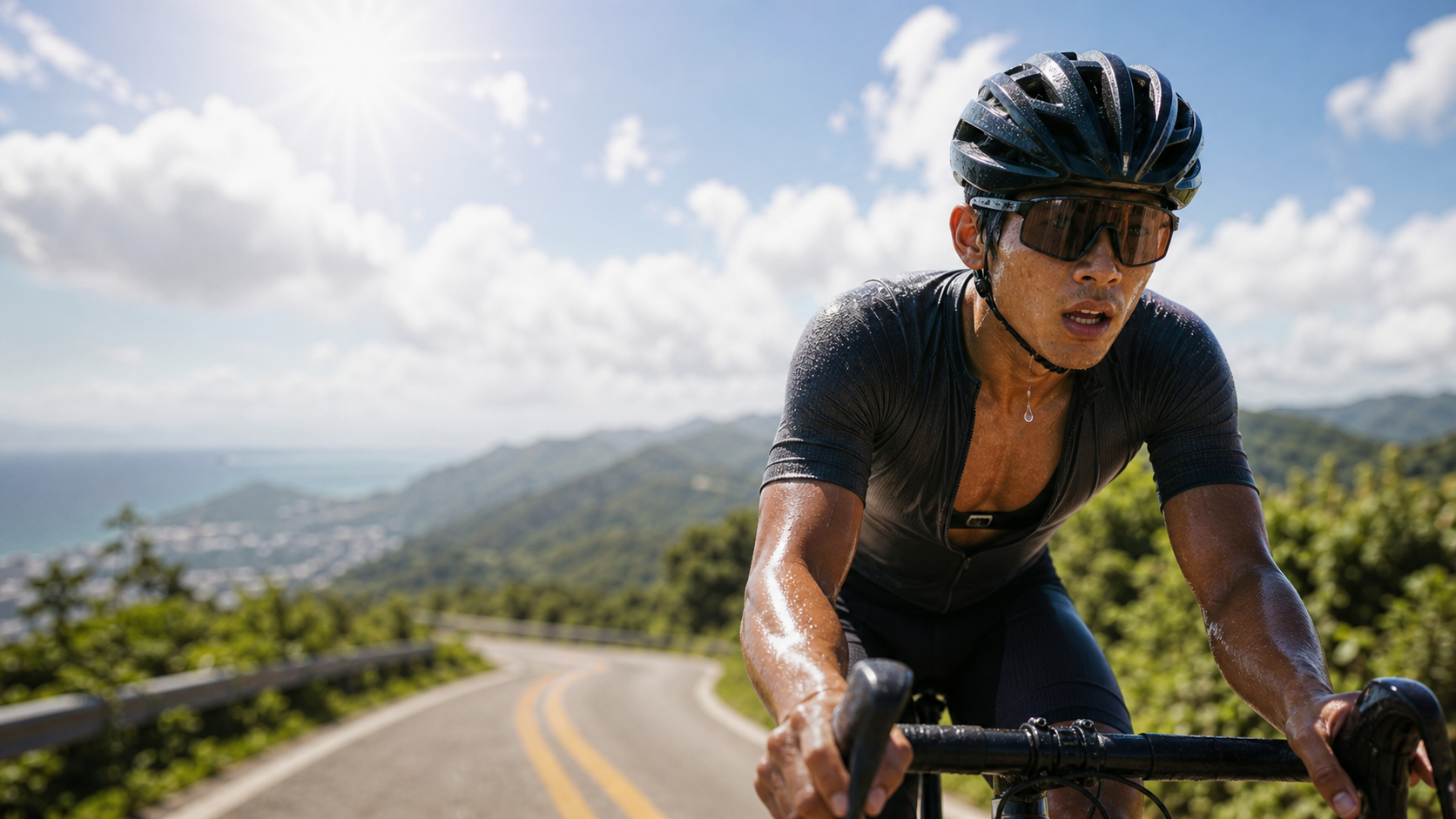
In Taiwan’s summer, temperatures in the plains of the central and southern regions frequently exceed 35°C, combined with humidity as high as 80–90%. The physiological challenge this environment poses to cyclists goes far beyond simply being “a bit hot.” Hot environments significantly increase the burden on the cardiopulmonary system—at the same intensity, heart rate can be 10–20 bpm higher than in cooler weather, and power output also drops. Understanding the physiological effects of hot environments is essential for making correct intensity adjustments and safety decisions during Taiwan’s summer training.
Effects of Hot Environments on the Cardiopulmonary System
When riding in high heat, the body faces two simultaneous demands: muscle activity requires blood flow, and skin cooling also requires blood flow. This creates a “blood flow competition” phenomenon:
Elevated core temperature:
- For every 1°C rise in body temperature, heart rate increases by approximately 8–10 bpm
- When body temperature exceeds 40°C, exercise capacity drops sharply
- Above 41°C enters the danger zone for heat stroke
Increased cardiovascular stress:
- Skin vasodilation reduces effective circulating blood volume
- Heart rate rises compensatorily to maintain cardiac output
- Maximum power output can drop by 5–10% as a result
| Environmental Condition | Heart Rate Impact | Power Impact | Notes |
|---|---|---|---|
| Cool (15–20°C) | Baseline | Baseline | Normal training |
| Warm (25–30°C) | +5–8 bpm | −2–5% | Hydrate adequately |
| Hot (30–35°C) | +10–15 bpm | −5–10% | Reduce intensity |
| Very Hot (>35°C) | +15–20 bpm | −10–15% | Consider moving indoors |
Heat Acclimatization
The good news is that the body can gradually adapt through repeated exposure to hot environments, typically requiring 10–14 days of continuous training in hot conditions:
Physiological changes from heat acclimatization:
- Increased plasma volume (can increase by 4–15%)
- Lower sweating threshold and higher sweat rate (more efficient cooling)
- Lower core temperature at the same workload
- Improved efficiency of skin blood flow
- Lower heart rate (at the same intensity), with exercise performance restored
The good news for Taiwanese cyclists is that after each summer of training, the body naturally builds heat acclimatization, and when facing occasional hot weather in autumn and winter, resistance is stronger.
Strategic Adjustments for Summer Training
Time adjustments:
- 5–7 AM is the coolest period of the day and the best time for summer outdoor training
- The Taipei Basin suffers from severe heat island effects; avoid high-intensity outdoor training between 2–4 PM
Intensity adjustments:
- When targeting heart rate, accept the fact that power output will be lower at the same heart rate
- Don’t force yourself to chase winter power numbers; maintaining the training plan matters more than “chasing watts”
- Drop summer high-heat sessions by one intensity zone (e.g., change from Zone 4 to Zone 3)
Hydration strategy:
- Consume 500ml of fluid 2 hours before riding to ensure adequate hydration
- Consume 500–750ml per hour (increase to 750–1000ml in high heat and humidity)
- Pay attention to electrolyte replacement; excessive plain water intake can dilute blood sodium
Prevention of Heat Exhaustion and Heat Stroke
Taiwan summer riding requires special attention to heat-related illnesses:
- Heat exhaustion: Heavy sweating, dizziness, nausea, cool and clammy skin. Management: stop exercising, move to a shaded area, consume electrolyte-containing drinks
- Heat stroke: Hot, dry skin or absence of sweating, confusion, body temperature exceeding 40°C. This is a medical emergency requiring immediate ambulance call
Indicators for deciding whether to stop riding:
- Heart rate more than 20 bpm above expected and unable to come down
- Dizziness or blurred vision
- Cessation of sweating (indicating severe dehydration)
The Summer Advantage of Indoor Trainers
With harsh outdoor riding conditions in Taiwan’s summer, a trainer paired with a fan is a smart choice for many cyclists:
- Allows precise control of training intensity, unaffected by environmental temperature
- A fan provides adequate cooling, keeping heart rate closer to true exercise capacity
- Safe with no traffic risk
Practical Advice
- Check urine color before each training session in summer (pale yellow = well hydrated, dark yellow = needs fluids)
- Carry enough water bottles; for long-distance rides in Taiwan’s summer, prepare at least 1000ml or more
- White or light-colored cycling jerseys absorb less radiant heat and are better than dark-colored clothing
Conclusion
Taiwan’s summer heat and humidity are a shared challenge for all riders, but they also present an opportunity to build heat acclimatization. Mastering the correct principles of intensity adjustment and hydration strategy not only allows for safe summer training—when the cool autumn weather arrives, your cardiopulmonary capacity will also see unexpected improvements.
Related Reading
- Heat Acclimatization and Cycling Performance: Physiological Adaptation for Taiwan Summer High-Temperature Training
- Cycling Heat Acclimatization Training: Coping Strategies for Taiwan Summer High Temperatures
- Heat Acclimatization Training: Physiological Strategies to Improve Cycling Performance in Taiwan’s Summer
- Heat Acclimatization Training: Performance Enhancement Strategies in Taiwan’s Summer Heat
#公路車 #Vo2Max #最大攝氧量 測驗 體驗 | 心肺測試
6 年前
TBA 北高360 逆風爆熱再送空汙 苦行挑戰賽全記錄 4K沈浸式臨空畫質| 公路車 | CT Yeh
3 年前
備戰 戀戀197 賽前關門點分析 西濱團練 #公路車 4K高畫質
6 年前
單車 一日北高 ( 雙城 ) 肥宅雙人瘋狂行 紀錄片 REACTO
10 年前
一日北高前的西濱集訓 | 跟著11小時軍團 | 300W踩不動的大逆風 | 輪車破風差幾瓦?
6 年前
JE22 百里任務體驗,心跳不能過150,三小時內有可能...? 沒有天時地利難度有多高? / 公路車 / CT Yeh
1 年前
一起升級!海鷗盃LSD團練...JJSC Zone2招待 騎到手抖 / 公路車 / CT Yeh
1 天前
大武山後門26%歡樂陡坡!JJSC南台灣單車行Day2 / 被颱風追著跑 / 公路車 / CT Yeh
2 年前