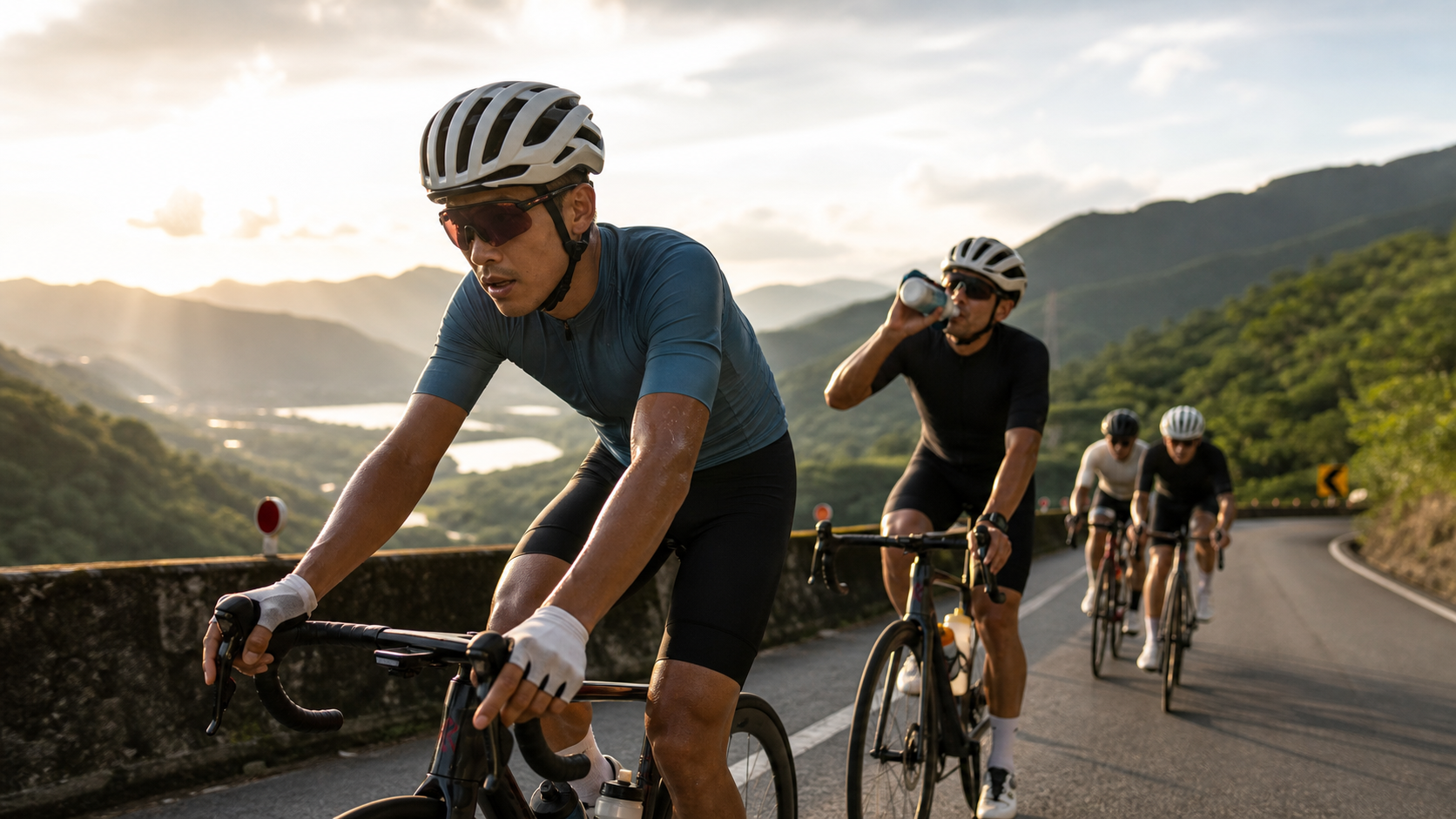
Introduction
Taiwan round-island rides, Wutou summit attempts, and long rides through the East Rift Valley… these activities often involve 4–6 hours or even longer in the saddle. Compared to 1–2 hour training rides, Long Slow Distance (LSD) rides present a completely different physiological challenge. The fuel system, metabolic shifts, cardiorespiratory endurance, and mental resilience are all pushed to their limits during this time. This article analyzes the characteristics of long-distance riding from a physiological perspective, helping you prepare for and complete every long-distance challenge more scientifically.
Temporal Shifts in the Energy System
The body’s primary fuels are glycogen (carbohydrates) and fat. During long-distance rides, the ratio of these two fuels changes over time and with intensity:
| Riding Time | Glycogen Contribution | Fat Contribution | Notes |
|---|---|---|---|
| 0–1 hour | 70–80% | 20–30% | Energy is ample; intensity can be slightly higher |
| 1–2 hours | 60–70% | 30–40% | Begin refueling |
| 2–3 hours | 50–60% | 40–50% | Glycogen gradually depletes |
| 3–4 hours | 30–50% | 50–70% | Carbohydrate intake becomes more critical |
| 4–6 hours | 20–40% | 60–80% | Fat is the primary fuel |
“Hitting the Wall (Bonk)” occurs when glycogen is nearly depleted, typically after 3–4 hours if refueling is insufficient. Symptoms include sudden leg weakness, dizziness, and mental confusion. The preventive measure is continuous carbohydrate intake.
Cardiorespiratory Challenges of Long Distances
Progressive Heart Rate Drift: As mentioned earlier, heart rate gradually rises at the same power output during long-distance rides, potentially drifting upward by 10–20 bpm after 4–6 hours of riding.
Decline in Maximal Power Output: Research shows that after 4 hours of riding, maximal 1-minute power can drop by 10–20%, and maximal 5-minute power can drop by 15–25%. This results from a combination of neuromuscular fatigue and metabolic fatigue.
Changes in Breathing Efficiency: After prolonged riding, the respiratory muscles (diaphragm, intercostal muscles) also fatigue, reducing breathing efficiency and creating a subjective feeling of “being more out of breath.”
Pacing Strategy for Long-Distance Rides
Conservative early, steadfast late is the golden rule for long-distance riding:
- First 1–2 hours: Ride 5–10% below target intensity to allow the body to reach optimal aerobic metabolic state
- Middle section (2–4 hours): Maintain target intensity (primarily Zone 2), focus on refueling
- Later section (after 4 hours): Accept that power may decline slightly; prioritize finishing
For Taiwan’s long-distance challenge events (such as Wutou Twin Towers, round-island): It is recommended to ride slightly conservatively during the first 30% of each day’s riding time, ensuring you still have energy in the later stages to handle unexpected situations.
Long-Distance Refueling Strategy
Refueling is the key to success or failure in long-distance riding:
Fluid Intake:
- Target 500–800ml per hour (including electrolytes)
- Total requirement for a 6-hour ride is approximately 3–5 liters
- Take small, frequent sips to avoid stomach discomfort from drinking too much at once
Carbohydrate Intake:
- Minimum 60g of carbs per hour (about 2 energy gels + 1 energy bar)
- After training your gut, you can increase to 90–120g per hour
- Taiwan’s convenience stores (7-Eleven, FamilyMart) are densely distributed and can serve as refueling stops
Refueling Timing: Don’t wait until you’re hungry to eat. Refuel at fixed intervals every 45–60 minutes, even if you don’t feel hungry yet.
Recovery After Long Rides
A 4–6 hour long-distance ride causes significant muscle damage and glycogen depletion, and recovery takes time:
- Within 30 minutes after the ride: Consume high-carbohydrate + protein foods (such as banana + soy milk, or convenience store rice balls + milk)
- That evening: Eat a normal dinner and drink an additional 2–3 glasses of water
- The next day: Do an easy recovery ride of 30–60 minutes in Zone 1, or rest completely
- Full recovery: Typically requires 48–72 hours
Practical Tips
- Bring enough supplies; on Taiwan’s mountain routes, convenience stores can be far apart (especially in the East Rift Valley)
- Wear cycling clothing with pockets for easy storage of energy foods
- Ensure adequate sleep (7–8 hours) the night before a long ride; sleep deprivation significantly impairs long-distance performance
Conclusion
Long-distance endurance riding is a dialogue between body and mind. By fully understanding the energy system, cardiorespiratory responses, and pacing strategies, you can turn every long ride into not just “getting through it,” but completing it with rhythm, while deeply experiencing the magnificent landscapes of Taiwan’s mountains and seas.
Related Reading
- Managing Energy for Rides Over 10 Hours: Fatigue Curves and Pacing Adjustment Strategies
- Fat Adaptation Training: Teaching Your Body to Burn Fat More Efficiently
- A 4-Hour Long Ride Refueling Plan: Strategies for Uninterrupted Fuel Supply
- Energy Intake Schedule for Long Rides: Practical Implementation of Hourly Carbohydrate Consumption
2016/4/20 - 中社路 夜騎 半年甩肉14KG 後測
10 年前
#公路車 #Vo2Max #最大攝氧量 測驗 體驗 | 心肺測試
6 年前
西進武嶺 免費訓練分析服務 Intervals | 練不夠還是練過頭?你哪一種類型選手?AI模型告訴你! | 備戰神器 | 公路車 訓練 | CT Yeh
4 年前
一日北高/長距離團騎 常見問題補充篇 / 組團或跟團的眉角 / 壯車友容易被瘦車友慢性拉爆 / 原來屁股痛可能是這個原因...? / 風場配速法 / 公路車 / CT Yeh
2 年前
一起升級!海鷗盃LSD團練...JJSC Zone2招待 騎到手抖 / 公路車 / CT Yeh
1 天前
一日北高前的高裝檢 | 北高 360 | 挑戰11小時的裝備 | 一日雙塔 | 補給
6 年前
#公路車 #西進武嶺 配速配瓦實驗 坡度分析 四小時內攻略 建大盃 NeverStop #西進武嶺攻略
6 年前
一日北高 11小時 賽後心得分享篇 | TWB北高360 | 一日雙城 | 單車 | 公路車
6 年前