The Impact of Taiwan's Summer Heat on Pacing: Pace Adjustments During the Heat Acclimatization Period
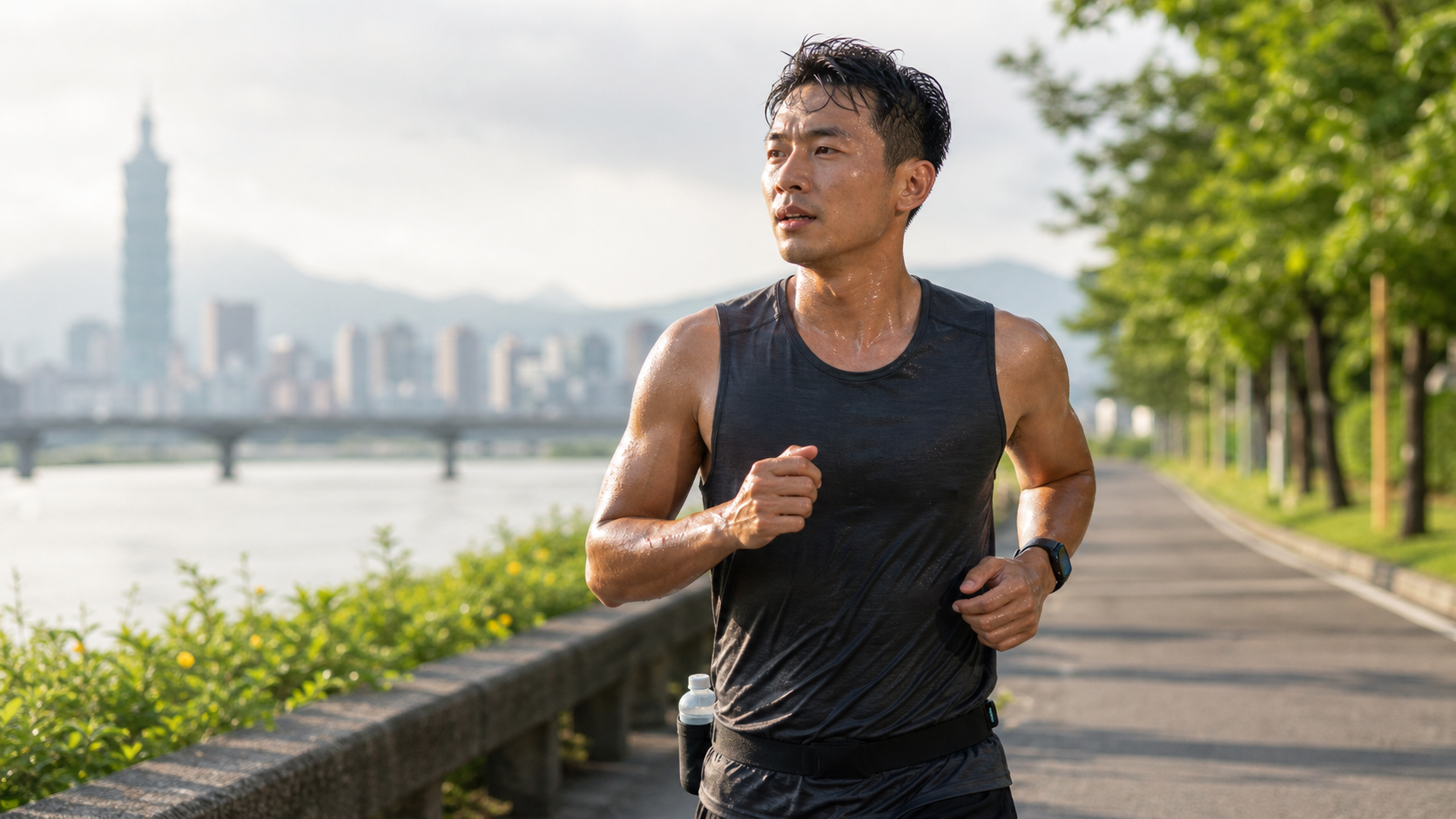
Introduction
Summer in Taiwan is a severe test for runners. In Taipei’s urban area in July, temperatures can reach 28°C as early as 6 a.m., combined with relative humidity above 80%. Even experienced runners often feel that “at the same pace, today feels especially tough.” This is not an illusion but a genuine physiological phenomenon.
The Physiological Effects of Heat on Running
1. Additional Burden of Thermoregulation
The human core temperature must be maintained within a narrow range of 37 to 38°C. In hot environments, the efficiency of heat dissipation through the skin (radiation, convection) decreases, forcing the body to rely more heavily on evaporative cooling through sweating. This requires:
- More blood flow to the skin for heat dissipation (reducing blood flow to working muscles)
- Increased cardiac output per minute (higher heart rate at the same pace)
- Increased sweat secretion (leading to reduced plasma volume, further decreasing efficiency)
2. Cardiac Drift in Hot Environments
During long runs in the heat, even when maintaining the same pace, heart rate will gradually climb—potentially rising 5 to 8 bpm every 20 minutes. This drift becomes especially pronounced when temperatures exceed 26°C.
3. The Critical Role of Humidity
When temperatures are high but humidity is low (such as in dry desert climates), sweat evaporation is efficient; Taiwan’s problem is high temperature combined with high humidity, making it difficult for sweat to evaporate and significantly reducing heat dissipation efficiency.
Quantified Impact of Temperature and Humidity on Pacing
According to international research, the following are pace adjustment recommendations for different temperature and humidity conditions compared to optimal running conditions (10-12°C, 50% humidity):
| Temperature | Relative Humidity | Recommended Pace Slowdown | Training Volume Adjustment |
|---|---|---|---|
| 18-22°C | 60% | No adjustment needed | Normal |
| 23-25°C | 70% | Slow down 10-15 sec/km | Slightly reduced |
| 26-28°C | 75% | Slow down 20-30 sec/km | Reduce 10-15% |
| 29-31°C | 80% | Slow down 35-50 sec/km | Reduce 20-30% |
| 32°C and above | 85%+ | Slow down 50+ sec/km | Consider moving indoors |
For outdoor training in Taiwan from July to September, most time periods fall within the “slow down 20 to 40 sec/km” range.
The Benefits of Heat Acclimatization
The good news is: by consistently training in hot environments, the body undergoes heat acclimatization within 7 to 14 days, including:
- Increased plasma volume (thinner blood, higher heat dissipation efficiency)
- Lowered sweating threshold (faster onset of cooling)
- Reduced electrolyte loss in sweat (more electrolyte-efficient)
- Lower heart rate at the same temperature (improved efficiency)
After full heat acclimatization (approximately 14 days), many runners can recover their pace in hot conditions to 80 to 90% of their cool-season levels.
Safety Strategies for Summer Training
Hydration Strategy:
- Drink 400 to 500 ml of water 30 minutes before running
- Replenish 150 to 250 ml every 20 to 30 minutes
- Replenish based on body weight difference after running (1,000 to 1,500 ml per 1 kg lost)
- For runs exceeding 60 minutes, electrolytes must be supplemented—water alone is not sufficient
Time Slot Selection:
- Prioritize 5 to 7 a.m., the coolest time of day during Taiwan’s summer
- Avoid the high-radiation period from 9 a.m. to 5 p.m.
- Well-lit evening hours (8 to 10 p.m.) are another acceptable option
Warning Signs of Heat Stroke:
- Sudden cessation of sweating (dry, hot skin)
- Headache, dizziness, nausea
- Confusion or loss of sense of direction
If any of the above signs appear, stop running immediately, move to a shaded area, rehydrate, cool down, and seek help.
Practical Recommendations
- From June to September, use heart rate as the sole intensity metric—let pace follow heart rate, and do not force target paces
- Schedule a deliberate 8 to 14-day heat acclimatization period: train in warm environments wearing slightly more clothing to accelerate heat acclimatization
- Drink plenty of water 48 hours before races to increase plasma volume (pre-hydration strategy)
- Consider fall and winter events as your primary race goals, with summer training focused on maintaining base aerobic capacity
- Carry an emergency contact card during outdoor runs, noting your route and estimated return time
Conclusion
Taiwan’s summer is an annual test for every runner, but it is also an excellent opportunity to improve heat tolerance. Accept the reality that pace must slow down, manage intensity by heart rate, and let summer training become the heat acclimatization foundation for fall and winter races—rather than an ordeal that erodes your confidence.
Related Reading
- Hot Weather PB Adjustment: Pace Adjustment Formula for 35°C Environments
- Speed Training Adjustments in Hot Weather: Practical Interval Strategies for Taiwan’s Summer
- Compensating for Speed Loss in Hot Weather: Pace Adjustment Strategies for Taiwan’s Summer Training
- Running in Taiwan’s Summer Heat: Training Strategies for 33°C Conditions
#公路車 #Fitting 靠人工智慧APP 幫你調整單車
6 年前
CT暗黑廚房) 車友必備 宇宙無敵鮮蚵湯 幫助訓練恢復 天然食補 好市多 超肥鮮蚵 破PR
7 年前
一日北高/長距離團騎 常見問題補充篇 / 組團或跟團的眉角 / 壯車友容易被瘦車友慢性拉爆 / 原來屁股痛可能是這個原因...? / 風場配速法 / 公路車 / CT Yeh
2 年前
單車 一日北高 ( 雙城 ) 肥宅雙人瘋狂行 紀錄片 REACTO
10 年前
台灣旅行團參加 第7回まえばし赤城山ヒルクライム大会 雙視點
8 年前
#公路車 #Vo2Max #最大攝氧量 測驗 體驗 | 心肺測試
6 年前
TBA 北高360 逆風爆熱再送空汙 苦行挑戰賽全記錄 4K沈浸式臨空畫質| 公路車 | CT Yeh
3 年前
一日北高前的高裝檢 | 北高 360 | 挑戰11小時的裝備 | 一日雙塔 | 補給
6 年前