Introduction
The excitement after finishing a half marathon often makes runners eager to “keep up their fitness” and resume high-intensity training just a few days later. However, the micro-damage that a 21 km race inflicts on the body is far more severe than most people imagine—micro-tears in muscle fibers, wear on joint cartilage, and suppression of the immune system all take time to repair. Neglecting post-race recovery is one of the main causes of chronic injuries and long-term performance plateaus.
The Actual Physical Impact of a Half Marathon
Research shows that after finishing a half marathon, the body needs approximately 7–14 days to fully recover at the physiological level:
| Metric | Recovery Time |
|---|---|
| Muscle soreness subsides | 3–5 days |
| Muscle micro-damage repair | 5–10 days |
| Immune system recovery | 3–7 days |
| Joint cartilage hydration restored | 7–14 days |
| Neuromuscular fatigue eliminated | 7–14 days |
Even if muscle soreness disappears after 3–4 days, deep tissue repair in the body may not yet be complete. This is why “jumping straight into full-intensity training as soon as you feel good” is a common post-race mistake.
Two-Week Recovery Plan
Week 1: Active Recovery
Race day:
- Consume foods containing carbohydrates and protein (e.g., banana with peanut butter toast, soy milk)
- Replenish fluids and electrolytes
- Light stretching (avoid deep stretching to prevent aggravating damage)
- Alternate hot and cold showers (to aid blood circulation)
Days 1–3 after the race:
- Complete rest or 20–30 minutes of easy walking
- Do not run; give your legs ample rest
- Continue consuming protein (1.6–1.8g per kilogram of body weight)
- If there is noticeable swelling or pain, apply ice (15 minutes per session, 2–3 times daily)
Days 4–7 after the race:
- You may begin very easy jogging (20–30 minutes, at a pace slower than an easy run)
- The pace should feel “super easy,” with your heart rate staying below 65% of your maximum heart rate
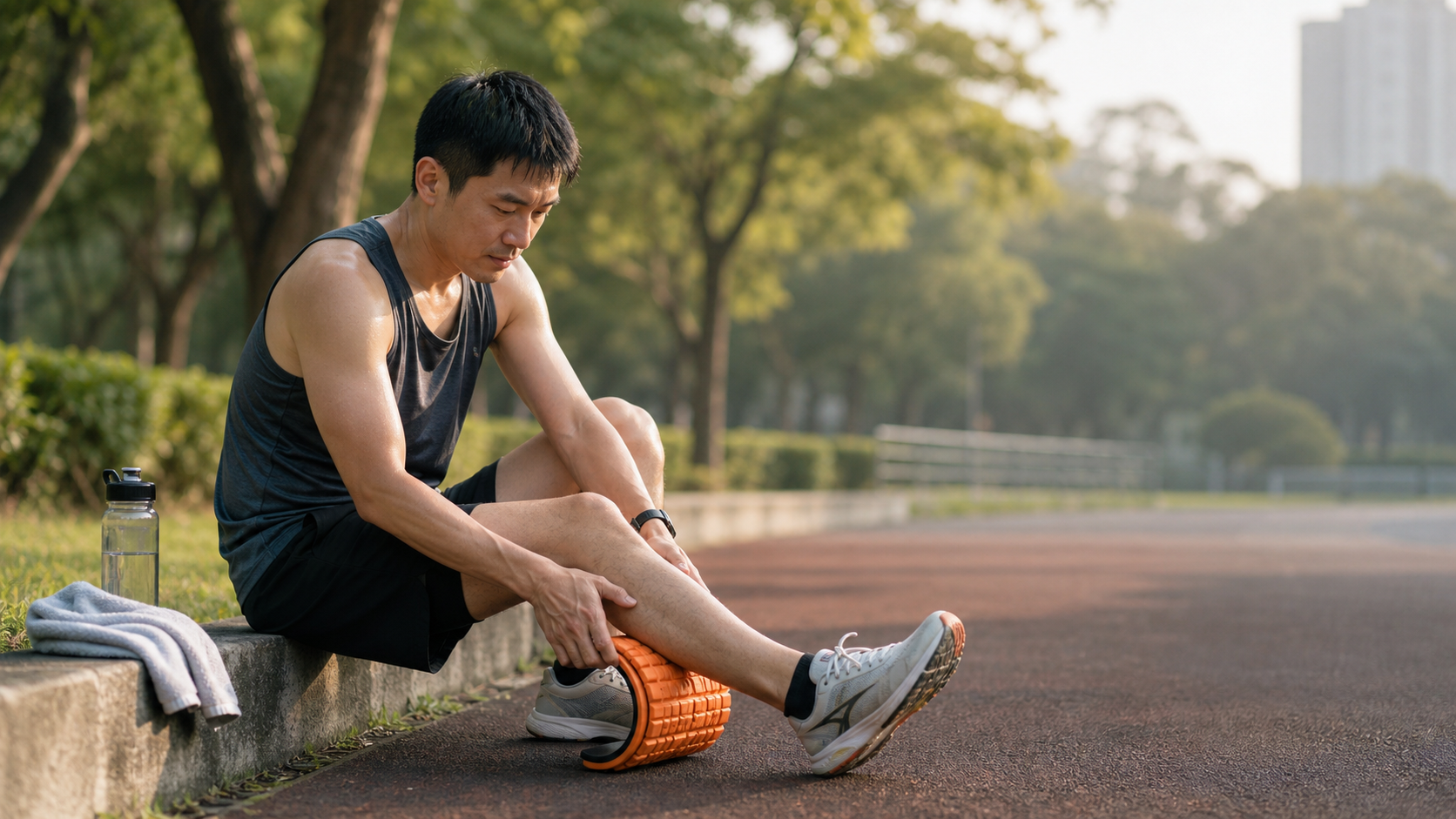
- Perform 5–10 minutes of light foam rolling daily (quadriceps, calves, glutes)
Week 2: Light Recovery Training
- 3–4 sessions per week of 30–40 minutes of easy running
- No high-intensity training whatsoever (no intervals, no tempo runs)
- On days when you still feel slight soreness, switch to walking or complete rest
- On Sunday, if conditions allow, try a 60–70 minute easy long run (no more than 12–13 km)
The Importance of Nutrition and Sleep
Dietary strategies during the post-race recovery period:
- Protein: Increase intake to support muscle repair (tofu, chicken breast, soy milk, eggs)
- Iron: Iron loss is greater after long-distance running, so increase consumption of red meat, spinach, and legumes
- Vitamin C: Helps with collagen synthesis and supports joint recovery (citrus fruits, guava)
- Avoid alcohol: Post-race celebrations are hard to avoid, but alcohol inhibits protein synthesis and affects sleep quality
Sleep is the most powerful recovery tool: aim for 7.5–9 hours of sleep each night during the first week after the race, especially on days 1–3.
When Can You Return to Normal Training?
The following signals indicate that you are ready to return to normal training:
- No pain in the legs (including on palpation)
- Easy-run pace has returned to pre-race levels
- Resting heart rate is back to its normal baseline
- You subjectively feel energetic and have the desire to run
Typically, low-intensity training can begin 10–14 days after finishing, while high-intensity workouts are best postponed until after the third week.
Practical Tips
- Record your post-race physical sensations: Logging pain, sleep quality, and energy levels daily helps you objectively assess your recovery progress
- Don’t compare yourself to others: Everyone recovers at a different rate; don’t rush to keep up just because a running buddy “has already recovered”
- Post-race massage: You can schedule a sports massage 3 days after the race to accelerate muscle repair
- Set your next goal: An appropriate goal helps maintain training motivation, but it’s best to plan your next race seriously only after full recovery
Conclusion
Recovery after a race is not a “gap period” in training—it is the necessary preparation for your next improvement cycle. Give your body the rest it deserves so that in the next training cycle you can handle a higher training load and achieve better results. Enjoy the sense of accomplishment from finishing, and patiently wait for your body to fully recharge—this is the right attitude for a long-term running career.
Related Reading
2019 夏季KOM 5小 完賽心得 準備攻略 東進武嶺 夏季登山王之路 Taiwan KOM Challenge
7 年前
Live) 備戰2019彰化經典百K 賽前攻略 (已完賽請看新影片
7 年前
摔車後補裝備: 好市多新款單車安全帽& Specialized Romin 北高整路屁股都不痛的坐墊 | 一千元居然有MIPS | CT Yeh | 公路車
4 年前
CT暗黑廚房) 車友必備 宇宙無敵鮮蚵湯 幫助訓練恢復 天然食補 好市多 超肥鮮蚵 破PR
7 年前
FTL 與 SYB 車隊專訪 西進武嶺 實用攻略分享! 2小時 如何練?!你不知道的眉角!新手準備武嶺必看 EP1 | 實力派女車友 | 精華版 | 公路車 | CTYeh
4 年前
一日北高前的高裝檢 | 北高 360 | 挑戰11小時的裝備 | 一日雙塔 | 補給
6 年前
一日北高 11小時 賽後心得分享篇 | TWB北高360 | 一日雙城 | 單車 | 公路車
6 年前
西進武嶺 免費訓練分析服務 Intervals | 練不夠還是練過頭?你哪一種類型選手?AI模型告訴你! | 備戰神器 | 公路車 訓練 | CT Yeh
4 年前