Introduction
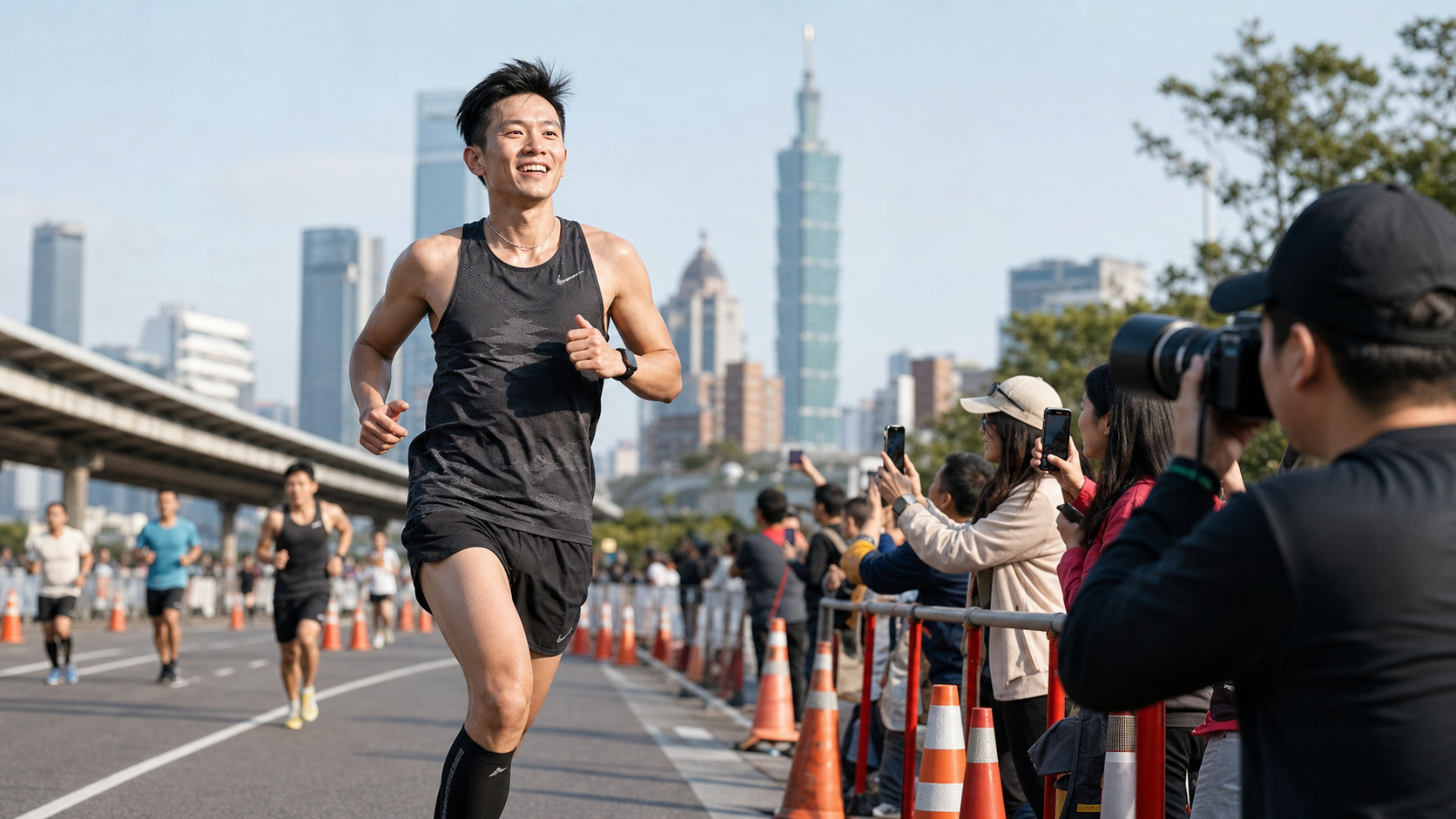
After every marathon, the finishing time is just a number, but that “finish-line photo” is a memory that lasts forever. In Taiwan, road running photography has developed into a unique race culture—from official photographers stationed at dozens of shooting points along the course, to runners actively studying how to present their best form in front of the lens, the relationship between road running and photography has long surpassed the realm of “souvenir snapshots” and become an integral part of the running experience itself.
The Current Landscape of Road Running Photography in Taiwan
The scale of official photography at Taiwan’s major road running events astonishes many foreign runners. Take the Taipei Marathon, for example: over 200 official photographers are deployed at more than 30 shooting stations along the route, ensuring every runner is captured in several photos during the race. Within 48 to 72 hours after the race, photos are delivered to each runner’s personal album via a bib number recognition system—this has become a standard service at major events.
Beyond official photography, Taiwan’s road running scene features several distinctive photography cultures:
Social Media Check-in Culture: Many runners deliberately slow down or stop to take photos at specific landmarks (such as crossing a bridge or entering a prime downtown section), leaving meaningful course memories on Instagram. This behavior has sparked lively debates over “should you chase a PR or take great photos,” but most runners believe both can be achieved.
The Tradition of Fellow Runners Photographing Each Other: There is a heartwarming habit in Taiwan’s running community: runners track each other’s positions during the race, appear at key mile markers or grueling hills, and capture “decisive moments” for one another. These photos are often more authentic and emotionally resonant than official photography.
Spectator Instant Photography: Spectator engagement at Taiwan’s road running events is high. Many family members or friends wait at specific sections, raising their phones or DSLR cameras to capture the person who matters most to them—one of the most touching scenes at any race.
| Photography Type | Photographer | Characteristics | How to Obtain |
|---|---|---|---|
| Official Race Photography | Professional photographers | High volume, consistent quality | Bib number search after the race |
| Social Media Check-in Photos | The runner themselves | Strong landmark appeal, carefully composed | Instagram/Facebook |
| Fellow Runner Photos | Running buddies | Most authentic race expressions | Shared instantly |
| Family/Spectator Photos | Friends and family | Richest in emotion | Sent instantly |
How to Capture Your Best State on the Course
Whether a running photo looks good actually follows certain patterns. The following tips can help you present your best form at official shooting points:
Know the Shooting Point Locations in Advance: Major events usually publish the locations of photography stations. Mark them on your watch or phone before the race, and as you approach, relax your expression, lift your head and chest, and adjust your stride.
Pay Attention to the Visual Effect of Your Running Form:
- Look ahead rather than down at the ground
- Let your arms swing naturally, avoiding a tight grip that tenses your shoulders
- Lift your knees slightly to give your leg movements more power
- Take a deep breath before entering the frame to keep your expression naturally relaxed
Make Good Use of Your Bib Number: Ensure your bib is secured at the center of your chest. The official system relies on bib number recognition; an incorrectly positioned bib may result in not finding your photos.
The Final 50 Meters to the Finish Line: This is where the most cameras are concentrated. Even if you are exhausted to the point of collapse, try to lift the corners of your mouth and raise your arms—this photo will stay with you for many years.
Practical Advice
Practical tips for road running photography are summarized below:
- Check the Official Photography Website Before the Race: Every major event partners with a photography company. Understand how to obtain photos (free or paid) before race day.
- Wear Visually Appealing Gear: Bright colors or outfits with personal flair make you easier to spot in a crowd.
- Strategy for Carrying Your Phone: Some runners use arm bands or waist packs to carry their phones, allowing them to take selfies at special spots or document the scenery along the way.
- Develop a Habit of Organizing Photos After the Race: It is recommended to create a separate album for each race, complete with your time and a record of how you felt, building a precious personal race history.
- Support and Thank Photography Volunteers: Many official photographers are also volunteers or low-paid contractors. Giving the lens a smile and eye contact when you see it is the best way to repay them.
Conclusion
Road running photos are time capsules runners send to their future selves. Five years from now, when you look back at that photo of your pained expression at the 35-kilometer mark of some marathon, you will smile remembering that day; and that frozen image of you waving at the finish line will tell you: on that day, you did it. The sophistication of Taiwan’s road running photography culture gives every runner the opportunity to leave behind their own epic story on the course—and that is one of the reasons Taiwan’s road running culture possesses such unique charm.
Related Reading
- The Check-in Culture of Road Running: Aesthetic Composition Tips for Instagram Running Photos
- Race Souvenir Collecting: Medal and Merchandise Culture at Taiwan’s Major Marathons
- Post-Race Award Ceremonies and Race Culture: Features and Things to Note at Taiwan’s Events
- Road Running Costume Culture: The Fashion Aesthetics and Personal Style of Taiwanese Runners
CT 喇低賽) 單車 比賽總是沒照片? 攝影師的觀點大公開 姿勢就是力量! 請加速1.25倍收看
7 年前
拍單車比賽能賺多少?一日Phomi攝影師實境測試| #公路車 | CT Yeh | 用科學分析賺錢!
3 年前
新玉門關 單車挑戰賽 多視角主集團衝刺菁華版 4K #公路車
5 年前
Live) 備戰2019彰化經典百K 賽前攻略 (已完賽請看新影片
7 年前
下次拍照前要查清楚啦🤣 #cycling
7 個月前
小野田真的存在!日本赤城山爬坡公路賽 台灣首發團完全實錄 | 頭文字D真實賽道! | 看完東奧自行車賽後好想再去騎一次啊! | 公路車 | CT Yeh
4 年前
2018 田中馬拉松 全程健跑 VR 360 環景錄影 體驗現場狂野加油氣氛! Insta 360
7 年前
第二屆 海鷗繞圈賽 / 桃園團體城市繞圈賽!多視角實況精華版 | | 訪問才是最好笑的 | 公路車 | CT Yeh
3 年前