文章導覽
Introduction
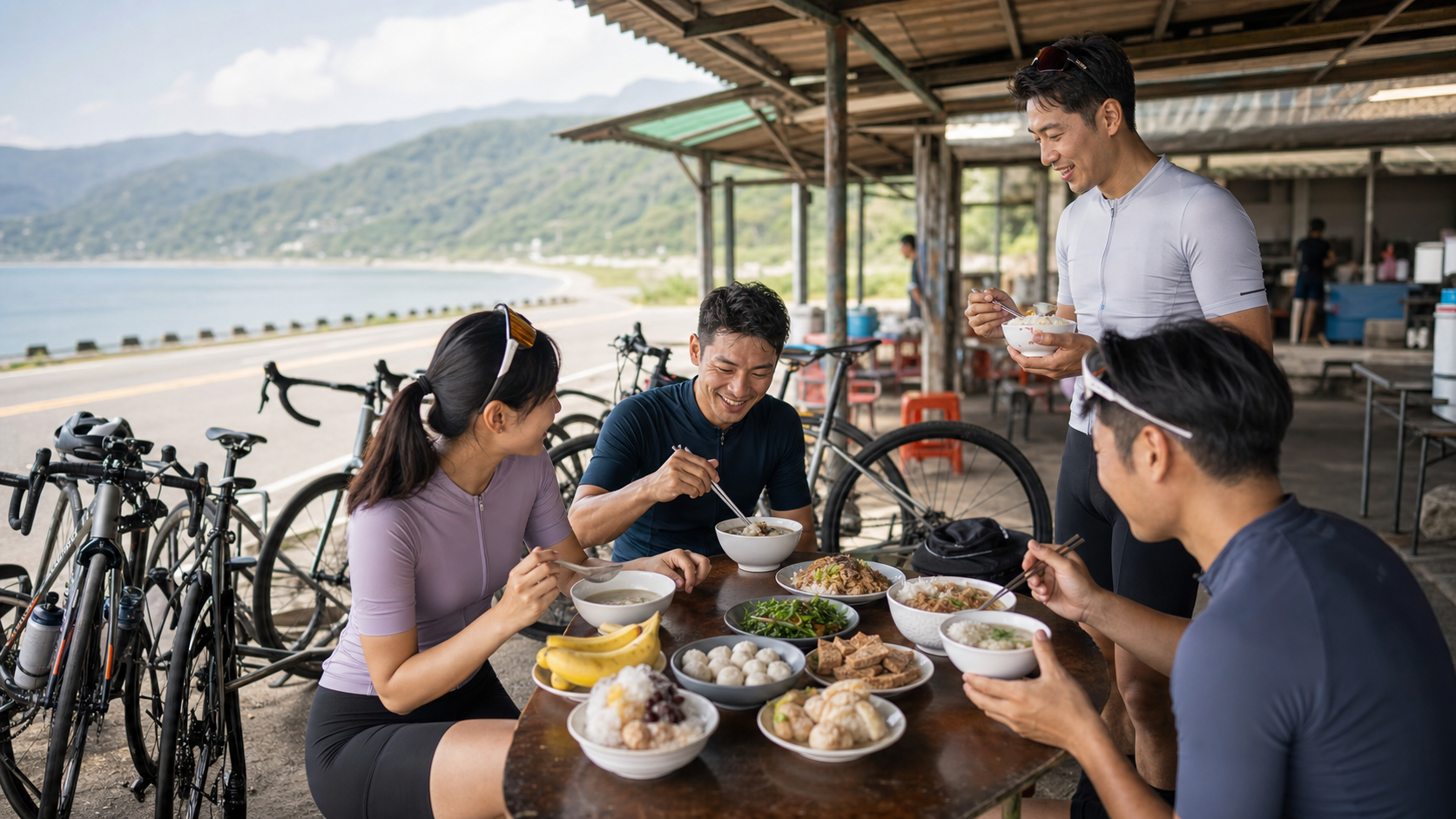
Ask a Taiwanese cyclist: “What’s the happiest part after a ride?” Eight out of ten will probably say: “Eating!”
Taiwan’s food culture is rich and diverse to begin with, and cycling naturally takes people to the urban fringe, country lanes, and along the coastline. Those roadside old-fashioned eateries, local snack stalls, and even farm-direct fresh ingredients have all become the most delicious surprises on a cycling journey. This isn’t just about replenishing calories—it’s a way of experiencing the land with your body.
This article compiles the representative foods that cyclists across Taiwan most often “ride out to eat,” organized by route region, so that when you plan your next route, food can also be a destination.
Taiwan’s Must-Eat Food Map by Route
Northern Routes
| Location | Recommended Food | Suitable Route |
|---|---|---|
| Tamsui Old Street | Fish ball soup, A-gei, iron eggs | End of the Tamsui River Bikeway |
| Keelung Miaokou | Ding bian cuo, tempura, sweet potato balls | Supply stop on the North Coast loop |
| Pingxi Old Street | Miner’s bento, taro balls | Route along the Pingxi Line railway |
| Jinshan | Duck meat, Jinshan sweet potatoes, hot spring buns | North Coast Route 101 |
Central Routes
| Location | Recommended Food | Suitable Route |
|---|---|---|
| Puli | Shaoxing chicken, fermented tofu, popsicles | End of the Wuling route |
| Fengyuan | Miaodong Night Market, shaved ice, meatballs | Along the Dajia River Bikeway |
| Jiji | Taro ice cream, bamboo shoot dishes | Route along the Jiji railway |
Eastern Routes
| Location | Recommended Food | Suitable Route |
|---|---|---|
| Chishang | Bento, farmhouse dishes by Dapo Pond | Huadong Rift Valley route |
| Guangfu Sugar Factory | Sugar factory ice cream | Either the Huadong Coast or Rift Valley |
| Yilan Luodong Night Market | Bu rou, Sanxing scallions, scallion pancakes | Finish of the Yilan Plain route |
The Dietary Wisdom of Cycling Refueling
On-the-Ride Refueling vs. Post-Ride Feasts
Cycling nutrition is divided into two levels: energy replenishment during the ride, and the proper meal after finishing.
Principles for on-the-ride refueling:
- Replenish food every 45–60 minutes of riding, focusing on easily digestible carbohydrates
- Taiwan’s most practical options: bananas (natural energy, easy to find), convenience store onigiri, salted rice crackers
- Avoid high-fat foods—digestion is slow while riding and can easily cause stomach discomfort
Post-ride dietary recommendations:
- Consuming protein + carbohydrates within 30 minutes after finishing is the golden window
- Best local Taiwanese choices: braised pork rice (carbs + a little fat), tea eggs (protein), soy milk (plant-based protein)
The Social Significance of the Cycling Community Meal
For Taiwanese cyclists, the “post-ride meal” isn’t just a personal act—it’s a community ritual. Many group rides set their finish point at a well-known eatery, and the meal is precious time for community bonding, exchanging techniques, and planning the next route.
A few typical scenes of Taiwanese cyclists dining together:
- Eating Shaoxing chicken in Puli after climbing Wuling: Completing Wuling is a rite of achievement for Taiwanese riders, and Puli’s food is the finest reward
- Keelung Miaokou Night Market after a North Coast ride: Seafood, snacks, and a lively atmosphere—the perfect community finale
- Chishang bento on an eastern Taiwan round-island tour: Local rice served in a wooden bento box, almost a must-photograph food for every island-circumnavigating rider
Practical Tips
- Search for “food stop points” along your route before departure, making eating a delightful highlight of the route rather than a random event
- Prepare a lightweight handlebar bag so you can bring back local specialties purchased along the way without affecting your ride
- Avoid lingering too long at food stops, especially in summer—riding immediately after a big meal can easily cause gastrointestinal discomfort; it’s recommended to rest for at least 20 minutes
- Keeping a “cycling food checklist” is a fun way to document your travels, and you can share it on Instagram or a blog
Conclusion
Taiwan’s cycling culture has always been closely intertwined with its food culture. Those roadside old-fashioned flavors, mountaintop stalls, and seafood stands by the fishing harbors all come vividly to life because of cycling. The taste of every bite carries the wind speed, temperature, and mileage of that moment—a unique flavor that no restaurant menu can replicate.