Introduction
Running has given many people in Taiwan health, confidence, and a sense of community belonging, and an increasing number of runners are asking: “Can I pass these on to those who need them more?” The landscape of running-related volunteering in Taiwan is far richer than most people realize. From guiding visually impaired runners to running education programs in mountain tribes, runners’ feet are charting a broader map of social responsibility.
The Diverse Forms of Volunteer Service Among Taiwanese Runners
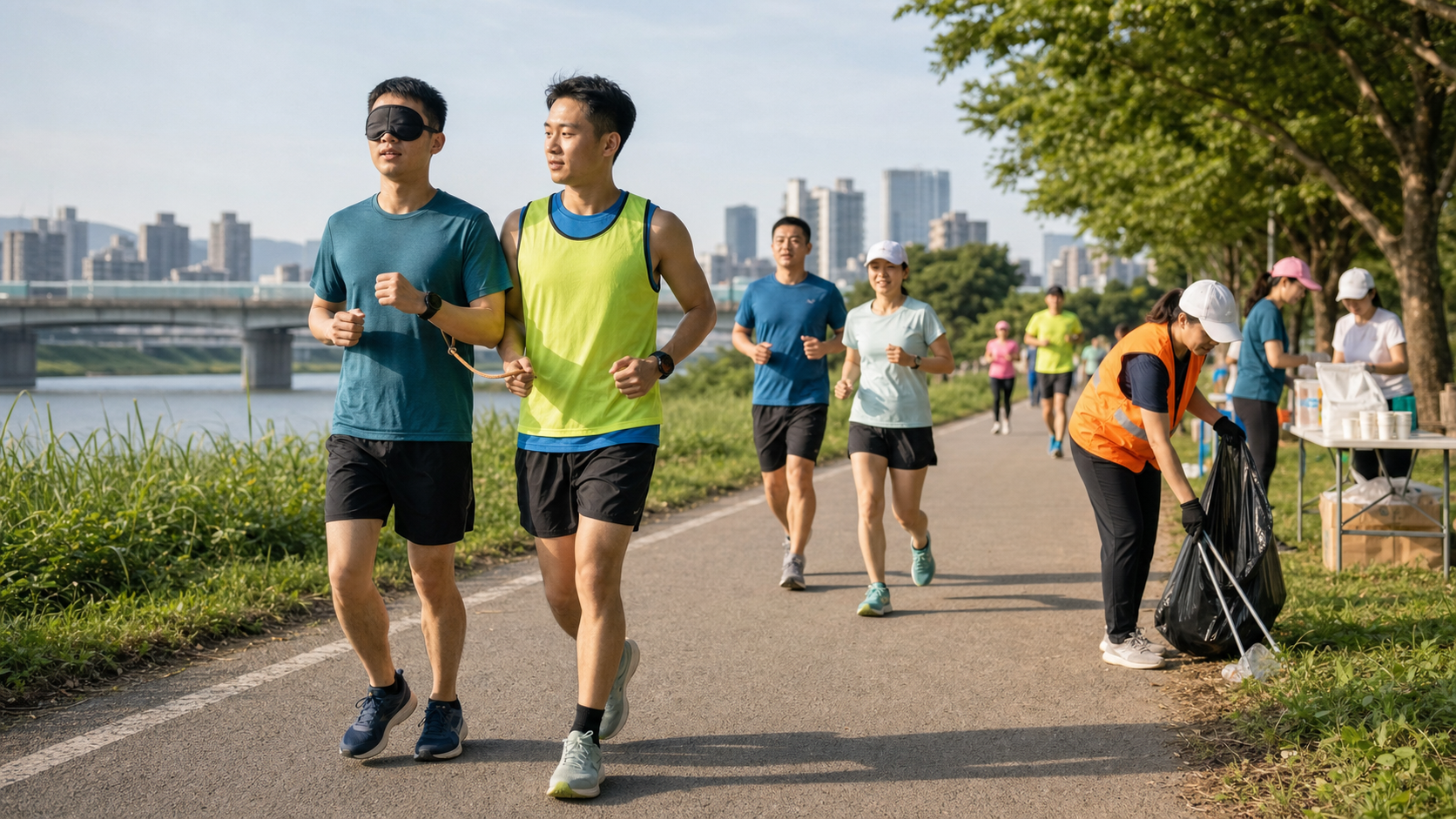
Guide Runners: Visually impaired runners need someone to accompany and guide them during marathons. Taiwan has several organizations dedicated to training guide runners, such as the “Marathon Guide Program for the Visually Impaired.” Guide runners are connected to visually impaired runners by a tether, providing directional guidance and safety protection while fully sharing the running experience. Many guide runners say this is the most meaningful race they have ever run.
Charity Race Volunteer Training: Some charity running events (such as the Children’s Heart Foundation Run) systematically train volunteer teams, allowing participants not only to contribute money and effort but also to receive complete event service training, combining running with social engagement skills.
Rural Running Education Programs: Several non-governmental organizations promote running education in Taiwan’s remote areas and indigenous tribes, with urban runners serving as volunteers who travel to mountain schools to lead children in running training. Some programs even help children register for and complete their first road race, creating equal sports opportunities that break down geographical barriers.
Run for a Cause: Runners commit to “donating one dollar per kilometer run” or “donating an amount equivalent to the registration fee upon completing a half marathon,” directly converting training mileage into social donations. This model is especially popular in Taiwan’s corporate running communities, combining corporate CSR resources to amplify charitable impact.
Plogging: Plogging (picking up litter while running), which originated in Sweden, is being practiced by more and more runners in Taiwan. Some running clubs have made cleaning up riverbanks or park trails a regular activity, turning running into a concrete act of environmental protection.
| Type of Volunteer Service | Primary Beneficiaries | Time Commitment | Skill Requirements |
|---|---|---|---|
| Guide Runner | Visually impaired runners | During race events | Running ability + communication and coordination |
| Race Volunteer | General races | Race day | No special requirements |
| Rural Running Education | Children in mountain areas | Weekends or winter/summer breaks | Basic running knowledge |
| Charity Race Organization | Charitable organizations | Long-term, regular | Event planning ability |
| Plogging | The environment | During personal training | None |
What Drives Taiwanese Runners to Volunteer
What makes Taiwanese runners willing to give back to society through volunteer service? Interviews with several long-time runner volunteers revealed several common themes:
Transformation of gratitude: “Running changed my life, and I want that change to happen for others too.” This is the most frequently heard answer. After personally experiencing the mental health benefits of running, many runners naturally develop the motivation to “let more people have this experience.”
Giving running deeper meaning: Pure competitive training sometimes leaves runners feeling empty; adding a charitable element gives every training session a broader connection to meaning, sustaining long-term motivation.
An expanded version of community cohesion: Volunteer service extends the cohesion of the running community from “us as a group” to “us and society as a whole,” giving the identity of being a runner a more macroscopic positioning.
Practical Advice
For runners interested in getting involved in running-related volunteer service, here are several channels to start with:
- Contact the Marathon Guide Program for the Visually Impaired: They regularly hold guide runner recruitment and training courses—the best entry point into running volunteer service
- Participate in organizing charity races rather than just competing: Proactively contact the organizers to express interest in helping with organization, rather than just paying to participate
- Initiate Plogging activities within your personal running community: Your own running club is the most direct starting point—suggest bringing gloves and trash bags to the next group training session
- Follow Taiwan’s charity running organizations: Search for “路跑公益” (charity running) on Facebook; many organizations regularly post volunteer recruitment notices
- Make your “running mileage = donation” commitment public: Announce it on social media, using the social commitment effect to keep yourself motivated
Conclusion
Running itself is a form of giving—giving yourself a better body, a clearer mind, and richer relationships. And when runners extend this spirit of giving to society, running transcends personal exercise and becomes an act of civic practice. Taiwanese runners are writing this story in their own ways: step by step, starting from their own bodies, moving toward a broader world.
Related Reading
- The Culture of Running Volunteers: Reflections and Community Significance of Race Service
- Taiwan’s Running Volunteer Culture: The Emotion and Meaning of Serving at Aid Stations
- How Running Changes Lives: Transformation Stories and Psychological Gains of Taiwanese Runners
- Road Race Volunteers: The Meaning and Experience of Participating in Race Service
元宇宙運動 ! RouvyAR 虛擬實境約騎! 台灣路段開箱 帶你日月潭環潭一圈 | 團騎競賽參加教學 | 常見小問題整理 三人共享一年不用一千 | 公路車 | 訓練台 | CTYeh
5 年前
新屋團體繞圈賽 | 眾多菁英好手賽道奔馳 | 千瓦女子軍團 | 無敵交管狂獲好評 明年你一定不能錯過 | #公路車
5 年前
#PUSHBIKE 原來這麼好玩! 小朋友 滑步車 初體驗 超可愛
6 年前
台北大雁西飛 約騎挑戰 feat. Doris | 公路車 | CT Yeh
3 年前
太平山單車員工旅遊 | 這樣玩CP值最高!| 公路車
5 年前
2018 田中馬拉松 全程健跑 VR 360 環景錄影 體驗現場狂野加油氣氛! Insta 360
7 年前
大家都在開箱的...單車用藍芽對講耳機真的有幫助嗎? SENA BiKom 20 長距離旅遊 & 海鷗繞圈賽 實際體驗心得 / 公路車 / CT Yeh
9 個月前
2019 柯P 超越北高 第一集團實錄 (11小時實錄請參考另一部影片) 一日雙城 一日北高 NeverStop Taiwan Long Distance Cycling Challenge
7 年前