Swimming Photography and the Underwater World: Beginner Equipment and Techniques for Underwater Photography
Introduction
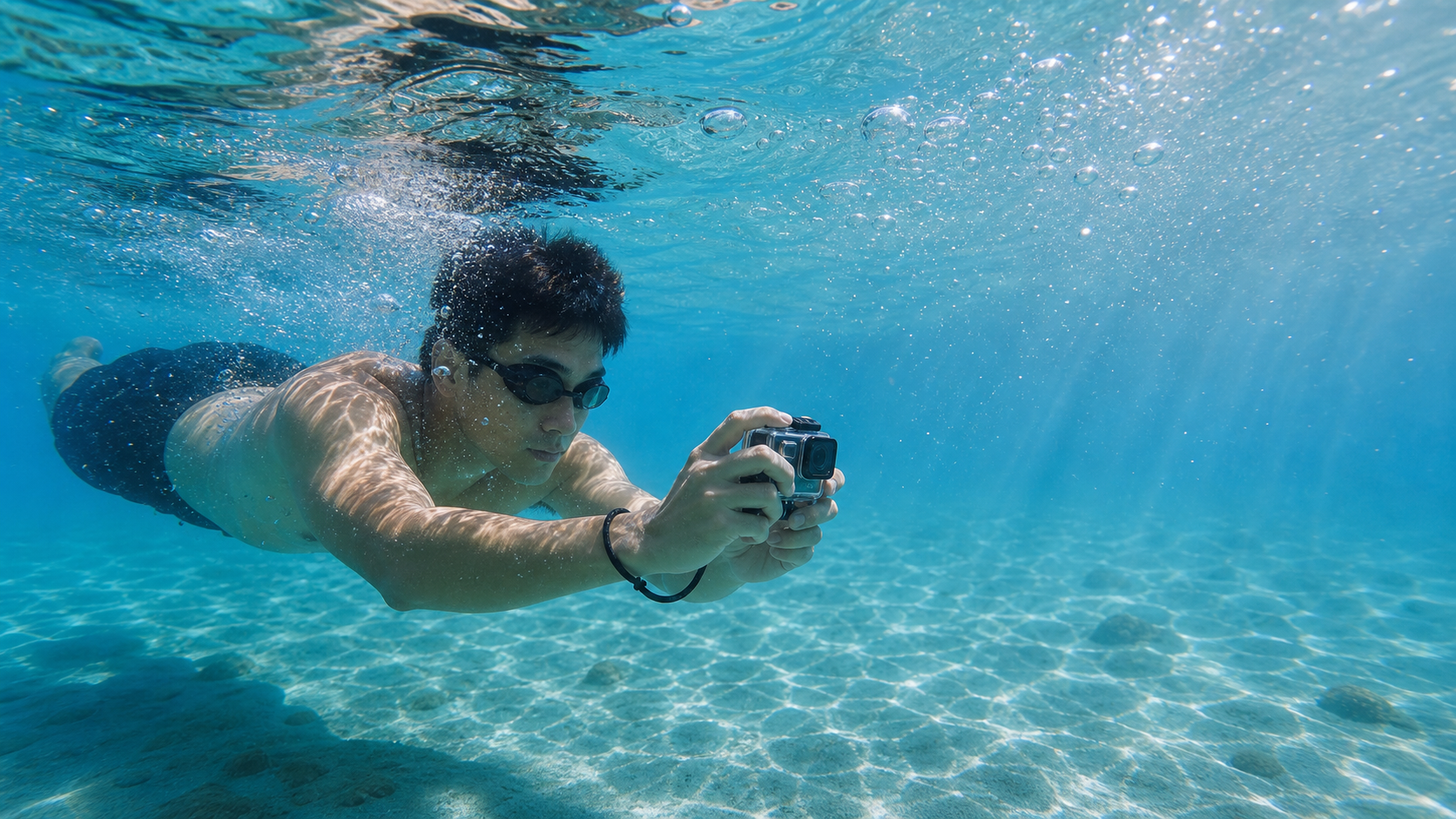
Every swim is a ritual of entering another world. Below the surface, light refracts into unique ripples, bubbles string together like transparent beads, and the human body moves with more fluidity and grace than on land. This world has always existed, but it wasn’t until recent years, with the proliferation of recording devices, that more ordinary people gained the opportunity to capture it on camera.
Taiwan boasts abundant water resources—from the coral reefs of Kenting to the crystal-clear streams of Hualien, from the artificial blue of swimming pools to the tropical waters of Orchid Island—every scene is an excellent stage for underwater photography. You don’t need to be a professional photographer; with basic equipment and a few key techniques, any swimming enthusiast can begin their underwater photography journey.
Beginner Equipment Selection Guide
The barrier to entry for underwater photography equipment is lower than you might think. Depending on your budget and needs, there are various options:
| Equipment Type | Budget Range | Waterproof Depth | Suitable Scenes | Pros and Cons |
|---|---|---|---|---|
| Waterproof Phone Case | NT$300–3,000 | 2–30m depending on brand | Pools, shallow waters | Cheap and easy to obtain, but bulky to handle |
| GoPro Action Camera | NT$9,000–18,000 | 10m natively (60m with housing) | Pools, open-water swimming | Lightweight with wide angle, but short battery life |
| Waterproof Compact Camera | NT$8,000–20,000 | 15–30m | Various water bodies | Good image quality, intuitive operation |
| Mirrorless Camera + Waterproof Housing | NT$30,000+ | Varies by housing | Seabed coral reefs | Best image quality, high cost |
For first-time swimming enthusiasts, the GoPro Hero series or similar action cameras are the most recommended starting point: simple to operate, wide-angle lenses suited for underwater shooting, and highly durable—even an accidental bump against the pool edge won’t matter. Taiwan’s major sporting goods stores and online platforms (Shopee, PChome) offer a wide selection.
Core Underwater Photography Techniques
Equipment is just the starting point; what truly makes photos look great are techniques and an understanding of light.
Light is the soul of underwater photography
Water absorbs light, especially the red and orange wavelengths, which is why underwater photos often lean toward blue-green. Here are several ways to address this:
- Shoot in shallow water (within 3 meters): Natural light is abundant and color retention is best. It’s recommended to shoot on sunny days between 10 AM and 2 PM
- Get close to your subject: The closer the distance, the less light attenuation, resulting in clearer images
- Use a red filter: This compensates for the red light lost in water, making colors more natural and saturated
- Make good use of light angles: Shooting from below upward can capture the “light curtain” effect of refracted light on the water surface—absolutely mesmerizing
Composition and shooting techniques:
- For swimming action shots, use burst mode to capture the most powerful moments
- Position the camera near the waterline for a split shot (half water, half air) composition—the most unique perspective in underwater photography
- For still-life photography (corals, schools of fish), keep your body stable and breathe slowly to minimize movement
- When shooting in pools, pay attention to the play of light and shadow from water ripples—this is the greatest charm of indoor underwater photography
Post-processing recommendations:
- Use Lightroom’s “Underwater” preset, or manually boost warm tones (orange, red) while reducing cyan and green
- Increase contrast and clarity to slightly tame the hazy underwater look
- Some cameras support RAW format, offering more room for post-processing
Practical Tips
Pre-dive preparation checklist:
- Confirm that your equipment’s waterproof rating matches the shooting depth. Waterproof housings must undergo a pressure test before use (place a dry tissue inside and submerge to check for leaks)
- Learning basic freediving techniques (breath-hold diving) helps you achieve better shooting angles
- Practice shooting techniques in a pool first before venturing into open water
- Hire or invite a friend to dive in with you as a subject—dynamic photos with two people working together yield the best results
- Underwater photography enthusiasts in Taiwan can join the “Taiwan Underwater Photography Association” or related Facebook groups to exchange techniques and gear information
Recommended shooting locations in Taiwan:
- Indoor pools: Taipei City Swimming Pool (blue plastic pool floor with excellent lighting effects)
- Outdoor Jiaoxi Hot Spring Swimming Pool: Unique environmental color tones
- Kenting Houbihu: Rich in coral reefs, ideal for snorkeling photography
- Orchid Island: Visibility up to 20–30 meters with vibrant underwater colors
- Near Green Island’s Zhaori Hot Spring: Unique seabed terrain
Conclusion
Underwater photography adds another dimension to swimming—it’s not just about physical exercise, but about exploring, with your eyes and your lens, a world you can’t see in everyday life. Every underwater photo is a special record: that refracted light, those dissipating bubbles, that figure moving freely through the blue—all are precious moments only you can capture by getting into the water yourself. Take your camera into the water and let swimming become more than just a sport.
Related Reading
- Swimming Technique Video Analysis: Using Your Phone to Identify Technical Flaws
- Swimming Technique Video Analysis: How to Use Underwater Footage to Identify Your Own Deficiencies
- Introduction to Water Activities in Taiwan: From Swimming to Surfing, SUP, and Snorkeling
- Self-Analysis Through Swimming Videos: Technical Diagnostic Methods for Above- and Underwater Shooting
[八甲田滑雪] 攝影器材介紹篇 DJI OSMO Mavic Pro ActionCam X3000 Insta360
7 年前
類空拍神器 Feiyu Pocket 2s (有優惠連結)三軸穩定 運動攝影機 開箱!比GoPro 還強的滑順視角!三小時長時間錄影 行車記錄器 | 環花東365實測 | 公路車 CT Yeh
4 年前
新玩具!Feiyu Pocket 3 無線三軸 運動攝影機 開箱!/ GoPro拍不出來的震撼視角? / 完全沒殘影的神夜拍效果 (內有專屬優惠!) / 公路車 / CT Yeh
2 年前
Insta360 ONE RS 徠卡1英吋 x 後背空拍套件開箱 | 日本單車行實拍 畫面怎麼可以美成這樣 | 對比 Insta 360 X3 | 公路車 | CT Yeh
3 年前
單車 一日北高 ( 雙城 ) 肥宅雙人瘋狂行 紀錄片 REACTO
10 年前
[教學] Premiere 影片 手震 修正 教學 防抖 單眼 影像 GoPro 穩定 Video Stabilization
8 年前
GoPro Hero 10 畫質好但 他是個吃電怪物 過熱只是小CASE 單車錄影實測 ! 耗電 災情 過熱實測 購買前請三思 OSMO Action 2了 !? | CT Yeh
4 年前
#PUSHBIKE 原來這麼好玩! 小朋友 滑步車 初體驗 超可愛
6 年前