Introduction
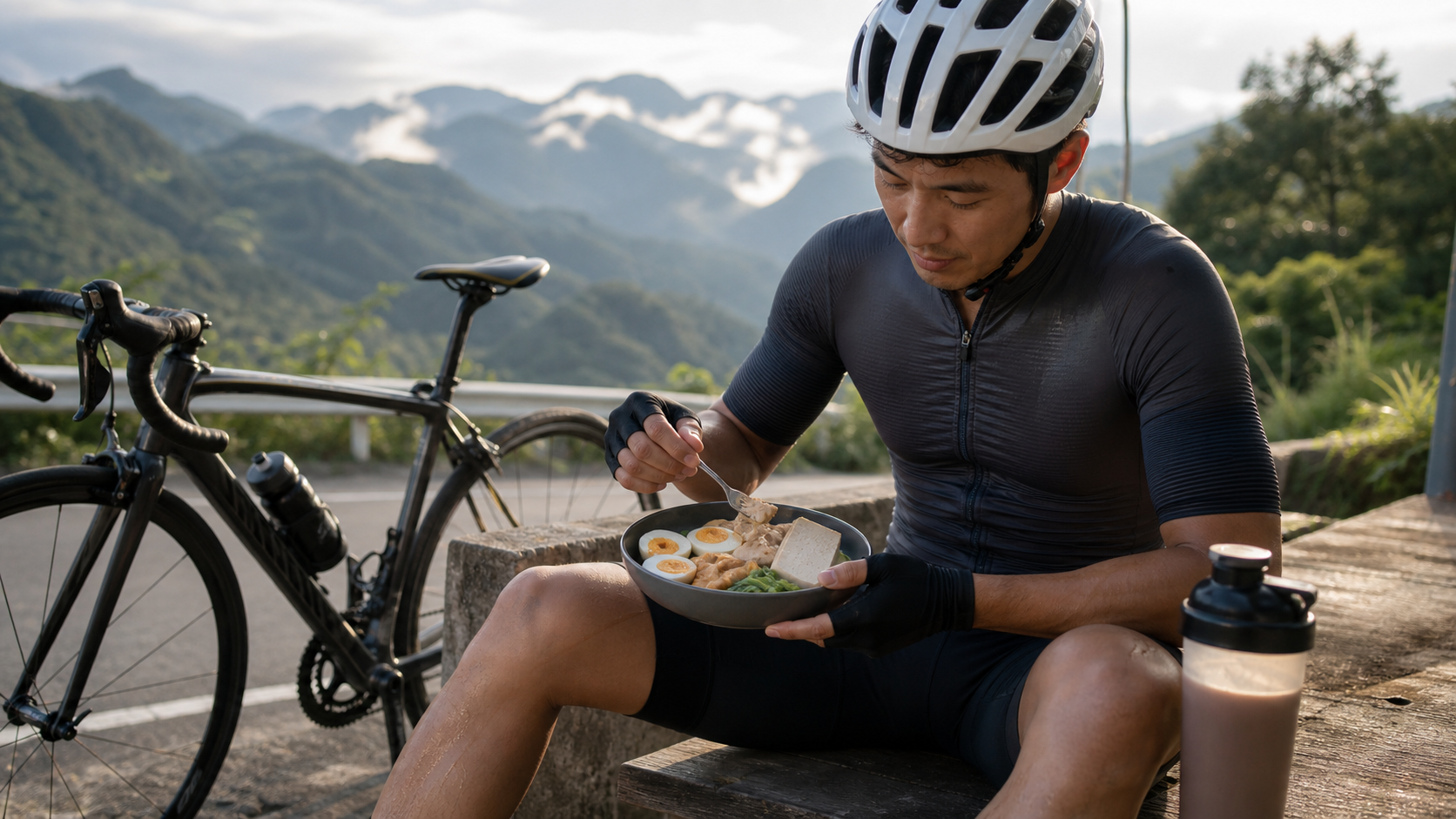
After finishing a ride up Wuling or Beiyi, your tired legs need more than just rest—they need precise nutritional support. Muscle Protein Synthesis (MPS) is the core mechanism through which the body repairs micro-damage and adapts to training stress, and this process is highly dependent on the timing and quality of post-exercise protein intake. Neglecting this step is equivalent to making your hard training half as effective.
Post-Exercise Muscle Protein Synthesis Dynamics
Cycling (especially long-distance or high-intensity efforts) causes micro-damage to muscle tissue and activates a cascade of anabolic signals:
- mTOR Pathway Activation: Resistance-type contractions (climbing, pedaling) activate mTORC1, the primary switch for MPS
- Enhanced Insulin Sensitivity: Within 2–4 hours post-exercise, insulin receptor sensitivity in muscle cells increases significantly, facilitating amino acid uptake
- Protein Synthesis Window: MPS rates remain elevated for 24–48 hours post-exercise, but are most active within the first 2 hours
| Time Post-Exercise | MPS Rate | Optimal Supplementation Strategy |
|---|---|---|
| 0–30 minutes | Rapidly rising | Fast-absorbing protein (whey) |
| 30–120 minutes | Peak period | Complete meal (protein + carbohydrates) |
| 2–6 hours | Still above resting levels | Regular meals, maintaining protein intake |
| 6–24 hours | Gradually declining but still elevated | High-quality protein at every meal |
| Before bedtime | Nocturnal MPS | Slow-absorbing protein (casein) |
Protein Quality and Amino Acid Composition
Not all proteins are created equal. The key determinant of a protein’s ability to stimulate MPS is its essential amino acid (EAA) content, particularly leucine—the most important activator of the mTOR pathway.
Comparison of High-Quality Protein Sources:
- Whey protein: Highest leucine content (approximately 10–11%), rapidly digested, the top choice within 30 minutes post-exercise
- Egg white protein: Well-balanced EAA profile, moderate digestion rate, suitable for main meals
- Chicken breast / fish: Easily accessible in Taiwanese diets, providing 20–25g of protein per 100g
- Tofu / edamame: Plant-based proteins with slightly lower leucine; increase intake by 25–30% to achieve equivalent MPS stimulation
- Casein: Slowly digested (approximately 6–7 hours), ideal for pre-bedtime supplementation
Daily Protein Requirements: The recommended intake for cycling trainees is body weight × 1.6–2.0 g/kg/day, which can be increased to 2.2 g/kg/day during high-intensity training periods. A 70 kg rider needs 112–154 grams of protein per day.
The Synergistic Role of Carbohydrates
Post-exercise protein supplementation alone is effective, but combining it with carbohydrates yields even better results:
- Carbohydrates stimulate insulin secretion, accelerating amino acid uptake into muscle cells
- They replenish glycogen, storing energy for the next training session
- Recommended ratio: protein:carbohydrate = 1:3 (e.g., 25g protein + 75g carbohydrate)
Traditional Taiwanese foods such as sweet potatoes and bananas paired with eggs or soy milk make an ideal post-ride recovery combination—no expensive sports supplements required.
Practical Recommendations
- Within 30 minutes post-ride: Consume 20–30g of whey protein (mixed with milk or soy milk), paired with 1–2 bananas or sweet potatoes
- Main meal 2 hours post-ride: Consume 30–40g of high-quality protein (chicken breast, fish, eggs) plus adequate carbohydrates and vegetables
- 30 minutes before bedtime: Consume 30–40g of casein (Greek yogurt or casein powder) to support nocturnal MPS
- Distribute daily protein evenly: Research shows that consuming 20–40g of protein per meal, spread across 4–5 meals, is more effective than one large bolus
- Supplement BCAA during long rides: During rides exceeding 4 hours, supplement 5–7g of BCAA per hour to reduce muscle protein breakdown
Conclusion
Muscle repair is the “final mile” of your training results, and the timing and quality of protein intake are the key map for this stretch. Taiwanese food culture is rich—from roadside salt-poached chicken to convenience store tea eggs—all of which can become powerful recovery tools when consumed at the right time. Next time you finish a ride, don’t just think about showering and resting; give your muscles what they truly need first—that’s the secret to riding better next week.
Related Reading
- Post-Exercise Muscle Recovery: The Golden Time Window for Protein Synthesis
- The Post-Exercise Protein Synthesis Window: Muscle Repair Benefits of Supplementation Within 30 Minutes After Riding
- Protein Intake Timing and Recovery: Does the Golden Window After Training Really Exist?
- Post-Exercise Protein Supplementation Timing: Scientific Research on the Anabolic Window and Muscle Repair
FTL 與 SYB 車隊專訪 西進武嶺 實用攻略分享! 2小時 如何練?!你不知道的眉角!新手準備武嶺必看 EP1 | 實力派女車友 | 精華版 | 公路車 | CTYeh
4 年前
西進武嶺 自製新版AI配速表產生器 x 賽前攻略 抱佛腳! 沒有功率計也可以產生配速表嗎?有什麼其他眉角賽前要注意的呢? | 西進武嶺 / 東進武嶺 KOM 攻略 | 公路車 | CT Yeh
4 年前
西進武嶺 免費訓練分析服務 Intervals | 練不夠還是練過頭?你哪一種類型選手?AI模型告訴你! | 備戰神器 | 公路車 訓練 | CT Yeh
4 年前
CT暗黑廚房) 車友必備 宇宙無敵鮮蚵湯 幫助訓練恢復 天然食補 好市多 超肥鮮蚵 破PR
7 年前
#公路車 #Fitting 靠人工智慧APP 幫你調整單車
6 年前
#公路車 #西進武嶺 配速配瓦實驗 坡度分析 四小時內攻略 建大盃 NeverStop #西進武嶺攻略
6 年前
Never Stop 西進武嶺 前後雙機 完整全程錄影 訓練台 實境
8 年前
一日北高/長距離團騎 常見問題補充篇 / 組團或跟團的眉角 / 壯車友容易被瘦車友慢性拉爆 / 原來屁股痛可能是這個原因...? / 風場配速法 / 公路車 / CT Yeh
2 年前