Morning Training for Swimmers: Physiological Advantages and Adjustment Strategies for Early Workouts
Introduction
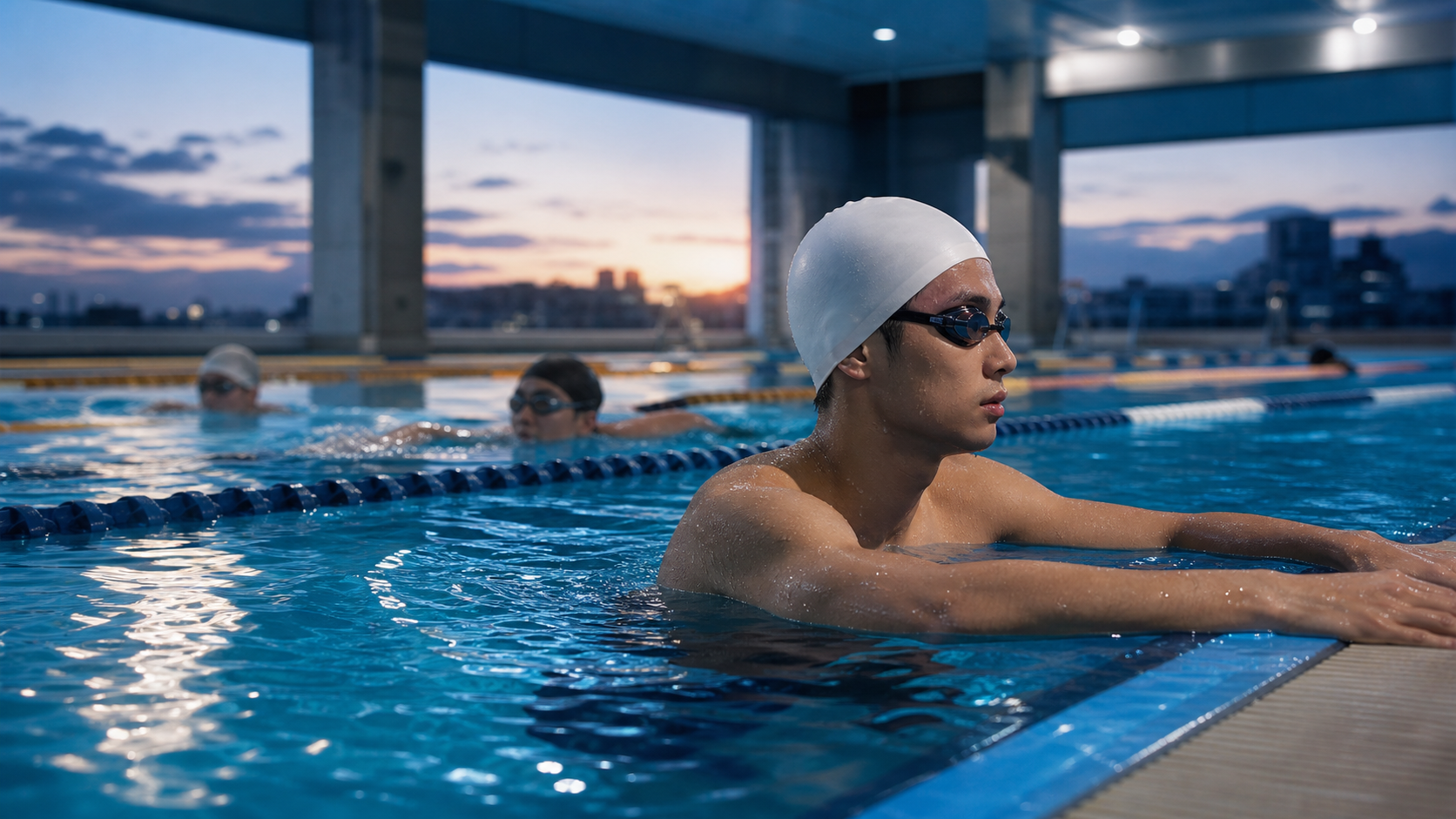
At 5 AM by the poolside, lights reflecting off the water, athletes have already begun their warm-up—this is almost a daily scene for swim teams across Taiwan. Morning practice is a tradition in competitive swimming, but many athletes do it “just for the sake of practicing early” without considering the physiological characteristics of this time period and what the optimal training content should be.
Only by understanding the body’s state in the early morning can you design the most efficient morning practice workout.
Morning Physiological Characteristics: What Is Your Body Telling You?
Core Body Temperature and Neural Response
After waking up in the morning, core body temperature is approximately 0.5–1°C lower than in the afternoon, neuromuscular reaction speed is slower, and muscle viscosity is higher. This means:
- Longer warm-up time is needed: At least 15–20 minutes of progressive warm-up is required to reach training readiness
- High-intensity race-pace training is less effective: Maximum neural activation peaks in the afternoon
- Technical performance is relatively stable: Less neural “noise” makes it easier to maintain movement consistency
The Morning Cortisol Peak
Between 6–8 AM, cortisol secretion naturally peaks, with the following effects on the body:
- Enhances blood glucose mobilization, providing energy for training
- Increases alertness and focus
- Promotes fat oxidation (beneficial for aerobic energy metabolism training)
This means the morning is ideal for aerobic base swimming and technical training, rather than anaerobic explosive workouts.
Training Types Suitable for Morning Practice
| Training Type | Suitability for Morning | Reason |
|---|---|---|
| Long-distance aerobic swimming | ★★★★★ | Aligns with the fat oxidation peak |
| Technical drill work | ★★★★☆ | High movement consistency |
| Anaerobic lactate training | ★★★☆☆ | Requires adequate warm-up before proceeding |
| Maximum speed sprinting | ★★☆☆☆ | Neural activation has not yet peaked |
| Flexibility and mobility work | ★★★★★ | Highly effective after warm-up |
Based on this table, coaches planning morning practice should focus primarily on aerobic endurance + technical correction, leaving high-intensity anaerobic training for the afternoon session.
Adjustment Strategies Before and After Morning Practice
The “Start-Up Protocol” from Waking to Entering the Water
Many athletes jump into the water half-asleep, which not only increases injury risk but also diminishes training effectiveness. A recommended morning start-up protocol:
- Rehydrate after waking: 150–200ml of warm water to replenish fluids lost during sleep
- Light dynamic stretching (10 minutes): arm circles, hip rotations, ankle mobility work
- Simple carbohydrate intake (optional): a banana or energy bar to avoid overtraining on an empty stomach
- Gradually increase pace after entering the water: Swim the first 400–600m at an easy pace, then increase intensity
Recovery Management After Training
After morning practice, athletes typically still have to go to school or work. If recovery is inadequate, another morning session follows the next day, and fatigue will accumulate rapidly:
- Consume protein + carbohydrates within 30 minutes after training (e.g., soy milk + tea egg)
- Take a 20–30 minute nap at noon (if possible), which significantly aids cognitive and muscle recovery
- Stay well hydrated throughout the day: Most people tend to neglect drinking water after morning practice
Practical Recommendations
- Maintain a consistent bedtime: More than the wake-up time, a consistent sleep schedule better maintains your circadian rhythm
- Prepare gear the night before: Keep your swimsuit, cap, and goggles in a fixed spot to reduce morning decision-making burden
- Coaches should avoid scheduling peak-intensity work in the morning: Save sprint sets for the afternoon or weekend mornings
- Log morning practice RPE: Track over time which types of morning sessions are most fatiguing, using this as a basis for adjusting workouts
- Pay special attention to sleep duration for adolescent athletes: Athletes aged 15–18 are recommended to get 8.5–10 hours of sleep per day
Conclusion
Morning training is an indispensable part of competitive swimming culture, but “waking up early” in itself does not equal “being effective.” Only by understanding the body’s physiological state in the early morning and designing workouts that match the characteristics of this time period can every early-morning effort truly translate into competitive performance. Rather than simply accumulating training hours, give every morning session a clear purpose—that is the mindset of a smart athlete and coach.
Related Reading
- Designing Morning Swim Training: Strategies for Maximizing Efficiency in a 5:30 AM Workout
- Morning Swim Training Plans: An Efficient 45-Minute Morning Swim Schedule for Office Workers
- Morning Training Nutrition for Swimmers: What to Eat Before Entering the Water at 5 AM
- Double Sessions for Swimmers: The Design Logic Behind Training Twice a Day
福隆鐵人團練隨拍
8 年前
西進武嶺 免費訓練分析服務 Intervals | 練不夠還是練過頭?你哪一種類型選手?AI模型告訴你! | 備戰神器 | 公路車 訓練 | CT Yeh
4 年前
FTL 與 SYB 車隊專訪 西進武嶺 實用攻略分享! 2小時 如何練?!你不知道的眉角!新手準備武嶺必看 EP1 | 實力派女車友 | 精華版 | 公路車 | CTYeh
4 年前
CT Talk) 數據面窺看 武嶺大神們 平時的備戰 共通點 (娛樂性質XD)
7 年前
滑雪新手們慘摔學習全紀錄(請開字幕),滑雪好好玩 | Snowboard + Ski | 岩原 スキー場 | 滑雪APP使用 | GoPro Max
6 年前
Live) 備戰2019彰化經典百K 賽前攻略 (已完賽請看新影片
7 年前
live) 超越北高 之一日北高12小時 策略
7 年前
[教學] Premiere 影片 手震 修正 教學 防抖 單眼 影像 GoPro 穩定 Video Stabilization
8 年前