Introduction
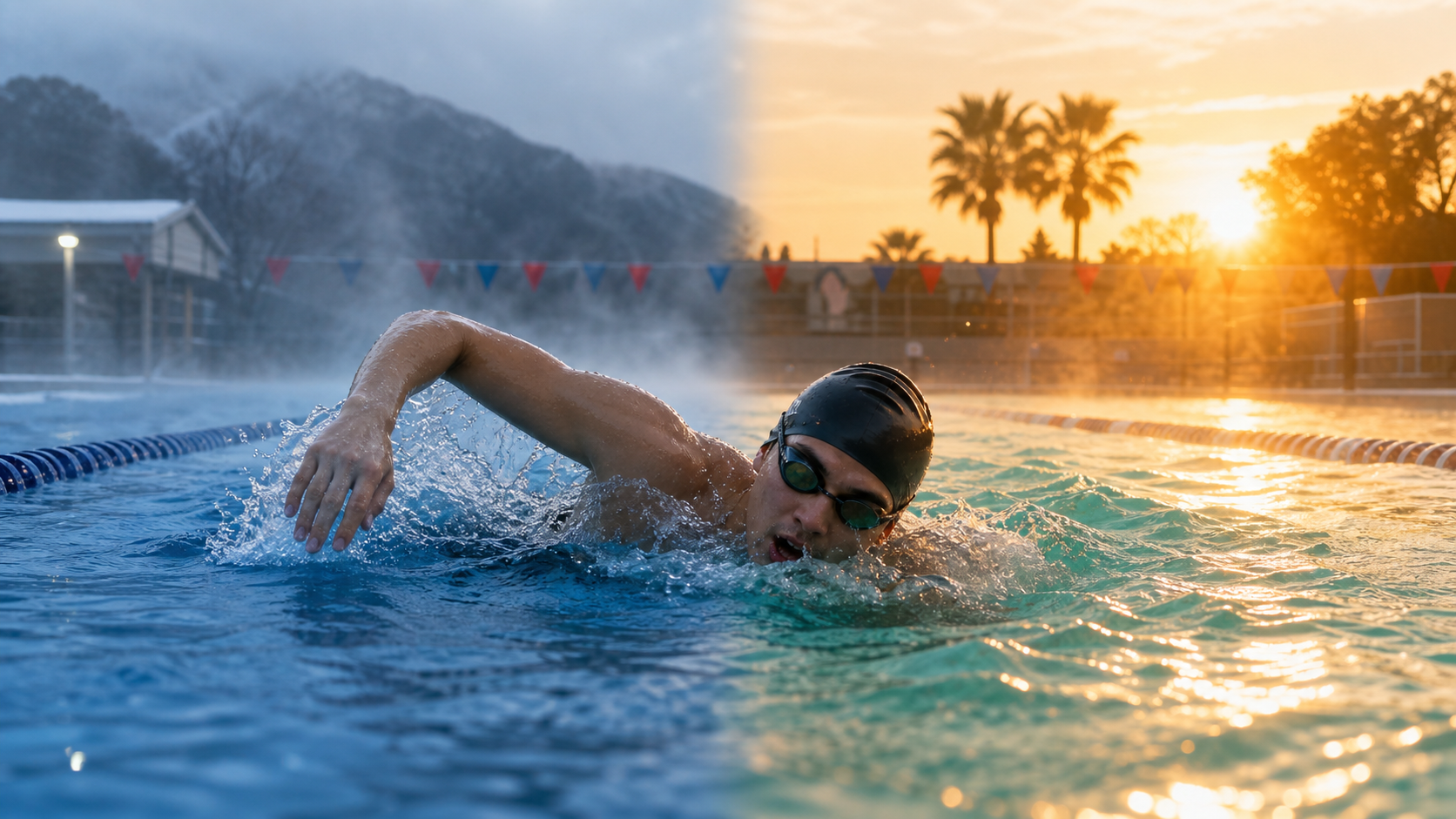
Taiwan is located in the subtropics, where seasonal variations in the swimming environment are more extreme than in temperate countries—outdoor pool water temperatures can reach 31–33°C in summer, while some unheated school pools can drop to 18–22°C in winter, a difference of nearly 15°C. Such seasonal changes not only affect thermal comfort but also profoundly alter the physiological responses to swimming: from the efficiency of energy metabolism to neuromuscular function, from cardiovascular load to the rate of training adaptation, every aspect is regulated by water temperature.
Physiological Responses in Cold Water (< 24°C)
Immediate Response: Cold Shock
Within the first 30–60 seconds of rapid cold-water exposure, the body exhibits a “cold shock response”:
- Uncontrollable deep gasping, increasing the risk of drowning
- Heart rate spikes then rapidly drops, with a sharp rise in blood pressure
- Rapid constriction of peripheral blood vessels
For Taiwanese winter swimmers (especially early-morning swimmers), entry should be gradual—first entering with the feet, then slowly submerging, avoiding direct jumps into cold water.
Short-Term Adaptation (Minutes to Tens of Minutes)
- Peripheral vasoconstriction persists, and limb skin temperature can drop close to water temperature
- Muscle temperature decreases, reducing contraction speed and power output (for every 1°C drop in muscle temperature, strength decreases by 2–4%)
- Metabolic rate increases, with the body burning large amounts of carbohydrates and fat to maintain core temperature (heat production increases by 30–50%)
- Swimming efficiency decreases, requiring more energy at the same speed
Long-Term Cold Adaptation (Weeks to Months)
Regular cold-water training can induce the following adaptations:
- Lowered threshold for the peripheral vasoconstriction response (stronger reactions are only triggered at lower water temperatures)
- Enhanced non-shivering thermogenesis, increasing the metabolic activity of brown adipose tissue
- Redistribution of subcutaneous fat, improving insulation
- Strengthened diving reflex, with a more pronounced bradycardic effect in cold water
Physiological Responses in Hot Water (> 29°C)
Heat Dissipation Difficulty and Rising Core Temperature
When water temperature exceeds 29°C, the body-to-water temperature gradient narrows, reducing heat dissipation efficiency. After prolonged high-intensity swimming, core temperature can rise above 38.5°C, approaching the warning threshold for exertional hyperthermia. Symptoms include:
- Early stage: dizziness, nausea, decreased attention
- Middle stage: noticeable deterioration of swimming technique (the primary early warning sign of overheating)
- Late stage (rare but dangerous): convulsions, altered consciousness
Cardiovascular Stress in Hot Water
During hot-water swimming, skin blood vessels dilate to promote heat dissipation, competing with working muscles for blood flow, placing greater strain on cardiac output distribution. Heart rate is often 5–10 bpm higher than swimming at the same intensity in moderate temperatures, subjecting the cardiovascular system to greater load.
Benefits of Heat Acclimatization
Taiwanese summer swimmers can gain specific physiological adaptations from regular hot-water training:
- Lowered sweating threshold (heat dissipation begins earlier)
- Plasma volume increases by 10–15%, enhancing oxygen-carrying and heat-dissipating capacity
- Reduced heart rate response to heat stress (more stable heart rate at the same intensity)
- This adaptation is particularly beneficial for triathletes’ summer race performance
| Water Temperature Range | Primary Physiological Challenge | Maximum Appropriate Training Duration | Special Considerations |
|---|---|---|---|
| < 18°C | Risk of hypothermia | 15–30 minutes | Insulated swimwear essential |
| 18–22°C | Reduced muscle efficiency | 45–60 minutes | Thorough land-based warm-up |
| 22–26°C | Mild cold sensation | 90–120 minutes | Normal training |
| 26–28°C | Optimal range | Unlimited | Peak performance |
| 28–30°C | Mild heat stress | Hydration needed beyond 90 minutes | Supplement electrolytes |
| > 30°C | Heat dissipation difficulty | High intensity < 60 minutes | Reduce intensity, consume cold fluids |
Seasonal Training Strategies for Swimming in Taiwan
Winter (November–February): Cold-Water Training Period
- Increase the proportion of land-based strength training to compensate for reduced swimming efficiency in cold water
- Extend warm-up time to 20–25 minutes (low-intensity warm-up in the water until muscle temperature rises)
- Appropriately develop cold tolerance (especially for open-water and triathlon athletes)
- Pay attention to energy intake: the elevated metabolic rate in cold water means greater carbohydrate replenishment is needed
Spring (March–May): Transition and Base-Building Period
- As water warms, aerobic base training volume can be significantly increased
- Build on winter strength training gains by transitioning to increased in-water swimming intensity
- Target races often fall in this season; maintain training continuity
Summer (June–September): High-Volume Training Period
- Water temperature is favorable, aerobic metabolic efficiency is at its highest, suitable for high-volume aerobic training
- However, during extreme heat (water temperature > 30°C), the number of high-intensity training sets should be reduced to maintain technique quality
- Hydration strategy is most critical; actively replenish every 30 minutes
Autumn (October): Peak Competition Period
- Water temperature gradually drops into the ideal range (26–28°C), making it the best season for swimming performance
- Training volume begins to taper, with emphasis on high-intensity quality work
Practical Recommendations
- Carry a thermometer during winter training: Measure water temperature before each session as the basis for determining training intensity and duration
- Make hydration ritualistic in hot-water training: Place a fixed hydration container poolside in summer and drink every 2–3 sets (approximately 15–20 minutes) to form a habit
- Leverage seasonal advantages to develop special abilities: Use winter cold water to build cold tolerance; summer heat-acclimatization training directly enhances heat dissipation efficiency
- Water-temperature simulation training for triathletes: If race water temperature is forecast at 22–24°C, schedule some training in similar water temperatures 2 weeks before the race to avoid race-day temperature shock
Conclusion
Taiwan’s unique subtropical climate provides rich seasonal variation for swimming training. Leveraging these differences—developing cold tolerance in winter, accumulating aerobic base in summer, and reaping competitive peaks in autumn—is a smart framework for scientifically planning year-round training programs. Understanding the physiological effects of water temperature on the body is not just the foundation of safety but also a key capability for transforming environmental conditions into training advantages.
Related Reading
- Cold-Water Adaptation in Swimming: The Effects of Water Temperature on Heart Rate, Metabolic Rate, and Oxygen Consumption
- The Impact of Water Temperature on Swimming Performance: Heat Acclimatization and Cold-Water Swimming Physiology
- Physiological Adaptation to Cold-Water Swimming: Coping with Water Temperatures at Taiwan’s Northeast Coast in Winter
- Swimming Technique Adjustments at Different Water Temperatures: Body Responses and Adaptation in Cold-Water Swimming
[防寒衣體驗] 鐵人魂 三鐵 防寒衣試穿會 於松運 深水游泳池 鯨魚池
8 年前
CT暗黑廚房) 車友必備 宇宙無敵鮮蚵湯 幫助訓練恢復 天然食補 好市多 超肥鮮蚵 破PR
7 年前
2016/05/13 單車 冷水坑下滑
10 年前
水金九不厭五分 10度寒流冷到不願停!feat. 卡卡 / 公路車 / CT Yeh
6 個月前
西進武嶺 免費訓練分析服務 Intervals | 練不夠還是練過頭?你哪一種類型選手?AI模型告訴你! | 備戰神器 | 公路車 訓練 | CT Yeh
4 年前
秘境雪場 日本 八甲田 冰樹探險與滑雪體驗 ft. Q老師 & 運動生活
7 年前
4K 東眼山 x 水蜜桃冰沙 百人單車約騎! 操完再吃冰 多爽快
7 年前
虎豹潭!日本老師來台一日約騎 台灣車友熱情招待私房路線 / CT Yeh
20 天前