Running Compression Apparel: A Full Analysis of the Scientific Benefits of Muscle Support and Venous Return
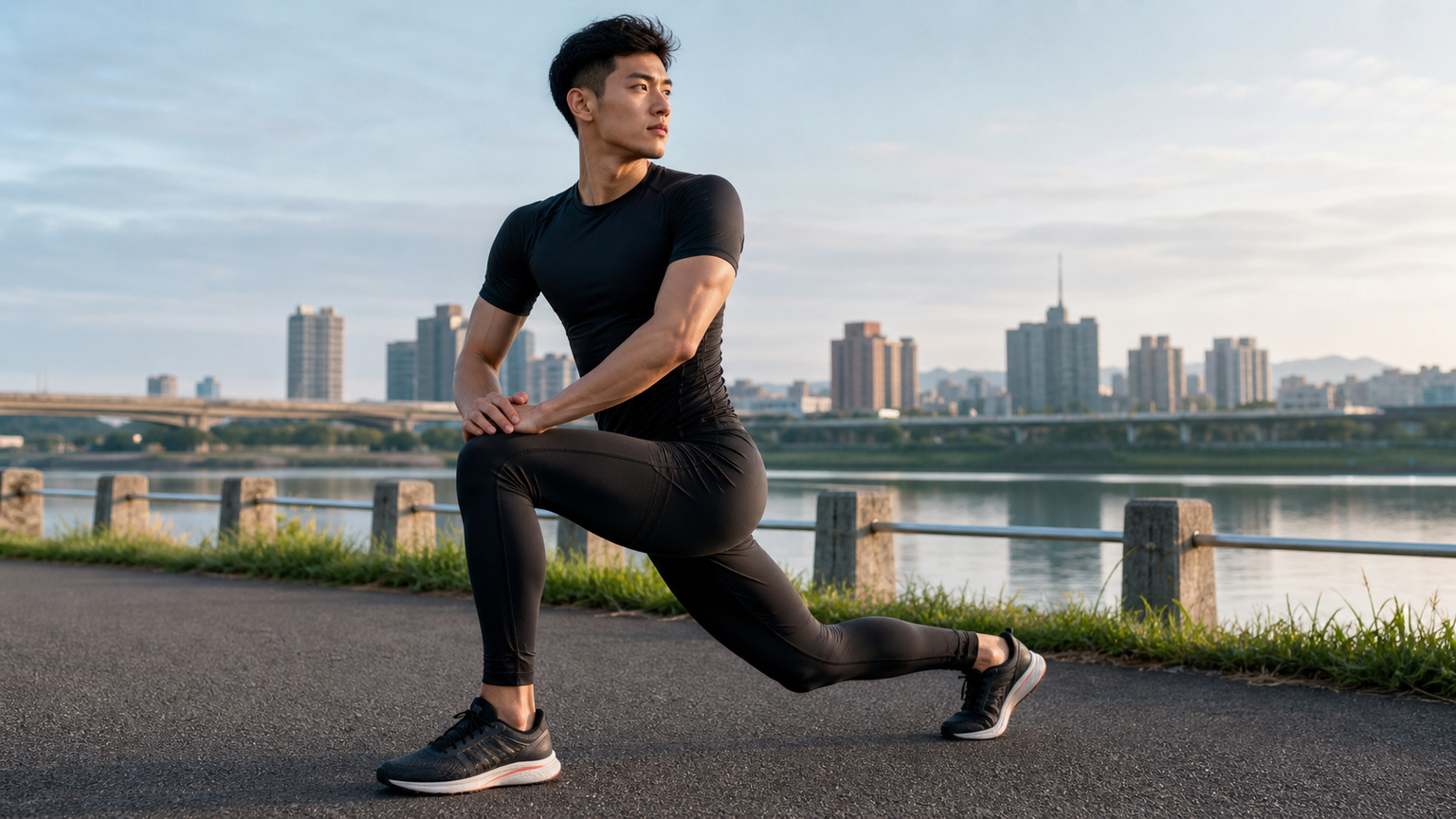
Introduction
Among the crowds at road races across Taiwan, compression running tights have become almost standard equipment. From Compressport, 2XU, and CEP to the compression lines of major sports brands, prices range from a few hundred to several thousand NT$. But amid the dizzying array of options, what real benefits can compression apparel actually deliver? And what does sports science research have to say?
The Mechanism of Action of Compression Apparel
Compression garments apply external pressure (measured in mmHg) and primarily affect the following physiological systems:
Enhanced Venous Return
While running, venous blood in the lower limbs must work against gravity to return to the heart. Compression tights (especially compression calf sleeves) apply graduated pressure from the distal end (ankle) toward the proximal end (knee), mimicking the principle of medical compression stockings, which helps accelerate venous blood return. This benefit is especially pronounced in the later stages of long-distance running, helping to reduce the feeling of heaviness in the lower limbs.
Muscle Vibration Damping
When the foot strikes the ground during running, muscles produce slight vibrations with each impact. Research suggests that this “muscle vibration” is linked to the onset of delayed-onset muscle soreness (DOMS). By fitting tightly against the muscle surface, compression garments physically reduce the amplitude of muscle vibration, which in theory can lower micro-damage to muscle fibers.
Enhanced Proprioception
The continuous pressure stimulation of compression garments on the skin can enhance joint position sense (proprioception), making runners more sensitive to lower-limb posture. Some studies suggest this helps maintain running form quality in the later stages of a run.
What the Scientific Research Says
| Claimed Benefit | Level of Research Support | Notes |
|---|---|---|
| Accelerates post-run recovery | Moderate-strength evidence | Most studies show reduced DOMS and faster strength recovery |
| Reduces lactate accumulation during running | Weak to moderate | Some studies show an effect, but individual variation is large |
| Improves running economy | Weak | Existing research findings are inconsistent |
| Prevents sports injuries | Weak | Lacks sufficient prospective studies |
| Reduces muscle vibration | Strong | Mechanical benefits are well supported by measurement data |
| Promotes venous return | Strong | Medical-grade compression has solid clinical evidence; athletic-grade data is similar |
It is worth noting that the benefits of compression garments are highly dependent on the compression pressure level. Most medical studies use pressures above 15–30 mmHg, whereas the actual pressure values of commercially available athletic compression garments often lack standardized certification and vary enormously.
Compression Pressure Levels and Buying Guide
- Mild compression (8–15 mmHg): Comfortable for daily wear and not overly warm; suitable for first-time users or prolonged static situations (e.g., on an airplane)
- Moderate compression (15–20 mmHg): The target range for most athletic compression garments; suitable for general road running training and racing
- Firm compression (20–30 mmHg): Close to medical grade; suitable for recovery after long-distance ultramarathons
Given Taiwan’s hot and humid climate, special attention should be paid to fabric breathability when purchasing:
- Nylon/Lycra blends: The most common compression garment material; good elasticity, but moisture-wicking performance varies by brand
- Merino wool blends: Excellent natural temperature regulation and odor resistance, but with a higher price tag; suitable for fall and winter races
- Bamboo charcoal fiber blends: Used by some Taiwanese brands; claimed to offer antibacterial and deodorizing effects
Strategic Timing of Wear
The timing for wearing compression apparel can be divided into three categories:
- Wearing during training: Helps with muscle vibration damping; can reduce late-run form breakdown during long-distance sessions
- Wearing during races: Offers the same benefits, but in Taiwan’s hot and humid weather, full-leg compression tights may increase the feeling of stuffiness; it is recommended to get used to them during training first
- Wearing for post-run recovery: The use case with the strongest research support. Wearing them for 30 minutes to several hours after a run helps accelerate venous return and reduce leg swelling. Most ultramarathon runners report subjective improvements in next-day muscle soreness
Practical Recommendations
- Prioritize upper-body garments or calf sleeves in Taiwan’s summer: If the daytime temperature exceeds 30°C, full-leg compression tights may raise perceived body temperature. Consider switching to compression calf sleeves instead, which balance venous return benefits with breathability
- Washing precautions: The elastic fibers (Lycra/Spandex) in compression garments are sensitive to high heat. Hand wash in cold water or machine wash on a low-temperature cycle, and avoid the dryer to extend the durability of the compression effect
- Don’t just buy the most expensive pair: Research shows that within a reasonable compression level, price differences do not fully reflect performance differences. Start with a mid-priced product to gauge your own tolerance for compression apparel
- Listen to your body: If you feel discomfort or numbness in your legs while wearing compression tights, it means the compression pressure is too high. Switch to a properly fitting size immediately
Conclusion
The benefits of compression apparel for runners are real, particularly in promoting post-run recovery and reducing muscle vibration, where scientific support is stronger. However, it is not a magic tool and cannot compensate for insufficient training or flawed running form. Treat compression garments as an auxiliary aid, and use them correctly at the right times to maximize their practical benefits. Taiwanese runners may want to start with compression calf sleeves to experience the “light, fresh feeling in the legs” that comes from improved venous return, and then gradually assess whether an upgrade to full-leg compression tights is needed.
Related Reading
- The Evidence for the Benefits of Running Compression Tights: What the Science Really Tells You
- The Effects of Compression Tights on Running: What the Science Says
- The Recovery Benefits of Compression Tights: Best Timing and Pressure Levels for Wearing Them
- The Recovery Effects of Compression Garments: What Does the Science Say?
3D 列印車褲墊 / 舒適改善? / 無痕 x 分區壓縮 / ATK & Decider系列 / JE22黑科技 / #公路車 #CTYEH
11 個月前
#公路車 #Fitting 靠人工智慧APP 幫你調整單車
6 年前
Nepest NOVA 碳條輪組:輕量、空力、舒適一次滿足!/ 公路車 / CT Yeh
7 個月前
詳測) 小米 電動打氣筒 公路車胎要充多久? 值得買嗎? 米家充氣寶 小心燙手!
7 年前
CT暗黑廚房) 車友必備 宇宙無敵鮮蚵湯 幫助訓練恢復 天然食補 好市多 超肥鮮蚵 破PR
7 年前
摔車後補裝備: 好市多新款單車安全帽& Specialized Romin 北高整路屁股都不痛的坐墊 | 一千元居然有MIPS | CT Yeh | 公路車
4 年前
鉅齒紋輪組!? ControlTech MEG-T50 EVO 碳纖維幅條輪組/ 功率對比實驗 / 公路車 / CT Yeh
2 年前
大家都在開箱的...單車用藍芽對講耳機真的有幫助嗎? SENA BiKom 20 長距離旅遊 & 海鷗繞圈賽 實際體驗心得 / 公路車 / CT Yeh
9 個月前