Swimming Lap Counters and Pool Stopwatches: A Functional Comparison and Buying Guide for Lap-Tracking Tools
Introduction
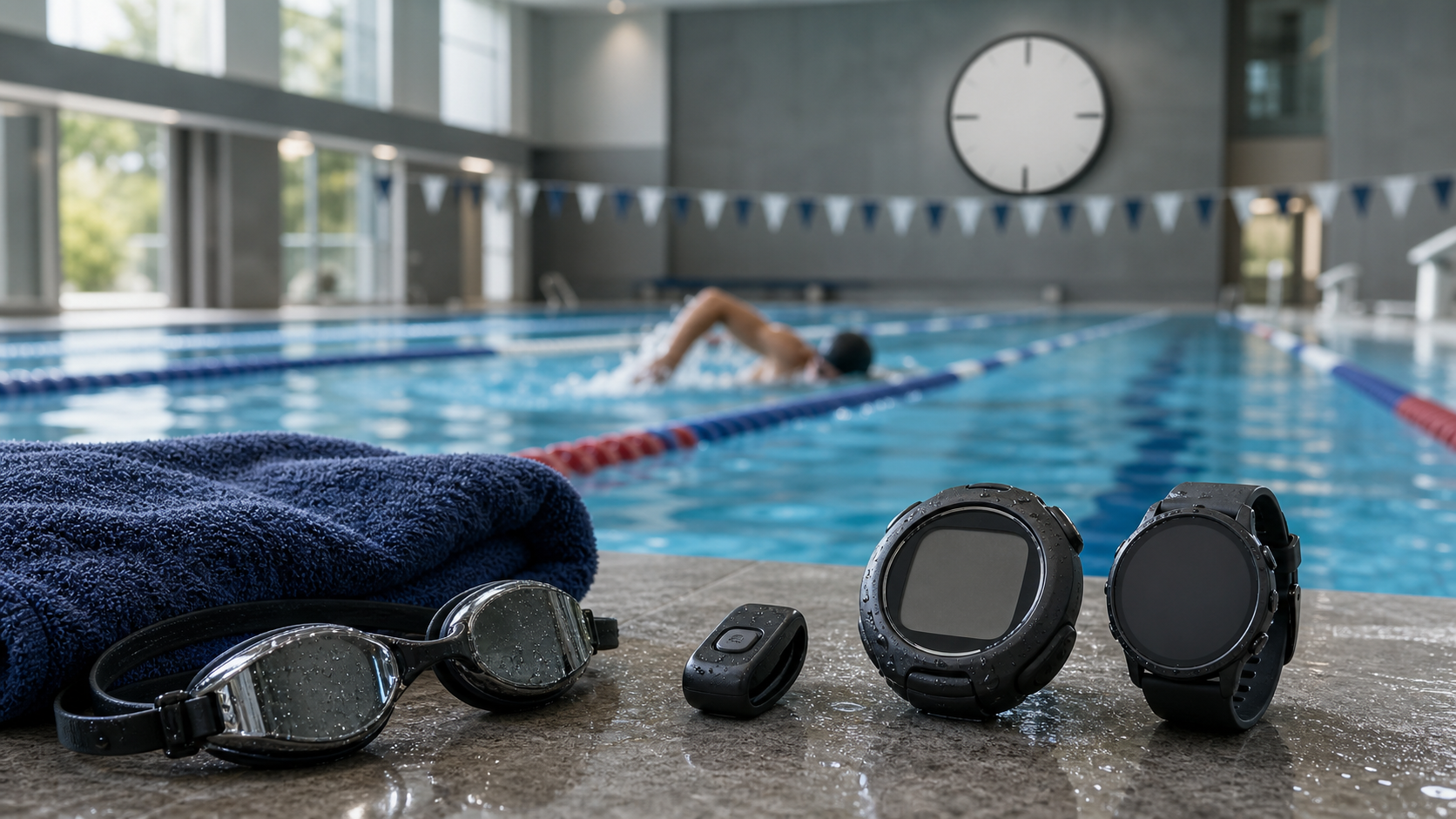
The challenge of logging swim training lies in the underwater environment—unlike running, you can’t easily check your phone, and it’s hard to keep a clear mental count of how many laps you’ve swum. Lap counters and pool pace clocks have solved this problem. From the simplest finger-mounted lap counters to intelligent lap-counting systems with automatic recognition, Taiwanese swimmers have a wide range of options. This article breaks down the features of each type of lap-counting tool to help swimmers with different needs find the most suitable solution.
Overview of Lap-Counting Tool Categories
Main Types and Features
| Tool Type | Pros | Cons | Price Range (NT$) |
|---|---|---|---|
| Finger lap counter (ring-style) | Cheap, reliable, no battery | Requires manual clicking, distracts attention | 50–200 |
| Waterproof wrist stopwatch | Multi-functional, easy to operate | Requires manual button presses, risk of accidental presses | 500–3,000 |
| Magnet-sensor lap counter | Automatic lap counting, reduces manual operation | Requires attaching magnet strips, accuracy affected by distance | 1,500–5,000 |
| Smartwatch (Garmin/Apple) | Automatic stroke recognition, detailed data | Expensive, requires learning curve | 5,000–30,000+ |
| Pool pace clock | Usable by the whole team, highly visible | Not portable, fixed pool equipment | N/A (pool-provided) |
Tips for Using Finger Lap Counters
A Traditional but Reliable Choice
The simplest finger lap counter is a counting ring worn on the finger that you click with your thumb, advancing one notch for each lap completed. Though basic in design, it remains a trusted tool for many veteran swimmers during long-distance training (e.g., 3,000–5,000 meters) in a 50-meter pool.
Usage tips:
- Wear it on the ring finger of your non-dominant hand to minimize unnecessary distraction during your stroke
- Before long-distance sets, set “whole-number distance units” such as 50 or 100 meters per lap for easier calculation
- Cross-check with the pool’s lap-count board (the numbered board flipped by pool staff) for double confirmation
Key Considerations When Buying a Waterproof Stopwatch
Differences in Water Resistance Ratings
A swimming stopwatch must have true waterproof capability, not just “splash resistance.” When purchasing, note:
- IPX7: Can be submerged in 1 meter of water for 30 minutes, suitable for pool use
- IPX8: Can withstand greater water pressure, suitable for open water
- ATM ratings: 3 ATM ≈ swim-friendly, 5 ATM ≈ safe for swimming, 10 ATM ≈ suitable for diving
Common swim stopwatch brands in the Taiwanese market, such as Rip Curl, Timex, and Casio’s Pro Trek/G-Shock series, all offer reliable waterproofing. You can try them on in person at swim shops or sporting goods stores.
The Importance of Button Design
The feel of operating buttons underwater is completely different from on land. Large buttons with a clear tactile click can effectively reduce the chance of accidental presses or missed presses in the water. Some high-end stopwatches offer “water detection” functionality, which automatically enters lap-counting mode upon sensing water resistance, avoiding the problem of forgetting to start before entering the water.
Magnet-Sensor Lap-Counting Systems
How They Work and Where They’re Used
A magnet-sensor lap-counting system typically consists of two parts: a magnetic sensor strip (or touch-sensing pad) mounted on the pool wall, and a receiver worn on the wrist. Each time you turn and touch the wall, the sensor automatically records a lap, eliminating the need for manual button presses.
These systems are gradually becoming more common in university swim teams and training centers across Taiwan. Their main advantage is allowing athletes to accurately record split times for each lap even during high-intensity interval training, with backend software enabling analysis of pacing distribution and fatigue trends.
Professional Training Applications of the Pool Pace Clock
Many public pools in Taiwan are equipped with large analog-style pace clocks, which are the standard tool for determining departure intervals in swim training. How to use them:
- Top-of-the-clock departures: Start uniformly from the 12 or 6 o’clock position, then time each swim
- Fixed intervals: For example, “depart every 2 minutes for a 100m swim,” observing your own departure interval
- Rest time calculation: After finishing, check how many marks the second hand has moved to convert into rest seconds
Learning to read the pace clock is a fundamental skill for joining a swim training team. Beginners attending their first training sessions are advised to familiarize themselves with reading it in advance.
Advanced Data-Logging Needs
For swimmers with higher training-data requirements, devices such as the FINIS Swimsense and Garmin swimming smartwatches offer more comprehensive options, automatically recognizing strokes, calculating stroke rate (SWOLF), and recording split times. The details of these devices will be explored further in a follow-up article in this series.
Practical Recommendations
- Beginners: A finger lap counter paired with the pool’s pace clock—total cost under NT$ 200—is sufficient for everyday training logging
- Intermediate swimmers: A waterproof stopwatch (mid-range models at NT$ 800–2,000) provides more accurate time recording and lap functions
- Competitive swimmers: Consider a smart swimming watch (e.g., Garmin Swim 2) for automatic lap counting and detailed stroke data
- Swim teams or training centers: Consider implementing a magnet-sensor lap-counting system for full training-data analysis capabilities
- Important reminder: Regardless of which lap-counting tool you use, regularly cross-check your lap count with pool staff or training partners to avoid inaccurate training logs due to system malfunctions
Conclusion
You don’t need to go all-in on lap-counting tools right away—choosing the right tool based on your current training needs is what matters most. Starting with a simple finger lap counter to build a logging habit, then upgrading to more precise timing devices as training volume increases and goals rise, is the gradual approach that best fits the actual needs of swimming enthusiasts in Taiwan.
Related Reading
- Swim Lap Counters: Usability of Mechanical vs. Electronic Lap Counters
- Swim Stopwatch Comparison: In-Depth Review of Garmin Swim 2 vs. Apple Watch Ultra for Swimming
- Complete Swimming Gear Guide: Buying Advice for Goggles, Wetsuits, and Training Aids
- Pool Training Tool Combinations: Best Setup for Beginners vs. Advanced Swimmers
入門車錶王者 iGPSPORT BSC100S 一千元的售價! 超大螢幕、連續兩趟北高的續航、藝術般的APP! Bryton Garmin 兩王地位撼動? | 公路車 | CT Yeh
3 年前
Garmin Edge 1050 旗艦車錶 全台首測!/ 環法冠軍指定 / 對比Edge 1040改進哪些? / 公路車 / CT Yeh
2 年前
Garmin Edge 540/840 Solar 台灣首發開箱!完整車錶功能 道路實測 / ClimbPro 爬坡提示超級牛 / 強大續航實測 / 公路車 / CT Yeh
3 年前
2022 前十五大自行車錶 !? 兩萬名車友大數據統計 | 你的上榜了嗎? | 菁英車友都用哪些錶? | Bryton Garmin 誰能拔得頭籌?| 車錶推薦 | 公路車 CT Yeh
4 年前
2025 自行車錶排行榜 兩萬車友大數據 / Garmin Bryton 排名會大洗牌嗎? / 全新的碼表前身分析 /公路車 / CT Yeh
1 年前
Apple Watch 3 值得 買嗎!? 實測 單車車錶 遙控相機 Zwift 心律連線 Apple Pay 全聯買菜 GoPro 遙控
8 年前
類空拍神器 Feiyu Pocket 2s (有優惠連結)三軸穩定 運動攝影機 開箱!比GoPro 還強的滑順視角!三小時長時間錄影 行車記錄器 | 環花東365實測 | 公路車 CT Yeh
4 年前
全台首發神車錶! iGPSPORT iGS630 兩趟一日北高的續航! 超強導航、功率訓練、超人性APP! Garmin & Bryton 有對手了嗎? | 公路車 |CT Yeh
3 年前