Introduction
“I feel like eating a huge meal right after swimming”—a common sentiment among many Taiwanese swimmers. But the more important question is: replenishing the right nutrients at the right time maximizes training benefits. Swimmers face a unique fueling challenge: sweating is hard to notice in the water, and you can’t easily grab a gel or sports drink mid-workout like you can while running or cycling. This article provides a science-based, swimming-specific nutrition strategy from a sports nutrition perspective.
Energy Substrate Characteristics in Swimming
At different training intensities, the proportion of primary energy sources in swimming:
| Swimming Intensity | Carbohydrates | Fat | Notes |
|---|---|---|---|
| Easy pace (<60% max HR) | 40–50% | 50–60% | Fat oxidation dominant |
| Moderate intensity (60–75% max HR) | 55–65% | 35–45% | Mixed fuel utilization |
| Threshold intensity (75–85% max HR) | 70–80% | 20–30% | Carbohydrate dominant |
| High intensity (>85% max HR) | 85–95% | 5–15% | Almost entirely glycogen-dependent |
During high-intensity swim training (e.g., interval sprint sets), muscle glycogen depletion can reach 4–6 mmol/kg per minute, and a single hour of training can deplete 50–70% of muscle glycogen stores.
Pre-Training Carbohydrate Intake
3–4 Hours Before Training (Main Meal)
- Carbohydrate intake: 1.5–2.5 g/kg (e.g., a 65 kg athlete consumes 98–163 g)
- Sources: white rice, noodles, sweet potatoes, bananas, and other low-fiber, easily digestible foods
- Practical Taiwanese option: one and a half bowls of white rice + chicken breast + a small amount of vegetables is an ideal pre-training main meal
- Avoid high-fat foods (fried items, greasy dishes) to prevent delayed gastric emptying
30–60 Minutes Before Training (Snack)
- If more than 3 hours have passed since the last meal, consume 30–50 g of fast-acting carbohydrates
- Good Taiwanese choices: 1 banana (about 25 g carbs), 2 slices of white toast (about 28 g), maltose (energy bar)
- Avoid high-protein snacks (slow gastric emptying may cause discomfort once in the water)
Mid-Training Fueling: The Swimmer’s Unique Challenge
The main challenges of fueling during swim training:
- You can’t drink while swimming (unlike running or cycling)
- The aquatic environment reduces thirst sensation, making dehydration easy to overlook
- Chlorinated pool water is not suitable for direct hydration
Practical strategies:
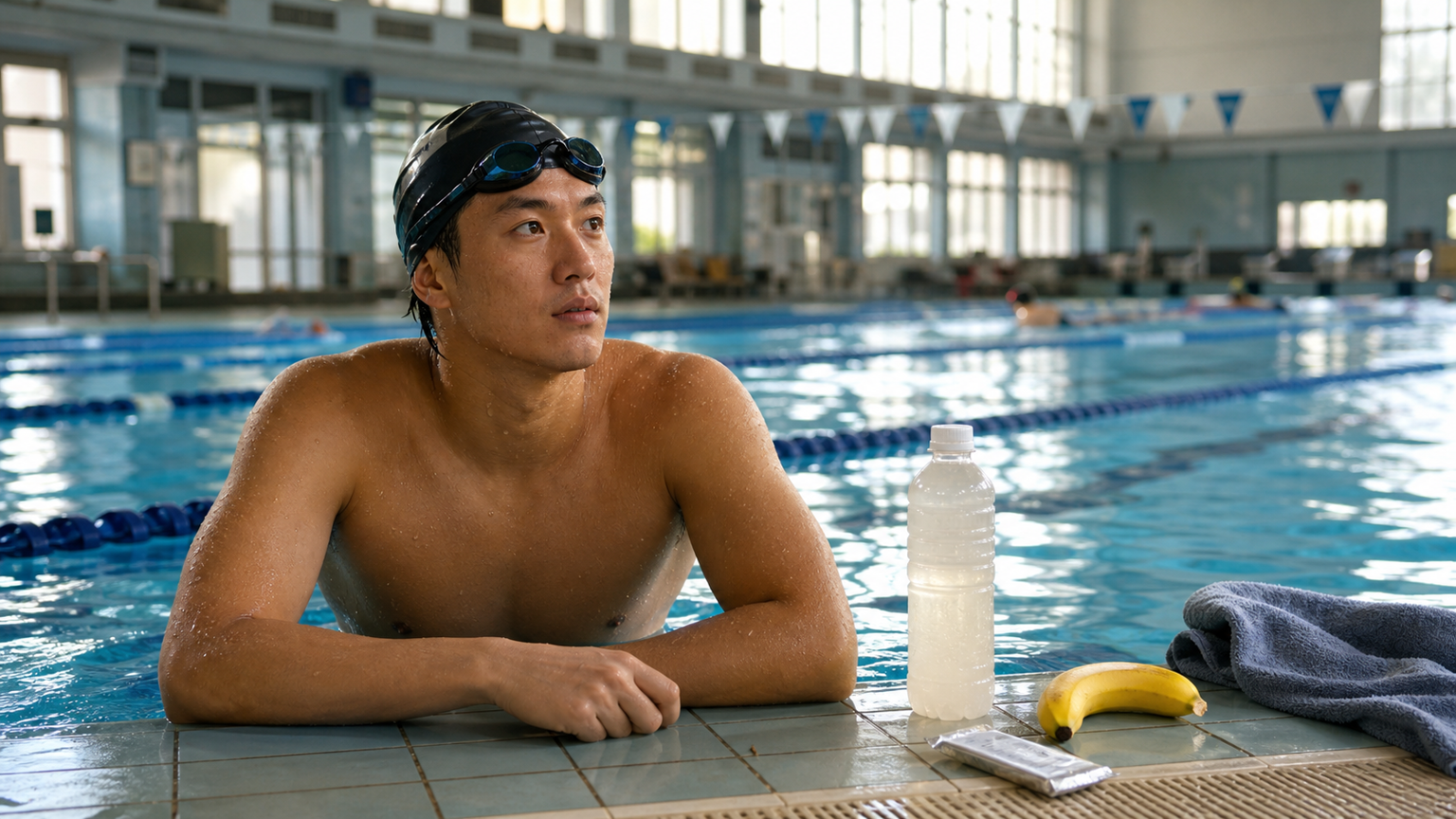
- Place a water bottle at the end of the lane and take in 200–300 mL during rest intervals every 20–25 minutes
- For long-distance sessions (>90 minutes), pair with a carbohydrate drink (6–8% concentration) to maintain blood glucose stability
- During Taiwan’s summer pool training, proactive hydration is even more essential—replace “drink when thirsty” with “planned hydration”
Post-Training Recovery Nutrition
The Golden 30–45 Minutes After Training (Recovery Window)
Glycogen synthase activity in muscles is at its highest after training, making this the golden window for recovery nutrition:
Carbohydrates: 0.8–1.2 g/kg of fast-digesting carbs (e.g., a 65 kg athlete consumes 52–78 g)
- Good Taiwanese choices: white rice, white toast, bananas, sports drinks mixed with fruit juice
Protein: 0.2–0.3 g/kg (about 15–20 g) to promote muscle repair
- Good Taiwanese choices: soy milk (250 ml, about 9 g), 2 eggs (about 12 g), whey protein (if needed)
Optimal ratio: Carbohydrate-to-protein ratio of 3:1 to 4:1 is the best recovery ratio after swimming
2 Hours After Training (Full Recovery Meal)
Replenish with a complete, balanced meal, emphasizing:
- Sufficient carbohydrates to continue restoring glycogen
- High-quality protein (chicken, fish, legumes) to support muscle synthesis
- Electrolyte replacement (sodium, potassium), especially when sweat loss during swimming is high
Common Dietary Misconceptions Among Taiwanese Swimmers
- Misconception 1: You must eat a huge meal after swimming: Swimming is not the highest-calorie-burning sport, and water pressure and temperature can disrupt appetite regulation; overeating can offset training benefits.
- Misconception 2: No hydration needed for swimming: Research shows that even in the water, swimmers can lose 300–600 mL of fluid per hour. Dark yellow urine after training is a warning sign of dehydration.
- Misconception 3: Protein alone is enough: Glycogen replenishment is more urgent than protein after swimming. Many Taiwanese athletes overemphasize protein while neglecting carbohydrate intake, slowing recovery.
- Misconception 4: Fasted swimming burns fat: Fasted swimming does increase fat oxidation, but it also raises the risk of muscle breakdown, and high-intensity training quality drops significantly. It is not recommended for general fitness swimmers and should be absolutely avoided by competitive athletes.
Practical Recommendations
- Prepare immediate post-training fuel: Before each session, pack 1 banana + 1 carton of soy milk or milk in your swim bag, and consume them immediately after getting out of the water—no need to wait until you get home to eat.
- Conservative eating on race day: Never try new foods on race day; stick to familiar foods to keep the gut stable. Stop eating solid foods 2 hours before the race.
- Electrolyte replenishment is especially important in Taiwan’s summer: High-temperature swim training accelerates sweat loss. Sodium supplementation (300–500 mg/hour) can prevent hyponatremia, particularly in long-distance swimming events.
- Track your diet and training feel: Keep a log of pre- and post-training meals and subjective training quality for 3 consecutive weeks to identify your personalized optimal fueling pattern.
Conclusion
Nutrition is the “invisible fuel” of swim training. The timing and content of fueling directly affect training quality, recovery speed, and long-term performance gains. Taiwan’s abundant food options provide excellent sports nutrition support—from street-side bananas and soy milk to convenience store rice balls, all can serve as scientific fueling tools for swimmers. The key is building awareness so that every meal prepares you for the next time you hit the water.
Related Reading
- Swimming Athletes’ Nutrition Strategy: Carbohydrate Timing
- Swimming Athletes’ Nutrition Strategy: In-Season Weight Management and Carbohydrate Loading Plan
- Pre-Swim Energy Intake: Dietary Strategies 1–2 Hours Before Training
- What to Eat 90 Minutes Before Swimming: The Dietary Specifics of Water-Based Training
CT暗黑廚房) 車友必備 宇宙無敵鮮蚵湯 幫助訓練恢復 天然食補 好市多 超肥鮮蚵 破PR
7 年前
西進武嶺 免費訓練分析服務 Intervals | 練不夠還是練過頭?你哪一種類型選手?AI模型告訴你! | 備戰神器 | 公路車 訓練 | CT Yeh
4 年前
靠單車減肥35公斤 心得分享與整理
7 年前
4K 東眼山 x 水蜜桃冰沙 百人單車約騎! 操完再吃冰 多爽快
7 年前
水金九不厭五分 10度寒流冷到不願停!feat. 卡卡 / 公路車 / CT Yeh
6 個月前
滑雪新手們慘摔學習全紀錄(請開字幕),滑雪好好玩 | Snowboard + Ski | 岩原 スキー場 | 滑雪APP使用 | GoPro Max
6 年前
live) 超越北高 之一日北高12小時 策略
7 年前
#公路車 #Vo2Max #最大攝氧量 測驗 體驗 | 心肺測試
6 年前