Introduction
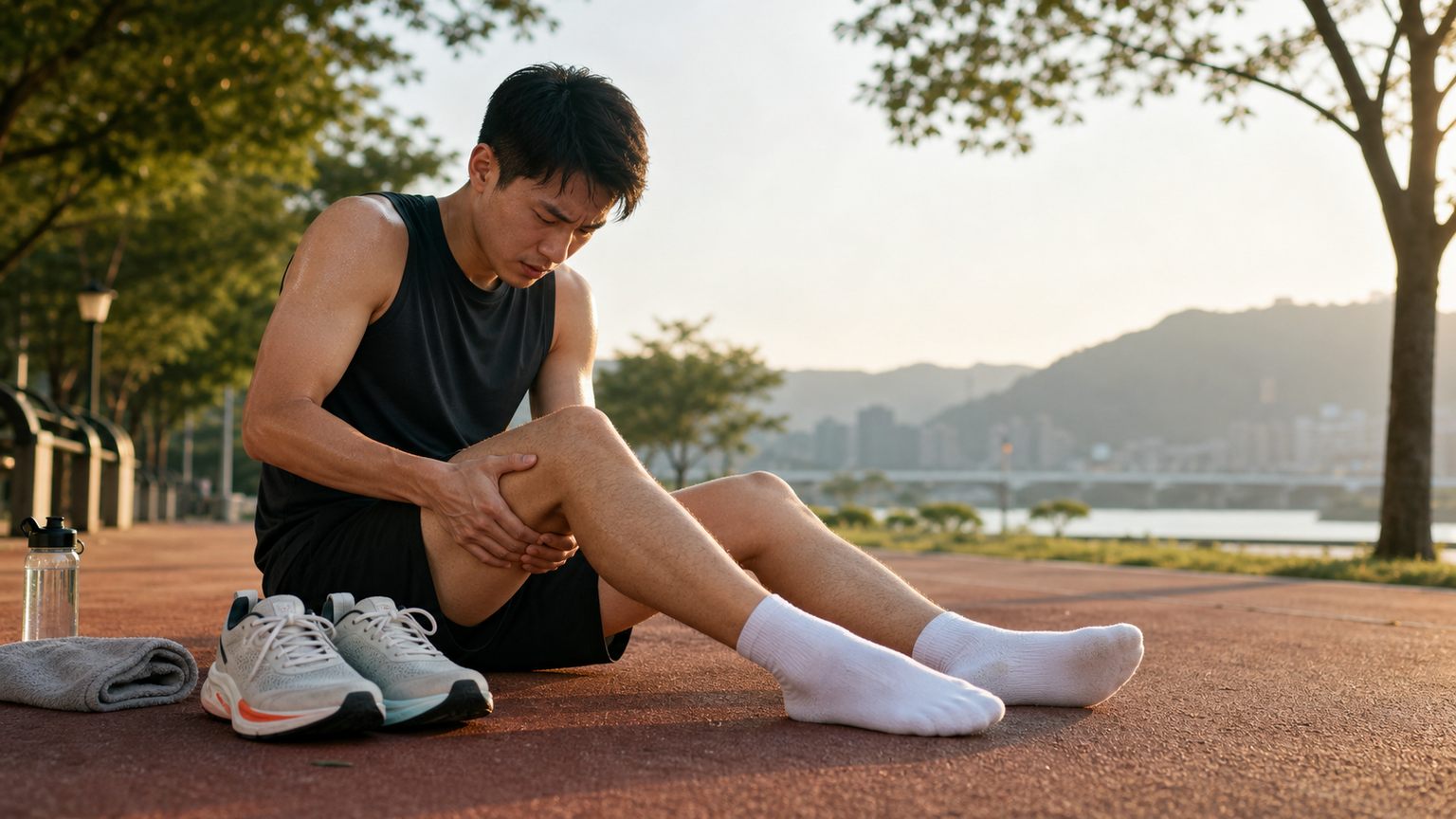
The morning after finishing a half marathon or trying downhill running for the first time, the stabbing pain in your legs as you walk down the stairs—that is Delayed Onset Muscle Soreness (DOMS). Nearly every runner in Taiwan has had a “close encounter” with it, but understanding of it often stops at the long-disproven misconception that “lactic acid is to blame.”
DOMS is a complex physiological process. Only by understanding its true mechanisms can we find genuinely effective prevention and faster recovery methods.
The True Causes of DOMS
Debunking the “Lactic Acid Theory”
For a long time, it was widely believed that DOMS was “caused by lactic acid accumulating in the muscles.” But modern exercise physiology research has long since debunked this view:
- Lactic acid is cleared within 1–2 hours after exercise ends, whereas DOMS typically appears 12–24 hours after exercise and peaks at 48–72 hours
- Pure aerobic training (low-intensity long runs) produces little lactic acid, yet the frequency of DOMS is no lower than in high-lactate interval training
The True Mechanism: Muscle Damage and Inflammation
The primary cause of DOMS is microstructural damage to muscle fibers, particularly following eccentric contractions (muscles exerting force while lengthening):
- Mechanical damage: Eccentric contractions cause non-uniform stretching of sarcomeres; some sarcomeres overextend, leading to Z-disk disruption
- Inflammatory response: Damaged cells release pro-inflammatory factors (such as IL-6, TNF-α, and prostaglandins), attracting immune cells (especially neutrophils and macrophages) to the damaged site
- Pain sensitization: The inflammatory environment lowers the activation threshold of pain receptors (nociceptors), causing pain in response to normally harmless pressure (such as muscle stretching during walking)
| DOMS Timeline | Key Physiological Events |
|---|---|
| 0–6 hours post-exercise | Micro-damage to muscle fibers; pro-inflammatory cytokines begin to be released |
| 12–24 hours post-exercise | Heavy neutrophil infiltration; swelling and soreness begin |
| 48–72 hours post-exercise | Macrophages clear damaged tissue; soreness peaks |
| 72–120 hours post-exercise | Satellite cells activate; muscle fiber repair begins |
| 5–10 days post-exercise | Repair completed; “repeated bout effect” protection established |
Factors Influencing the Severity of DOMS
The following factors determine why the same training produces different levels of DOMS in different runners:
- Training type: Eccentric contractions (downhill running, eccentric squats) produce the most severe DOMS
- Training experience: With the same stimulus, more experienced runners experience milder DOMS (repeated bout effect protection)
- Intensity and speed: The more intense and faster the eccentric movement, the more severe the DOMS
- Muscle temperature: Cold muscles performing intense exercise are more prone to damage
- Genetic factors: Individuals have genetic differences in susceptibility to muscle damage
Scientific Evaluation of Recovery Strategies
1. Active Recovery
Effectiveness rating: ★★★★
Light, low-intensity aerobic exercise (walking, easy cycling, swimming) can:
- Increase local blood flow, accelerating the clearance of inflammatory byproducts
- Maintain joint mobility, preventing muscles from becoming stiffer
- Not recommended: Active recovery should not include any stretching movements that reach the point of pain
2. Cold Water Immersion
Effectiveness rating: ★★★
- Temperature 10–15°C, lasting 10–15 minutes
- Mechanism: Cold stimulation constricts blood vessels, reducing swelling; after exiting, blood vessels dilate, accelerating blood circulation
- Can reduce subjective pain and swelling, but may slightly inhibit long-term training adaptations (not recommended after every training session)
3. Massage
Effectiveness rating: ★★★
- Studies show massage can reduce the subjective pain of DOMS, but does not change the rate of muscle functional recovery
- Best timing: 2–4 hours after exercise, rather than immediately after
- “Foam Rolling,” very popular in Taiwan’s running community, has similar effects and is more economical
4. Static Stretching
Effectiveness rating: ★★ (controversial)
Multiple studies show that static stretching has extremely limited effects on preventing or reducing DOMS, and may even exacerbate pain when DOMS is severe.
5. Non-Steroidal Anti-Inflammatory Drugs (NSAIDs, such as ibuprofen)
Effectiveness rating: ★★ (use with caution)
- NSAIDs can indeed reduce the pain of DOMS, but the inflammatory response itself is a necessary process for muscle repair
- Long-term or heavy use of NSAIDs may interfere with muscle adaptation and is not recommended for routine training use
- Use only when competition demands or severe pain affects daily life, under a physician’s guidance
6. Protein and Carbohydrate Supplementation
Effectiveness rating: ★★★★
- Consuming 20–40g of protein within 30–60 minutes after exercise activates muscle protein synthesis
- Consuming carbohydrates together with protein can suppress cortisol secretion and reduce muscle breakdown
- Common and effective recovery foods in Taiwan: soy milk with oatmeal, milk with fruit, chicken breast with rice
Training Principles for Preventing DOMS
- Progressive training volume increase: Increase weekly volume by no more than 10%, giving muscles adequate time to adapt
- Thorough warm-up: Raising muscle temperature can reduce the degree of eccentric damage
- Start new training with small doses: When adding new stimuli such as downhill running or weight training, the first session should be kept at 30–50% of the normal volume
- Utilize the “repeated bout effect”: Regularly exposing yourself to the same training stimulus gradually reduces the severity of DOMS
Practical Recommendations
- When DOMS is at its worst (48–72 hours), schedule active recovery such as easy walking or swimming, and avoid intense training
- Foam rolling (30–60 seconds per area) helps alleviate subjective DOMS discomfort and can be used on recovery days
- Don’t completely avoid high-intensity or downhill training out of fear of DOMS—moderate DOMS is a signal of adaptation, not a warning of danger
- For downhill races in Taiwan (such as Taroko), systematically training downhill 6–8 weeks beforehand can effectively reduce the severity of post-race DOMS
Conclusion
DOMS is an unavoidable byproduct of the muscle repair and strengthening process—a necessary step on the path to becoming stronger. Understanding its true mechanisms allows us to view this discomfort rationally: it is not a motivational reminder that “no pain, no gain,” but rather a physiological signal that the muscle adaptation process is underway. Through scientifically designed training and recovery strategies, we can minimize unnecessary suffering while maximizing the long-term benefits of training.
Related Reading
- The Science of Post-Run Muscle Recovery: The Mechanisms of DOMS (Delayed Onset Muscle Soreness)
- Managing Muscle Soreness After Running: Causes of DOMS and Methods to Accelerate Recovery
- The True Causes of Muscle Soreness (DOMS) and How to Handle It
- The Complete Guide to Preventing and Managing Running-Related Delayed Onset Muscle Soreness (DOMS)
一日北高/長距離團騎 常見問題補充篇 / 組團或跟團的眉角 / 壯車友容易被瘦車友慢性拉爆 / 原來屁股痛可能是這個原因...? / 風場配速法 / 公路車 / CT Yeh
2 年前
一日北高常見問題大集合 | 攻略 | 路線 | 訓練 | 補給 | 自行車 單車 | 一日雙城 | 雙塔 | TWB北高360 | 屁股痛
6 年前
摔車後補裝備: 好市多新款單車安全帽& Specialized Romin 北高整路屁股都不痛的坐墊 | 一千元居然有MIPS | CT Yeh | 公路車
4 年前
西進武嶺 免費訓練分析服務 Intervals | 練不夠還是練過頭?你哪一種類型選手?AI模型告訴你! | 備戰神器 | 公路車 訓練 | CT Yeh
4 年前
車錶新黑馬? / 超狂續航 / 超好用錶冠 / 無敵準定位 / Dash圖表合成!?/ COROS DURA 評測!/ 公路車 / CT Yeh
2 年前
一起升級!海鷗盃LSD團練...JJSC Zone2招待 騎到手抖 / 公路車 / CT Yeh
2 天前
2019 柯P 超越北高 第一集團實錄 (11小時實錄請參考另一部影片) 一日雙城 一日北高 NeverStop Taiwan Long Distance Cycling Challenge
7 年前
2019 夏季KOM 5小 完賽心得 準備攻略 東進武嶺 夏季登山王之路 Taiwan KOM Challenge
7 年前