Swimming Underwater Earphones: A Complete Guide to Bone Conduction Technology and Pool Music Training
Introduction
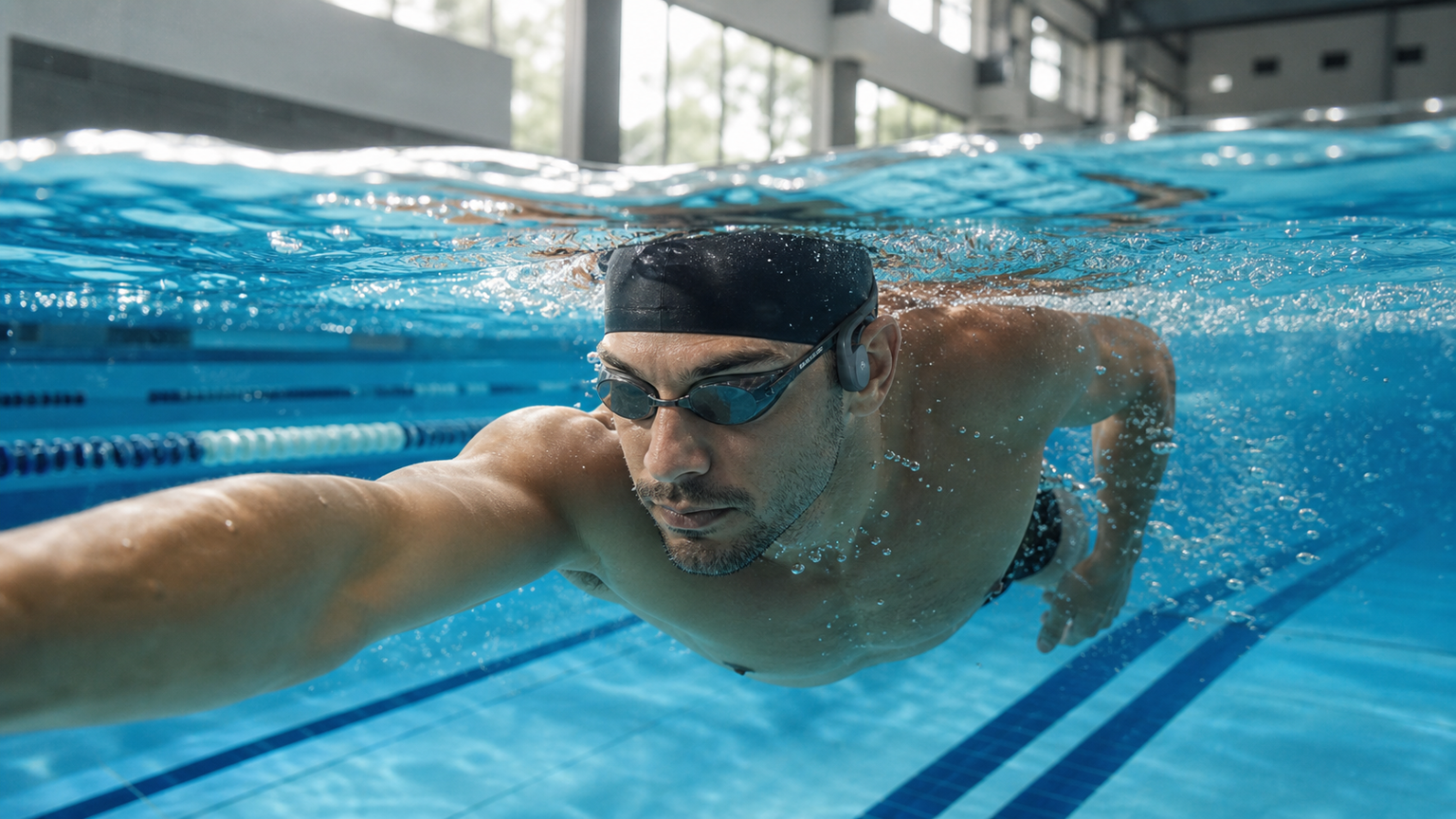
Swimming has long been considered “the loneliest sport”—when your head is submerged below the surface, all outside sounds are cut off, leaving only the sound of water and your own breathing. The maturation of underwater earphone technology has completely transformed this experience. From early wired solutions requiring waterproof MP3 players to today’s wireless underwater earphones incorporating bone conduction technology, swimmers in Taiwan now have a rich array of audio options. This article takes an in-depth look at the principles behind underwater audio technology and the practical impact of music on swim training.
Underwater Audio Technology Explained
Why Traditional Earphones Cannot Be Used Underwater
Traditional air conduction earphones work by having a diaphragm push air molecules to form sound waves that travel into the ear canal. Underwater, air conduction is extremely inefficient—sound waves can barely transmit effectively. Combined with the limitations of waterproofing design, ordinary Bluetooth earphones are often damaged outright once water gets in.
How Bone Conduction Technology Works
Bone conduction technology completely bypasses the ear canal’s sound transmission mechanism. A vibrator is placed directly against the skull (typically at the temple), and vibrations travel through the skull to the cochlea in the inner ear, allowing the auditory nerve to perceive sound. This principle echoes the story of Beethoven, who, after going deaf, perceived musical notes by biting down on a piano to feel its vibrations.
In an underwater environment, water is 800 times denser than air, making bone conduction vibration transmission actually more effective than air conduction. This makes bone conduction technology the ideal solution for underwater audio.
Comparison of Mainstream Underwater Audio Devices
| Brand/Model | Technology Type | Waterproof Rating | Storage Capacity | Price (NT$) | Features |
|---|---|---|---|---|---|
| Shokz OpenSwim | Bone Conduction | IPX8 (2m) | 4GB | Approx. 3,500 | Swim-specific, no Bluetooth |
| Shokz OpenSwim Pro | Bone Conduction | IPX8 (2m) | 32GB | Approx. 5,000 | Supports Bluetooth, can connect to phone on land |
| FINIS Duo | Bone Conduction | Waterproof to 3m | 4GB | Approx. 4,000 | Clip-on goggle design |
| H2O Audio Tri | Standard Waterproof | IPX8 | 8GB | Approx. 3,000 | Pairs with waterproof iPod Shuffle |
| Sony NW-WS623 | In-ear Sealed | IPX5/8 | 4GB | Approx. 4,000 | Traditional in-ear design, slightly inferior to bone conduction for swimming |
Bone Conduction vs. In-ear Sealed
Bone Conduction Advantages:
- No need to insert earphones into the ear canal, high wearing comfort
- Stable underwater sound quality, unaffected by water entering the ear canal
- Can still perceive surroundings while wearing (higher safety)
Bone Conduction Disadvantages:
- Poorer bass frequency response (insufficient bass)
- Water flow noise may interfere with sound quality during fast swimming
- Overall sound quality is inferior to high-end in-ear earphones
The Scientific Impact of Music on Swim Training Efficiency
Rhythmic Entrainment
Sports science research has long focused on the impact of music on athletic performance. Research indicates that when movement rhythm aligns with the music’s BPM (beats per minute), athletes can maintain their target pace more naturally, and subjective fatigue is reduced (RPE, or Rate of Perceived Exertion, decreases).
Swimming stroke rates typically range from 30–60 strokes per minute, corresponding to a music BPM range of 60–120 BPM (one beat per stroke). Choosing music that matches your stroke rhythm can effectively enhance the sense of rhythm during training.
Psychological Benefits for Long-Distance Aerobic Training
For long-distance aerobic swim training (such as continuous swimming of 3,000–5,000 meters), the psychological benefits of music are most pronounced. Monotonous long-distance swimming is one of the hardest training types for many swimmers to push through, and music can significantly improve the psychological experience of training, making athletes more willing to complete long sessions.
Recommendation: No Earphones During Technique Training
During training sessions that require focus on technique correction (such as stroke path or breathing rhythm), music may actually cause distraction. It is recommended to use underwater earphones only during steady-rhythm aerobic endurance training, and to go without earphones during technique sessions.
Shokz Bone Conduction Series Review
In the Taiwanese market, Shokz (formerly AfterShokz) is the leading brand in bone conduction earphones. Its OpenSwim series is specifically designed for swimming, using built-in memory to store music (Bluetooth is not supported underwater due to the limitations of bone conduction technology in aquatic environments). Before use, music files must be transferred to the device via a charging clip.
Key Points from Real-World Usage:
- The vibration plate contacting the skull must be properly positioned against the temple; improper placement will affect sound quality
- High-frequency vocals and mid-frequency instruments perform well, while bass response is relatively weak
- The OpenSwim Pro’s ability to immediately switch to Bluetooth and connect to a phone after swimming is highly practical for triathletes doing a cooldown run after their swim
Practical Recommendations
- Confirm memory format support before purchasing (most devices support MP3/AAC formats; prepare music files in advance)
- For purchases in Taiwan, Shokz products are available at major electronics retail chains or official authorized channels, offering better warranty coverage
- Training playlist suggestions: 100–120 BPM pop/rock for long aerobic sets; 130–145 BPM electronic music for high-intensity intervals
- Before entering the water, make sure the sealing cover (charging port cover) is completely closed—this is the most common cause of water damage
- Bone conduction earphones have some sound leakage (people nearby can slightly hear the audio); be mindful of volume etiquette in quiet swimming environments
Conclusion
Underwater audio technology has greatly enhanced the swim training experience. For swimmers who train long distances alone in particular, the psychological support that music provides should not be underestimated. Choosing the right bone conduction underwater earphones and pairing them with a playlist that matches your training rhythm can make every pool session more fulfilling and more efficient.
Related Reading
- Waterproof MP3 Players: Sound Quality and Ear Canal Fit Review of Waterproof Earphones
- Running Earphone Selection Guide: Comprehensive Safety and Sound Quality Comparison of Bone Conduction vs. In-ear
- Road Running Music Device Buying Guide: Safety, Sound Quality, and Running Comfort Comparison of Bone Conduction Earphones
- Running Earphone Buying Guide: Safety and Sound Quality Comparison of Bone Conduction vs. Open-ear Earphones
單車 重低音 藍芽喇叭 音質實測 SoundBot SB525 Real Sound Test
8 年前
#公路車 #Vo2Max #最大攝氧量 測驗 體驗 | 心肺測試
6 年前
3C開箱) SoundBot 老車升級智慧音響 SB360 藍芽 免持 接收器 Aux in 手機 汽車音響 美國聲霸
7 年前
一起升級!海鷗盃LSD團練...JJSC Zone2招待 騎到手抖 / 公路車 / CT Yeh
1 天前
大家都在開箱的...單車用藍芽對講耳機真的有幫助嗎? SENA BiKom 20 長距離旅遊 & 海鷗繞圈賽 實際體驗心得 / 公路車 / CT Yeh
9 個月前
洗單車神器 吹水機! 實際洗車用用看 暴力洗鍊條大法 | 公路車 | CT Yeh
4 年前
3D 列印車褲墊 / 舒適改善? / 無痕 x 分區壓縮 / ATK & Decider系列 / JE22黑科技 / #公路車 #CTYEH
11 個月前
iPhone 13 Pro 電影級 VLOG 實拍測試!優缺點 原理分析! 夜間效果對決 GoPro10!蘋果沒有說的超強錄影體驗!? | CT Yeh
4 年前