Introduction
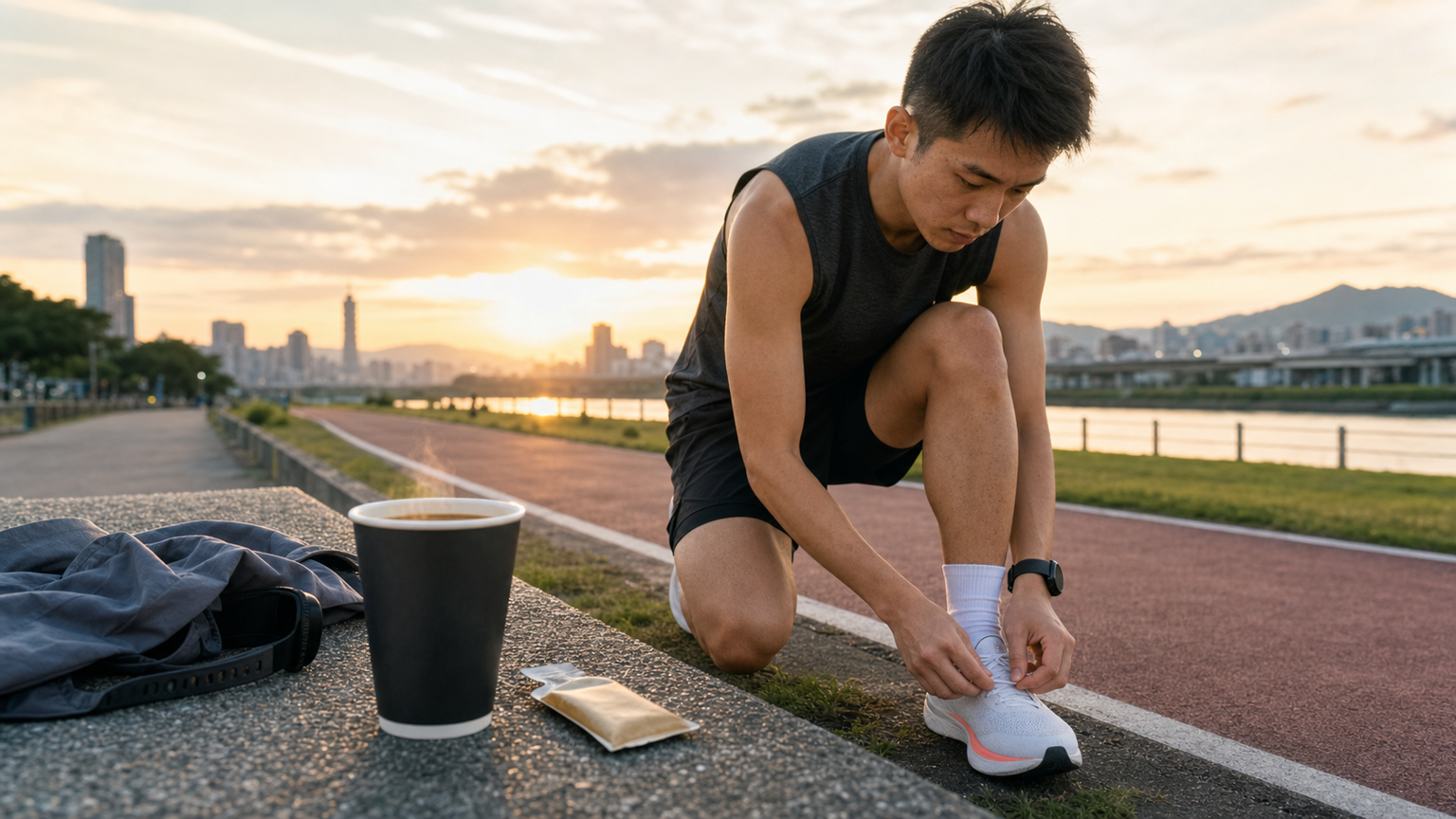
A cup of coffee before a race—a pre-race ritual for many runners—but do you know when this coffee is most effective? How much is the optimal dose? Do long-term coffee drinkers need to “quit caffeine” to make pre-race caffeine more effective?
Caffeine is one of the most widely studied legal performance-enhancing substances in sports. Although the World Anti-Doping Agency (WADA) has removed caffeine from its prohibited list, it still monitors its use. A large body of research consistently shows that moderate caffeine intake can effectively enhance endurance performance, making it the most accessible natural aid for runners with solid scientific backing.
How Caffeine Works During Exercise
Caffeine affects running performance primarily through the following mechanisms:
- Adenosine receptor blockade: Adenosine is a chemical in the brain that causes fatigue. Caffeine competes with adenosine for receptor binding, reducing the perception of fatigue and making you “feel easier” at the same pace.
- Increased adrenaline secretion: Raises heart rate and fat mobilization, helping the body burn fat more efficiently for energy while preserving muscle glycogen.
- Improved neuromuscular function: Studies show caffeine can enhance muscle contraction strength, helping maintain explosive power in the latter half of a race.
- Reduced pain perception: Caffeine raises the pain threshold, allowing runners to tolerate discomfort better during high-intensity segments.
Optimal Dosage and Timing
Dosage
The most commonly recommended effective dose in research is: 3–6 mg per kilogram of body weight
| Body Weight | Low Dose (3 mg/kg) | Moderate Dose (5 mg/kg) | High Dose (6 mg/kg) |
|---|---|---|---|
| 50 kg | 150 mg | 250 mg | 300 mg |
| 60 kg | 180 mg | 300 mg | 360 mg |
| 70 kg | 210 mg | 350 mg | 420 mg |
First-time users are advised to start with a low dose; exceeding 9 mg/kg provides no additional benefit and increases the risk of side effects (palpitations, anxiety, gastrointestinal discomfort).
Timing
It takes approximately 45–60 minutes for caffeine to reach peak blood concentration after ingestion, so it is recommended to:
- General 10K / half marathon: Consume 45–60 minutes before the race
- Full marathon: Consume 45–60 minutes before the race, and supplement with caffeinated energy gels in the latter half
- Races starting at 6 AM: Consume caffeine around 4:30–5:00 AM, but pay attention to coordination with breakfast
Caffeine Content of Common Beverages in Taiwan
| Beverage | Serving Size | Caffeine Content (Estimated) |
|---|---|---|
| Black coffee (pour-over) | 350 ml | 150–200 mg |
| American coffee (chain store) | Medium 480 ml | 150–200 mg |
| Latte | Medium 480 ml | 75–150 mg |
| Instant coffee | 1 sachet | 60–120 mg |
| Black tea | 350 ml | 40–70 mg |
| Green tea | 350 ml | 25–50 mg |
| Caffeinated energy gel | 1 packet | 25–75 mg |
| Caffeine supplement tablet | 1 tablet | 100–200 mg |
Recommendation: If using pour-over or specialty coffee, caffeine content is harder to control precisely; if you need an accurate dose, consider caffeine supplement tablets paired with a small amount of beverage.
The Controversy of the Pre-Race “Caffeine Withdrawal Period”
A practice that was popular in the past: completely abstaining from caffeine for 5–7 days before a race to increase the body’s sensitivity to caffeine, making pre-race intake more effective. However, recent research has questioned this strategy:
- Side effects of the withdrawal period: Headaches, fatigue, low mood—these may compromise the quality of race preparation.
- Limited additional benefit: Studies show that even without withdrawal, regular caffeine users still gain significant benefits from pre-race intake; the difference in improvement may be minimal.
- Current consensus: If you regularly consume caffeine, it is still effective without withdrawal. If you want to try a withdrawal strategy, it is recommended to practice it during training periods, not to attempt it for the first time before an important race.
Potential Side Effects of Caffeine
The following conditions may reduce the suitability of caffeine use:
- Those with sensitive stomachs: Caffeine stimulates intestinal motility, which may trigger urgent bathroom urges during running
- History of arrhythmia: Caffeine may exacerbate heart rhythm issues; consult a physician
- Anxiety-prone individuals: Pre-race nerves are already high; high doses of caffeine may worsen tension and affect performance
- Sensitive sleepers: If the race is in the afternoon, caffeine intake may affect pre-race sleep the night before
Practical Recommendations
- Practice your caffeine strategy during long training runs: Record dosage, intake timing, and how you feel while running to find the most personalized plan for yourself.
- Never try a new caffeine dose for the first time at an official race: Any new strategy should first be tested in training.
- Those with sensitive stomachs should use a low dose: Start at 2–3 mg/kg, observe gastrointestinal reactions, then adjust gradually.
- Combine caffeine with energy gels: Using caffeinated energy gels in the latter half of a full marathon is a great way to extend caffeine’s effects, but be sure to count it toward your total caffeine intake.
Conclusion
Caffeine is one of the most powerful and accessible performance-enhancing tools in a runner’s toolbox. Taiwan’s rich coffee culture makes it easy for runners to access various forms of caffeine sources. Master the correct dosage and timing to turn that pre-race cup of coffee from a habit into a strategy—your marathon results will be different.
Related Reading
- Caffeine Strategy for Road Running: The Science Behind Pre-Race Timing and Dosage
- The Impact of Caffeine on Road Running Performance: Research Recommendations on Pre-Race Timing and Dosage
- The Science of Caffeine: Optimal Dosage and Timing for Endurance Sports
- Caffeine Application in Cycling: Timing and Dosage
12/9 曜越Tomashinii 免費約騎,海倫咖啡 星巴克吃到飽😍 #公路車 #cycling
2 年前
靠單車減肥35公斤 心得分享與整理
7 年前
2021 96聯賽 桃園市長盃 4K多視角實況 當天選手瓦數/推力比/均速/時間 即時數據分析 | 公路車 | CT Yeh
5 年前
西進武嶺 自製新版AI配速表產生器 x 賽前攻略 抱佛腳! 沒有功率計也可以產生配速表嗎?有什麼其他眉角賽前要注意的呢? | 西進武嶺 / 東進武嶺 KOM 攻略 | 公路車 | CT Yeh
4 年前
西進武嶺 免費訓練分析服務 Intervals | 練不夠還是練過頭?你哪一種類型選手?AI模型告訴你! | 備戰神器 | 公路車 訓練 | CT Yeh
4 年前
#公路車 #Fitting 靠人工智慧APP 幫你調整單車
6 年前
CT暗黑廚房) 車友必備 宇宙無敵鮮蚵湯 幫助訓練恢復 天然食補 好市多 超肥鮮蚵 破PR
7 年前
單車 一日北高 ( 雙城 ) 肥宅雙人瘋狂行 紀錄片 REACTO
10 年前