Introduction
“Riding alone, you go fast; riding together, you go far” — this saying, widely shared in Taiwan’s cycling circles, captures the core value of a riding community. Active cycling communities across Taiwan, from urban riding clubs in Taipei to mountain biking alliances in Nantou, from the Iron Horse Festival in Changhua to cross-county rides in Hualien, these organizations are not just gathering people who love to ride—they are shaping a lifestyle and a sense of local identity.
So how does an individual passionate about cycling go from “rounding up friends to ride” to building an influential local riding organization? This article shares the logic of building and the wisdom of managing cycling communities in Taiwan.
The Four Stages of Community Development
| Stage | Characteristics | Size | Main Challenge |
|---|---|---|---|
| Germination Stage | Informal group rides with friends | 3–8 people | Finding like-minded people |
| Formation Stage | Fixed schedule, fixed routes | 8–30 people | Establishing shared norms |
| Growth Stage | Multiple routes, multiple activity types | 30–100 people | Organizational structure and division of labor |
| Maturity Stage | External influence, social connections | 100+ people | Maintaining core cohesion |
Step One: Establish a Fixed “Core Ride”
Almost every successful riding community originates from a fixed ride schedule. Don’t wait until you have enough people to start—set a fixed time (e.g., every Saturday at 6:00 AM) and a meeting point (some obvious landmark), invite everyone you know who rides, and then show up consistently every week.
Key Elements:
- Consistency: Same time, same place, almost never canceled (typhoon days excepted)
- Inclusivity: Route choices should allow people of different skill levels to participate, with designated lead and sweep riders
- Socializing: The breakfast or coffee time after the ride often does more to build bonds than the ride itself
Establish a Community Culture Rather Than Rules
Many newly formed riding communities rush to create a large set of formal rules, which only leads to rigidity. A more effective approach is to build a “culture” through example:
- Safety culture: Veteran riders wear helmets every time and call out “rider back” every time, and newcomers naturally follow suit
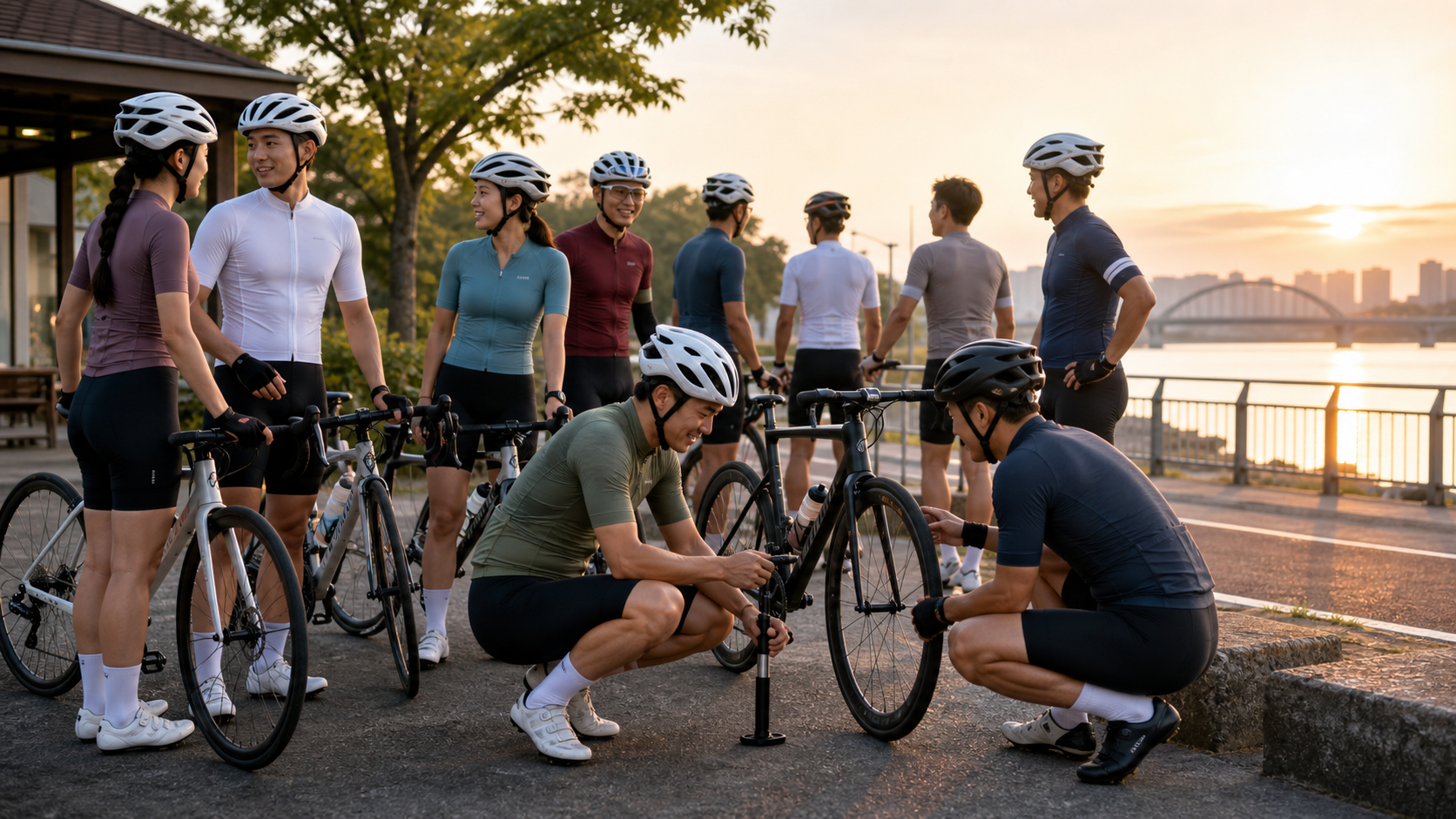
- Mutual aid culture: When someone gets a flat tire, everyone naturally stops to wait and help—new members replicate this behavior pattern
- Respect culture: No chasing down slower riders, no mocking them—make riders of all levels feel welcome
Successful riding communities in Taiwan typically share one trait: the behavior of core members is itself the best demonstration of community culture.
Leveraging Digital Tools
The day-to-day operations of modern riding communities rely heavily on digital tools:
- LINE groups: Taiwan’s primary community communication tool, ideal for quick notifications and daily discussions
- Strava clubs: Track members’ training data; weekly/monthly leaderboards add a healthy sense of competition
- Instagram/Facebook: Showcase community activities externally, attract new members, and build a public image
- Google Calendar: Unified schedule management to reduce message chaos
Pitfall to avoid: Don’t put all communication in LINE groups. Too many group messages cause people to mute notifications, ultimately defeating the purpose of real-time contact. Important announcements should be sent separately, and casual chatter should be diverted to a separate group.
Diversifying Activities: Beyond Weekend Group Rides
Communities that keep members engaged over the long term tend to offer a variety of activity types:
- Technical workshops: Invite bike shop mechanics to teach tire repair and brake adjustment—highly appealing to beginners
- Out-of-town training camps: Quarterly rides in other regions build deep community bonds
- Charity rides: Rides tied to charitable or environmental causes enhance the community’s public image
- Newcomer orientation program: Entry-level rides designed specifically for new members to lower the barrier to joining
The Leader’s Mindset Shift
The mindset that most often needs adjustment when building a riding community is the founder’s own:
From “my community” to “our community”: Once the community reaches a certain size, other members must share organizational responsibilities. A founder continuing to shoulder everything alone is unsustainable.
Embrace diversity: Not all members will be as committed as you are. Some come every week; some come once a year—both types have value. Don’t force everyone to be “invested” to the same degree.
Face conflict head-on: Every community has disagreements. Establishing clear conflict-resolution mechanisms (such as community guidelines or a core-team decision-making process) is healthier than avoiding the issue.
Practical Advice
Start with 5 people: Don’t wait until “conditions are right” to get going. Find four friends, set up the first ride, and even if only three people show up, that counts as success. A community’s momentum comes from sustained action, not a perfect plan.
Document the community’s history: Take photos, record milestones (the 100th group ride, the first out-of-town event). These records are a vital source of community identity and the best advertising for attracting new members.
Connect with the local area: Build partnerships with local bike shops and cafés—members get discounts, businesses get a steady customer base. This win-win relationship helps the community put down roots locally.
Conclusion
Cycling communities across Taiwan are the key force that truly roots cycling culture in the local landscape. They are not just groups of people riding together—they are creating a philosophy of life centered on movement in the gaps between cities and towns. Starting with your first group ride, you’re not just building a community; you’re adding a brick to the cycling culture of this island.
Related Reading
- Managing a Cycling Club: How to Build a Cohesive Riding Community
- Managing a Facebook Community for Bike Commuting: Build Your Cycling Commuter Group
- Managing a Cycling Community: How to Join a Team or Start a Small Riding Group
- Building a Cycling Community: How to Find Riding Partners That Suit You
車隊介紹) 台北 一年開團365天 車隊 Apollo Ride 晨騎 好選擇 ( 陽明山 風櫃嘴 冷水坑 平等里 聖人 關渡 大稻埕 ) 找人騎車
7 年前
高雄綠園道鐵路自行車道 / 外地人能輕鬆駕馭 還是整路崩潰? / 2025 全線開通 春節實地探索一次!(附GPS連結)/ 公路車 / CT Yeh
1 年前
藤枝二集團 單車行 Day1 | 南部小武嶺 | 爬坡爬到罵罵叫 | JJSC | 公路車 | CT Yeh
3 年前
山港 環東台北160K 自行車約騎活動
9 年前
台中大雪山 膏王領騎 震到都沒畫面了 公路車
5 年前
虎豹潭!日本老師來台一日約騎 台灣車友熱情招待私房路線 / CT Yeh
21 天前
太平山單車員工旅遊 | 這樣玩CP值最高!| 公路車
5 年前
「悲情男車友」創作單曲 爆笑MV / 公路車 / CT Yeh / 4K劇情版
7 個月前