Introduction
Completing a marathon is a major milestone for every runner, but the finish line is not the end of the journey—it is the starting point of the body’s recovery journey. Research shows that a 42-kilometer race causes micro-damage to muscle fibers, inflammatory responses, increased oxidative stress, and a temporary decline in immune function. If you apply the wrong stimuli during these 72 hours, you not only prolong recovery time but may also plant the seeds for overuse injuries.
This article provides a systematic recovery guide structured around a timeline, helping you make the most effective choices within 72 hours after the race.
0–6 Hours Post-Race: The Emergency Repair Phase
Movement and Keeping Warm
After crossing the finish line, your core body temperature drops rapidly and muscles begin to stiffen. Many runners want to sit down at this point, but this actually prolongs lactic acid accumulation. Recommendations:
- Walk slowly for 10–15 minutes to maintain blood circulation and prevent blood from pooling in the lower limbs
- Change into warm, dry clothing immediately to prevent hypothermia
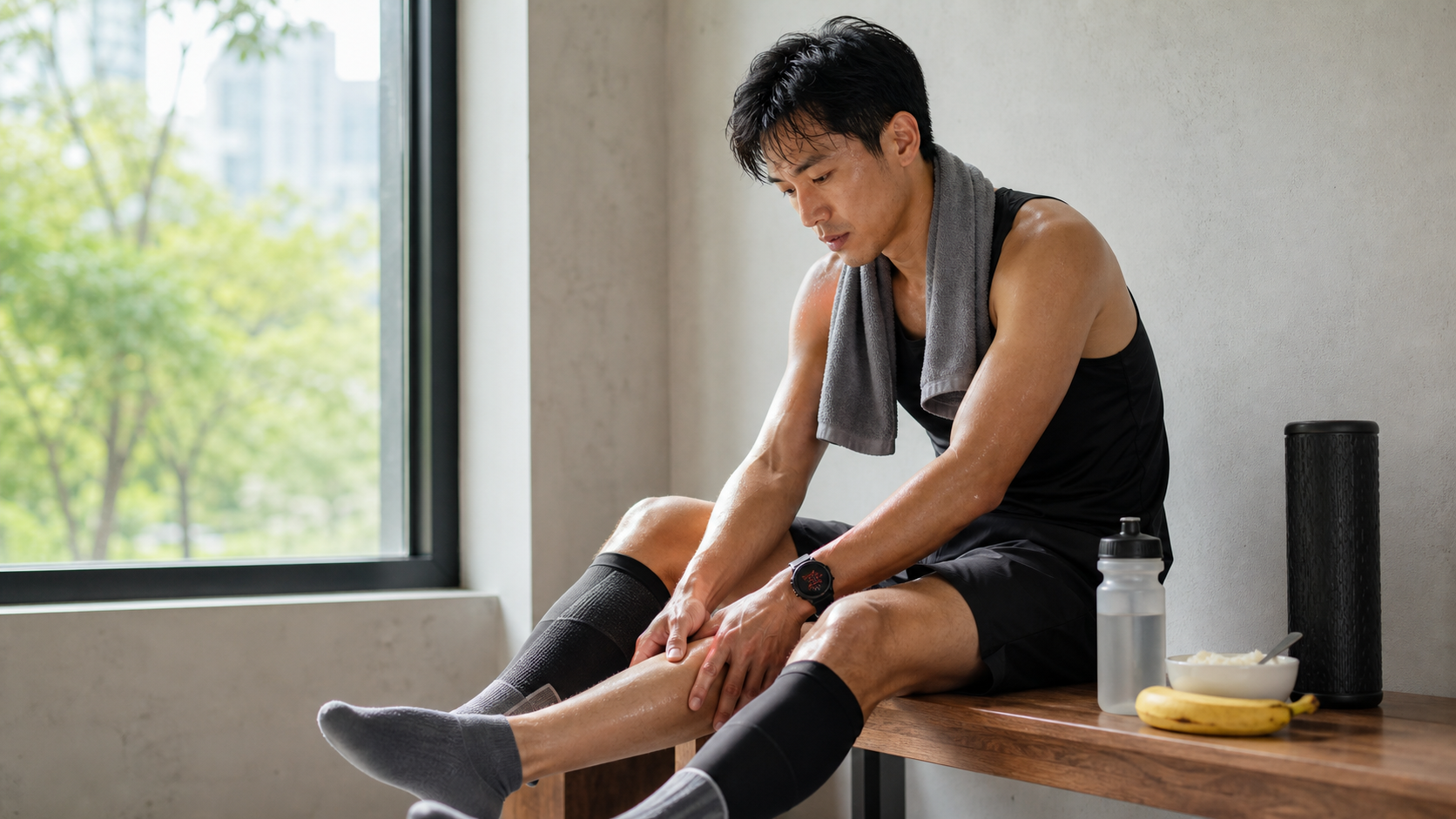
- Put on compression tights or compression calf sleeves to help reduce lower-limb swelling
Hydration and Electrolytes
Fluid loss during a marathon can exceed 2 liters, accompanied by significant losses of sodium, potassium, and magnesium. Simply drinking plain water dilutes blood electrolytes and may actually trigger hyponatremia. Within the first hour post-race:
- Drink an electrolyte-containing sports drink (500–750 ml)
- Consume sodium-rich foods (such as salty crackers or savory soups)
- Monitor urine color, aiming for pale yellow
The Golden Post-Race Nutrition Window
The 30–45 minutes after exercise is when muscle absorption efficiency for carbohydrates and protein is at its highest. Research recommends a carbohydrate-to-protein ratio of 3:1, for example:
- Banana + Greek yogurt
- Chocolate milk (a classic and well-researched recovery beverage)
- Rice + chicken leg
6–24 Hours Post-Race: The Peak Inflammation Phase
This is the stage when delayed onset muscle soreness (DOMS) begins to appear, with inflammatory markers (such as CRP and creatine kinase) peaking 12–24 hours after the race.
Sleep First
Growth hormone is secreted in large amounts during deep sleep and is the most important endocrine signal for muscle repair. Aim to get at least 8–9 hours of sleep on the night after the race. If excitement or the race environment (such as an out-of-town event) makes it hard to fall asleep, try:
- Avoiding phone screens for 30 minutes before bed
- Taking a warm bath (38–40°C) to help lower core body temperature and promote sleep onset
- Supplementing with magnesium (such as magnesium glycinate), which aids muscle relaxation and sleep quality
Timing of Cold and Heat Therapy
Using cold therapy (ice baths or cold water immersion) 6–24 hours post-race is effective for reducing acute inflammation and swelling. A water temperature of 10–15°C for 10–15 minutes is recommended. If an ice bath is not possible, rinsing the legs with cold water for 20 minutes can achieve a similar effect.
24–72 Hours Post-Race: The Active Recovery Phase
| Timeframe | Main Activity | Purpose |
|---|---|---|
| 24–36 hours | Walking 15–20 minutes | Promote blood flow, reduce stiffness |
| 36–48 hours | Light swimming or indoor cycling for 20 minutes | Active recovery, maintain mobility |
| 48–60 hours | Gentle stretching, yoga, foam rolling | Increase fascial elasticity, reduce adhesions |
| 60–72 hours | Easy jogging 20–30 minutes (heart rate < 65% HRmax) | Assess recovery level, rebuild neuromuscular coordination |
The Importance of Active Recovery
While complete bed rest may intuitively feel best for the body, research shows that active recovery (light aerobic activity) accelerates lactate clearance, promotes lymphatic circulation, and maintains baseline nervous system activation. The key is that intensity must be extremely low, with a perceived effort of “very easy.”
Dietary Strategy
The dietary focus for these three days is anti-inflammation and repair:
- Antioxidant foods: Dark berries (blueberries, cranberries), green tea, turmeric
- Quality protein: At least 20–30 g per meal, focusing on chicken breast, tofu, and fish
- Omega-3 fatty acids: Salmon, mackerel, flaxseed oil, which help regulate inflammatory responses
- Avoid alcohol: Alcohol interferes with protein synthesis and affects sleep quality; try to abstain for the full 72 hours
Practical Tips
- Don’t push through running: If your legs still have noticeable pain or swelling within the 72 hours, continue resting and do not force a running workout
- Monitor morning resting heart rate: If your morning heart rate is 5–10 bpm higher than usual, your body is still recovering
- Keep a recovery log: Record daily fatigue levels, sleep hours, and appetite as a reference for your next training cycle
- Mental recovery matters too: Some runners experience “post-race blues” after the event; feeling down is normal and can be managed through social activities and easy outdoor walks
- Book a massage: Schedule a deep tissue or sports massage 48 hours after the race (not immediately), when it will be most effective
Conclusion
The 72-hour recovery after a marathon determines the quality of the starting point for your next training cycle. Treat this period as part of your training rather than a “blank period of doing nothing.” By addressing each recovery phase with a systematic strategy, your body will return to its best state more quickly, and your preparation for the next race will be even more solid.
Related Reading
Live) 備戰2019彰化經典百K 賽前攻略 (已完賽請看新影片
7 年前
CT暗黑廚房) 車友必備 宇宙無敵鮮蚵湯 幫助訓練恢復 天然食補 好市多 超肥鮮蚵 破PR
7 年前
摔車後補裝備: 好市多新款單車安全帽& Specialized Romin 北高整路屁股都不痛的坐墊 | 一千元居然有MIPS | CT Yeh | 公路車
4 年前
西進武嶺 免費訓練分析服務 Intervals | 練不夠還是練過頭?你哪一種類型選手?AI模型告訴你! | 備戰神器 | 公路車 訓練 | CT Yeh
4 年前
靠單車減肥35公斤 心得分享與整理
7 年前
一日北高前的高裝檢 | 北高 360 | 挑戰11小時的裝備 | 一日雙塔 | 補給
6 年前
一日北高/長距離團騎 常見問題補充篇 / 組團或跟團的眉角 / 壯車友容易被瘦車友慢性拉爆 / 原來屁股痛可能是這個原因...? / 風場配速法 / 公路車 / CT Yeh
2 年前
台灣旅行團參加 第7回まえばし赤城山ヒルクライム大会 雙視點
8 年前