Active Recovery After Running: Comparing the Recovery Benefits of Jogging, Swimming, and Cycling
Introduction
“What should I do on recovery day?” is one of the most common questions runners ask. Passive rest (doing absolutely nothing) used to be the mainstream recommendation, but modern sports science has made it clear: active recovery is more effective than doing nothing in most cases. Active recovery uses low-intensity aerobic activity to promote blood circulation, accelerate the clearance of metabolic waste, and reduce muscle stiffness—all without adding extra training stress.
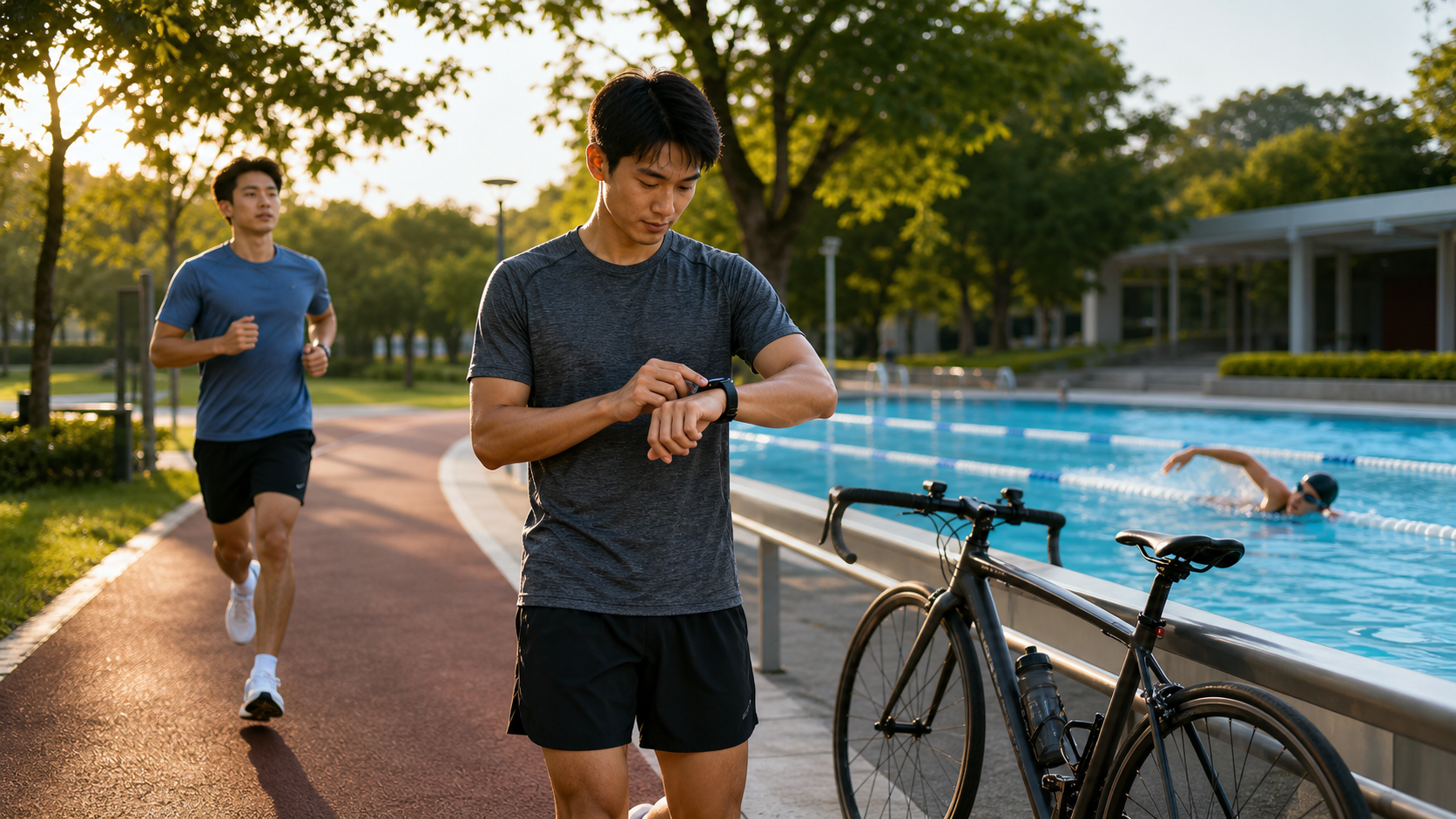
This article compares the three most common forms of active recovery—jogging, swimming, and low-intensity cycling—from their mechanisms and pros and cons to practical implementation tips, helping you choose the best option for your situation.
The Core Mechanisms of Active Recovery
Active recovery works primarily through the following physiological mechanisms:
- Lactate clearance: Low-intensity aerobic activity accelerates the conversion of lactate into energy substrates, 20–30% faster than static rest
- Lymphatic circulation: Muscle contractions act as a “pump” to drive lymph flow, helping clear inflammatory mediators
- Blood flow perfusion: Increases blood flow to damaged muscles, accelerating the delivery of oxygen and nutrients needed for repair
- Neuromuscular maintenance: Maintains baseline activation of neuromuscular connections, preventing the “training feel” from completely disappearing
Intensity control is key: heart rate during active recovery should be maintained at 50–65% of maximum heart rate, with a rating of perceived exertion (RPE) of about 2–3 (on a 10-point scale), and you should be able to talk without any breathlessness.
Detailed Comparison of the Three Recovery Methods
1. Easy Jog
Recovery mechanism: Uses the same movement pattern as regular running, stimulating the muscle groups required for running and maintaining neuromuscular coordination.
Advantages:
- No additional equipment or facilities needed
- Maintains the neuromuscular pattern of running
- Minimal disruption to the training plan
Disadvantages:
- Leg muscles absorb ground impact, adding extra load to already fatigued lower limbs
- Knees and ankles still bear body weight
- Pace can unconsciously creep up when fatigued, defeating the purpose of active recovery
Best timing: The day after light-to-moderate training, or when the body is largely free of soreness after running on hard surfaces
Recommended approach: 20–30 minutes, at a pace 30–60 seconds/km slower than easy pace, with heart rate strictly controlled below 65% HRmax
2. Swimming
Recovery mechanism: Water’s buoyancy removes body-weight loading, while water pressure applies uniform hydrostatic pressure over the entire body—similar to wearing a full-body compression garment.
Advantages:
- Zero impact, with almost zero joint stress
- Water pressure promotes venous return to the heart and reduces lower-limb swelling
- Balanced engagement of all major muscle groups, avoiding overuse of the legs
- Water temperature (if swimming in cool water) helps reduce local inflammatory responses
Disadvantages:
- Requires a swimming pool, which is inconvenient for many runners in Taiwan
- Poor technique (especially freestyle) can cause shoulder fatigue from compensatory movements
- Does not provide specific stimulation to running muscle groups
Best timing: 24–72 hours after a major race, or when the legs feel noticeably fatigued or swollen after a long run
Recommended approach: 25–40 minutes of easy breaststroke or backstroke (minimal impact), with heart rate maintained at 50–60% HRmax
3. Easy Cycling
Recovery mechanism: The circular pedaling motion produces no ground impact, and the knee moves in a closed kinetic chain, effectively engaging the quadriceps, glutes, and calves without causing muscle micro-damage.
Advantages:
- Zero ground impact, knee-friendly
- Indoor bikes (Zwift, spin bikes, etc.) are convenient when weather is poor
- Pedaling motion is highly effective at promoting lower-limb blood circulation
- Pace and intensity are easy to control precisely
Disadvantages:
- Requires cycling equipment
- Does not directly reinforce running movement patterns
- Prolonged cycling with poor posture can cause knee or hip discomfort
Best timing: Recovery days after high-volume weeks, or 48–72 hours after a marathon
Recommended approach: 30–45 minutes, maintaining a cadence of 80–90 rpm with light resistance, at 60–65% HRmax
Comparison Table of the Three Methods
| Comparison Item | Jogging | Swimming | Easy Cycling |
|---|---|---|---|
| Joint impact | Moderate | Very low | Very low |
| Equipment required | None | Swimming pool | Bicycle |
| Running specificity | High | Low | Medium |
| Circulation promotion | Medium | High (water pressure) | High |
| Suitable after major races | After 72 hours | After 24 hours | After 48 hours |
| Mental relaxation | Medium | High | Medium-high |
| Feasibility in Taiwan | Very high | Medium | High |
How to Choose the Right Method for You
The following principles can help you decide:
- Noticeable leg soreness (DOMS): Prioritize swimming or cycling, and avoid jogging to prevent adding muscle load
- 24–48 hours after a major race: Swimming > Cycling > Jogging
- The day after light training: Jogging is the most convenient and direct option
- High mental stress and need to unwind: Swimming offers the best sensory isolation
- No pool and no bike available: Jogging remains a viable option, but be sure to keep the pace slow
Practical Tips
- Don’t skip active recovery: Research shows that active recovery groups recover 15–20% more muscle strength at the 24-hour mark compared to passive rest groups
- Monitor your heart rate: Always wear a heart rate monitor during active recovery; if intensity exceeds the target, back off immediately
- Longer is not better: 20–45 minutes is the sweet spot for active recovery; anything over 60 minutes shifts from “recovery” to “training”
- Mix and match: For example, 20 minutes of cycling + 15 minutes of swimming, especially for comprehensive recovery after a major race
- Listen to your body: If you feel unusually fatigued or pain intensifies during active recovery, stop immediately and switch to complete rest
Conclusion
Jogging, swimming, and easy cycling—each of the three active recovery methods has its own ideal scenarios and advantages. Rather than sticking to one fixed method, choose flexibly based on the day’s fatigue level, sore spots, and available equipment. The most important principle remains: low enough intensity, short enough duration, and comfortable enough feeling. Get active recovery right, and your next high-quality training session will be all the more assured.
Related Reading
- Active Recovery: Which Is Most Effective—Easy Running, Swimming, or Cycling?
- Active Recovery vs. Passive Rest: A Scientific Comparison of Recovery Jogging and Complete Rest
- Active Recovery Rides After Cycling: The Correct Intensity and Benefits of Easy Riding
- Active Recovery After Running: Comparing the Effects of a 10-Minute Jog vs. Complete Rest
CT暗黑廚房) 車友必備 宇宙無敵鮮蚵湯 幫助訓練恢復 天然食補 好市多 超肥鮮蚵 破PR
7 年前
靠單車減肥35公斤 心得分享與整理
7 年前
摔車後補裝備: 好市多新款單車安全帽& Specialized Romin 北高整路屁股都不痛的坐墊 | 一千元居然有MIPS | CT Yeh | 公路車
4 年前
多機位拍片神器 DJI Action 2 拍出速度張力感 | 類空拍機視角 4陣列麥克風超強降風噪 實測! | 公路車 | CT Yeh
3 年前
DJI OSMO Action 3 新韌體超強! 2.5H續航!運動攝影新神器!超強快充!今年不換GoPro了🤣| 公路車 | CT Yeh
3 年前
一日北高常見問題大集合 | 攻略 | 路線 | 訓練 | 補給 | 自行車 單車 | 一日雙城 | 雙塔 | TWB北高360 | 屁股痛
6 年前
DJI Osmo Action 4 / 單車運動攝影最佳選擇!比賽 2.5 H 續航測試 / 超強夜拍 / 墾丁&日本實地拍攝測試! GoPero / 公路車 / CT Yeh
3 年前
DJI Osmo Action 6 / 單車運動拍攝實用技巧 公路車 CT Yeh
7 個月前