Introduction
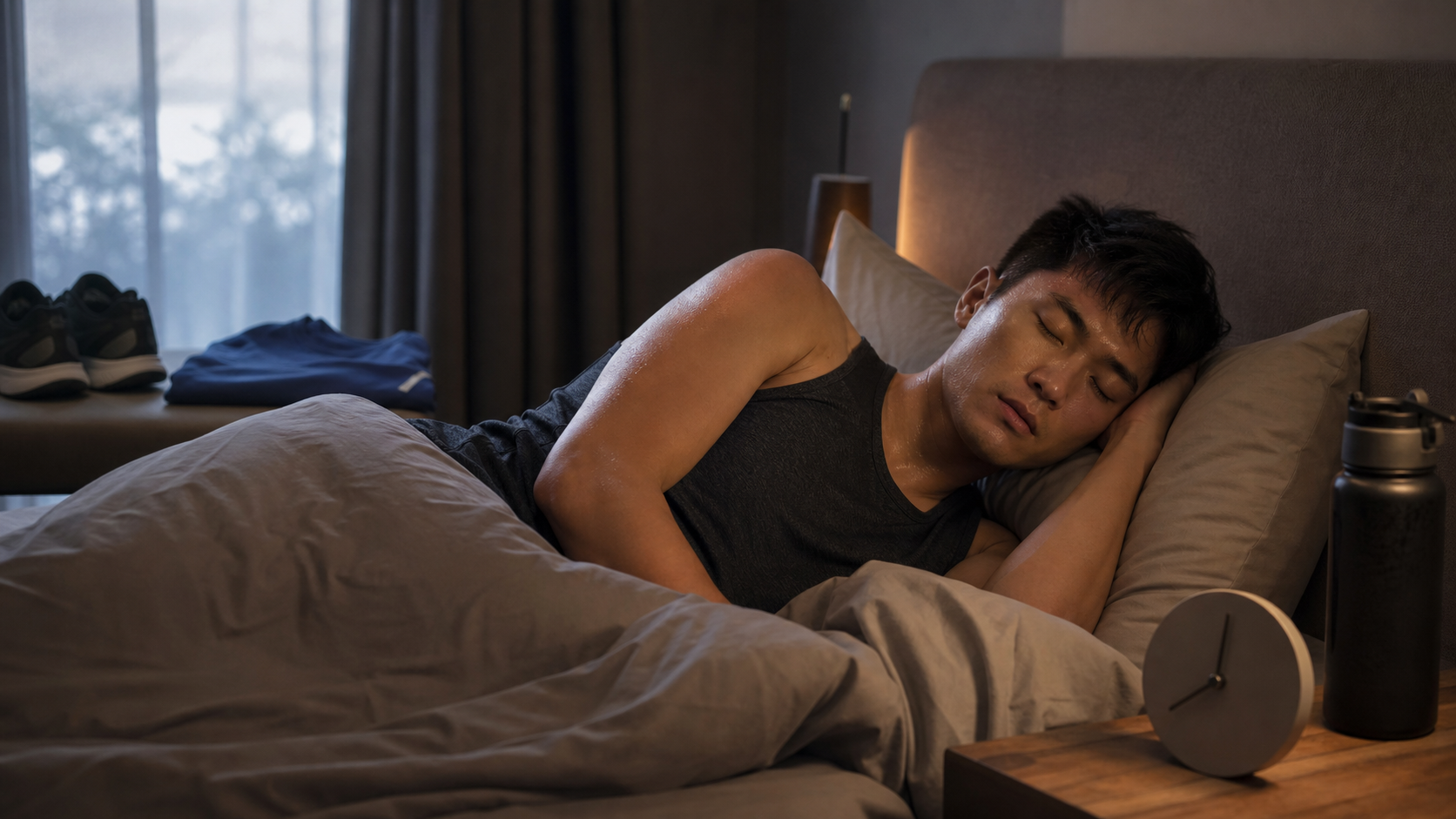
Sleep is not a homogeneous, single state, but rather consists of multiple alternating sleep cycles. For road runners, the most critical sleep stage is Slow Wave Sleep (SWS), also known as deep sleep or N3 sleep. This stage is not just about “sleeping more deeply”—it is the physiological window during which the body performs its most intensive tissue repair.
This article delves into the mechanisms of slow wave sleep and how runners can maximize the duration and quality of deep sleep through lifestyle adjustments.
The Basics of Sleep Architecture
A typical adult’s sleep consists of 4 stages cycling throughout the night, with each complete cycle lasting approximately 90 minutes:
| Sleep Stage | Alternative Name | Characteristics | Recovery Function |
|---|---|---|---|
| N1 | Light sleep onset | Half-awake, half-asleep | Transitional, limited function |
| N2 | Light sleep | Decreased heart rate, lowered body temperature | Memory consolidation, neural integration |
| N3 | Slow wave sleep (deep sleep) | Slowest brain waves, hardest to awaken | Muscle repair, immune restoration, growth hormone secretion |
| REM | Rapid eye movement | Dreaming, rapid eye movements | Emotional processing, motor skill memory consolidation |
Time distribution of SWS (N3): Deep sleep is concentrated primarily in the first half of the night (the first 3–4 hours of the sleep cycle), which explains why going to bed earlier is more effective than sleeping in to catch up.
The Relationship Between Growth Hormone and Slow Wave Sleep
Growth Hormone (GH) is one of the most important anabolic hormones for promoting muscle repair, reducing fat, and strengthening bones. Key facts:
- Approximately 70–80% of daily growth hormone secretion occurs during slow wave sleep, particularly during the first deep sleep peak after falling asleep (about 45–90 minutes after sleep onset)
- The pulsatile secretion of growth hormone during sleep is far higher than during the day; the GH secretion efficiency induced by deep sleep during daytime naps is lower
- As we age, the proportion of deep sleep declines (a decrease of about 2–3% every 10 years after age 50), which is one of the main reasons older runners recover more slowly
Important implication: If deep sleep is insufficient, muscle repair efficiency will be significantly compromised, even if you consume adequate protein and follow a complete training plan.
Factors That Reduce Slow Wave Sleep
Understanding the “killers” is essential for effective prevention:
Definitive harmful factors:
- Alcohol: Alcohol is the most common SWS killer. Although it can hasten sleep onset, it severely suppresses deep sleep and REM sleep, causing sleep fragmentation
- Going to bed too late: Deep sleep is concentrated in the first half of the night; the later you fall asleep, the less SWS you get
- Irregular sleep schedule: Circadian rhythm disruption leads to chaotic sleep architecture and a reduced SWS proportion
- Residual caffeine: Caffeine still present in the bloodstream at bedtime interferes with SWS initiation
- Overeating before bed: Digestion and metabolism raise body temperature, delaying SWS onset
- Obstructive Sleep Apnea (OSA): Breathing pauses during sleep frequently interrupt SWS and are often overlooked
Mild influencing factors:
- High-intensity training too close to bedtime (sympathetic nervous system activation)
- Bedroom temperature too high (SWS requires a drop in core body temperature)
- Noise disturbance (can interrupt SWS even without full awakening)
Evidence-Based Strategies to Increase Slow Wave Sleep
Physical Interventions
Regular aerobic exercise itself can increase SWS
This is good news: long-distance running or moderate-to-high intensity aerobic training can significantly increase the proportion of slow wave sleep that night. Studies show that people who regularly engage in aerobic exercise have 20–30% more SWS time than those who do not. However, note: allow at least 3–4 hours between training and bedtime so that body temperature and the sympathetic nervous system can fully recover.
Body temperature strategies
- Taking a hot bath 60–90 minutes before bed (as mentioned above) can effectively prolong the duration of the first SWS cycle
- Keep the bedroom cool (18–20°C); the more smoothly core body temperature drops, the deeper the SWS
Nutritional Interventions
| Nutrient | Recommended Usage | Mechanism |
|---|---|---|
| Magnesium (magnesium glycinate) | 200–400 mg before bed | Modulates NMDA receptors, promotes SWS initiation |
| Tryptophan | Consume tryptophan-rich foods (bananas, nuts, eggs) 1–2 hours before bed | Melatonin precursor |
| Vitamin D | Daily supplement of 1000–2000 IU (taken in the morning) | Vitamin D deficiency is associated with reduced SWS |
| Low glycemic index carbohydrates | Small amount 1–2 hours before bed | Stabilizes blood sugar, reduces nighttime awakenings |
Avoid:
- Alcohol (even small amounts impair SWS)
- Large amounts of high-fat foods (delay digestion, raise body temperature)
Sleep Schedule Regularity
Maintaining a fixed bedtime and wake time is the most consistently effective strategy among all SWS optimization approaches.
- A regular circadian rhythm allows the brain to more precisely schedule SWS during the most efficient time window
- It is recommended to base your schedule on bedtime (rather than just total sleep hours), setting a fixed sleep onset target (e.g., falling asleep at 10:30 PM each night)
- Do not sleep in on weekends more than 1 hour past your usual wake time, to maintain circadian stability
Cognitive Behavioral Interventions
Lowering pre-sleep cortisol: Chronic stress keeps cortisol levels elevated at night, and cortisol is a powerful inhibitor of SWS.
- Meditation or breathing exercises 30 minutes before bed (e.g., the 4-7-8 breathing technique)
- Mindfulness-Based Stress Reduction (MBSR) practice 1–2 times per week
- Avoid processing high-stress messages before bed (e.g., work emails, financial issues)
Tools for Monitoring Deep Sleep
Consumer wearable devices on the market can now provide estimated deep sleep data:
- Garmin / WHOOP / Oura Ring: Use heart rate variability (HRV) and accelerometers to estimate sleep stages, with an accuracy of approximately 70–80% (compared to polysomnography)
- Target deep sleep proportion: Healthy adults typically have about 15–25% of total sleep in deep sleep (approximately 68–112 minutes based on 7.5 hours of sleep)
- Note: SWS data from wearables varies greatly between individuals; trends are more informative than absolute values
Practical Recommendations
- Prioritize a fixed bedtime, even during race weeks
- Completely eliminate alcohol, especially during high-volume training weeks and the week before a race
- Schedule high-intensity training in the morning or early evening, avoiding strenuous exercise after 9 PM
- Try magnesium supplementation: Conduct a 2-week magnesium trial and observe via your watch whether deep sleep time increases
- Consider consulting a sleep physician: If deep sleep remains consistently low and is accompanied by snoring, sleep apnea may need to be ruled out
Conclusion
Slow wave sleep is a runner’s “free repair factory,” but this factory requires the right raw materials and environment to operate efficiently. Through systematic strategies such as sleep schedule regularity, temperature management, nutritional supplementation, and stress control, you can significantly enhance the duration and quality of deep sleep, maximizing the recovery benefits of every training session.
Related Reading
- Sleep and Running Recovery: Growth Hormone Secretion and Muscle Repair During Deep Sleep
- The Sleep Science of Road Runners: The Link Between Deep Sleep and Training Adaptation
- Sleep and Road Running Recovery: The Scientific Impact of Sleep Quality on Repair
- Sleep Cycles and Exercise Recovery: How Deep Sleep Repairs Your Muscles
西進武嶺 免費訓練分析服務 Intervals | 練不夠還是練過頭?你哪一種類型選手?AI模型告訴你! | 備戰神器 | 公路車 訓練 | CT Yeh
4 年前
#公路車 #西進武嶺 配速配瓦實驗 坡度分析 四小時內攻略 建大盃 NeverStop #西進武嶺攻略
6 年前
滑雪新手們慘摔學習全紀錄(請開字幕),滑雪好好玩 | Snowboard + Ski | 岩原 スキー場 | 滑雪APP使用 | GoPro Max
6 年前
CT暗黑廚房) 車友必備 宇宙無敵鮮蚵湯 幫助訓練恢復 天然食補 好市多 超肥鮮蚵 破PR
7 年前
3C開箱) 重低音藍芽喇叭 SoundBot SB526 音質實測 美國聲霸 單車戶外 大音量
7 年前
#公路車 #Fitting 靠人工智慧APP 幫你調整單車
6 年前
DJI OSMO Action 3 新韌體超強! 2.5H續航!運動攝影新神器!超強快充!今年不換GoPro了🤣| 公路車 | CT Yeh
3 年前
一日北高 11小時 賽後心得分享篇 | TWB北高360 | 一日雙城 | 單車 | 公路車
6 年前