The Benefits of Compression Garments for Runners: A Scientific Evaluation of Recovery Compression Gear
Introduction
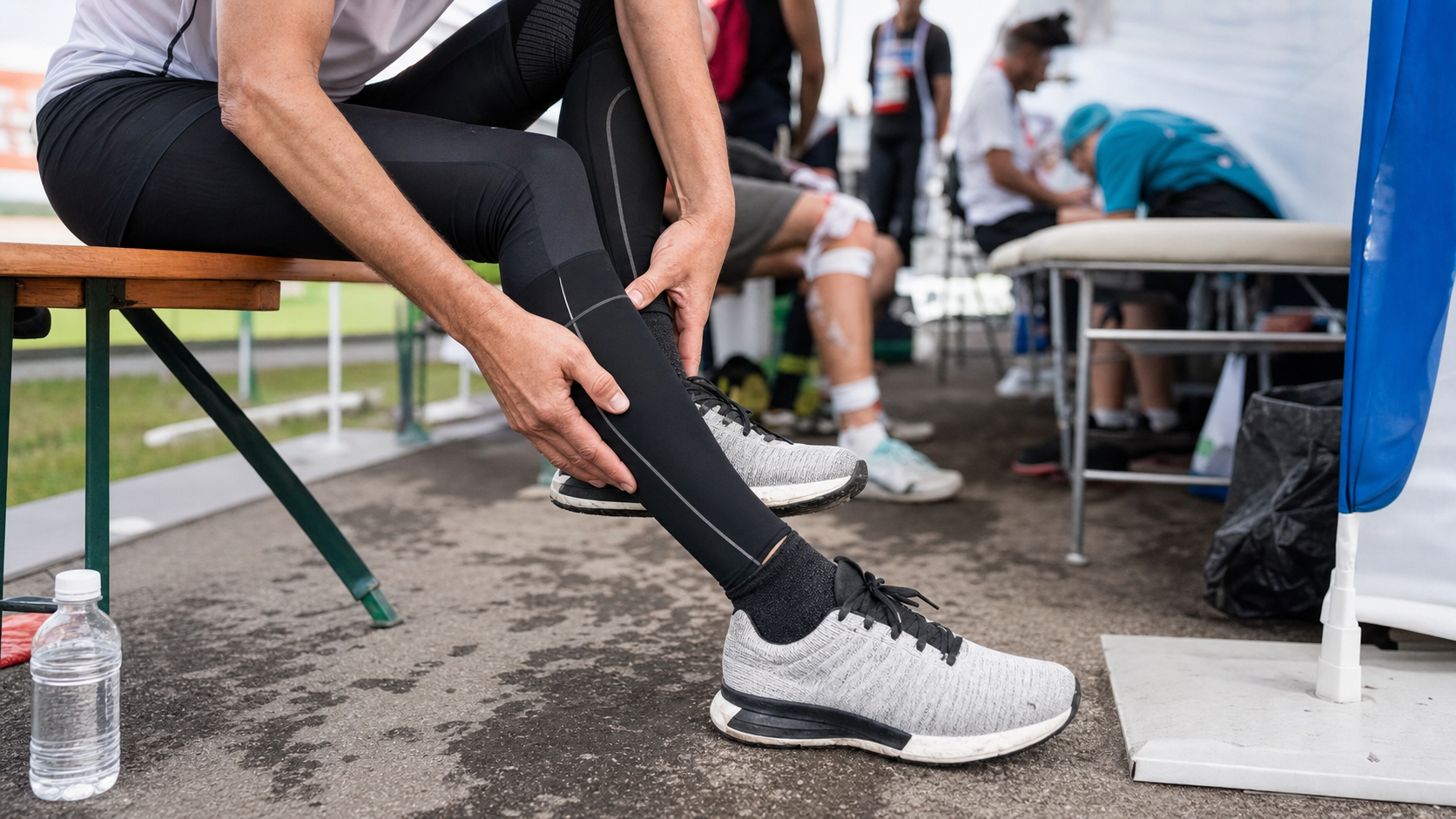
At the marathon finish line, you will almost certainly see a large number of runners wearing compression calf sleeves, or putting on compression calf sleeves after the race. Compression gear has become one of the hallmarks of running culture. However, when you carefully examine the scientific literature, you will find that the research findings on compression gear are far more complex than the marketing claims.
This article objectively evaluates the actual benefits of compression gear in running recovery, helping you make more informed gear choices.
The Mechanism of Action of Compression Gear
Compression gear (compression calf sleeves, compression tights, compression calf sleeves) affects several physiological systems in the body by applying graduated pressure (greater pressure distally, less pressure proximally):
Increased venous return: Graduated pressure pushes venous blood toward the heart, reducing venous blood pooling in the lower limbs and decreasing leg swelling.
Improved lymphatic circulation: Similar to the venous system, compression helps lymph fluid return from the periphery, reducing the local accumulation of inflammatory substances.
Reduced muscle vibration: Ground impact during running causes high-frequency muscle vibration (particularly in the calves), and compression gear can reduce this vibration, theoretically decreasing muscle micro-damage.
Enhanced proprioception: Pressure stimulates sensory receptors in the skin, enhancing awareness of limb position, which helps maintain running form.
What Scientific Research Finds: Benefits and Limitations
Situations with Clear Benefits
Immediate post-race period (0–24 hours): Swelling control
Multiple studies consistently show that wearing compression calf sleeves immediately after long-distance events such as marathons or ultramarathons effectively reduces lower-limb swelling. This benefit becomes more pronounced the longer the race distance and the sooner the gear is put on after the race.
Reduced perceived DOMS:
Several randomized controlled studies show that runners wearing compression calf sleeves after a race report 15–25% lower subjective muscle soreness at 24–48 hours compared to the control group. Note: this is an improvement in “perception,” which does not necessarily mean the actual degree of damage is reduced.
Tired legs after long-haul flights:
For runners who need to fly long distances to reach a race, wearing compression calf sleeves during the flight can effectively help prevent the risk of deep vein thrombosis (DVT) and also reduce leg swelling upon arrival.
Situations with Inconsistent Benefits
Actual muscle damage markers:
Studies measuring creatine kinase (CK, a blood marker of muscle damage) show inconsistent results regarding the effect of compression gear on the rate of CK decline—some studies show a benefit, while others show no significant difference.
Improved athletic performance:
Most high-quality studies show that at the same running speed, wearing compression gear does not significantly improve VO₂max or running economy, nor does it clearly enhance race performance.
Situations Where Benefits May Be Overstated
Placebo effect: Runners who know they are wearing compression gear may experience improved subjective feelings for that reason alone, which is a source of bias that is difficult to rule out. Some studies show that when the placebo effect is controlled for, the objective benefits of compression gear diminish.
Comparison of Different Compression Gear
| Gear Type | Recommended Use | Primary Benefits | Limitations |
|---|---|---|---|
| Full-leg compression sleeves | Post-race recovery, long-haul flights | Venous return, swelling control | More cumbersome to put on and take off, hot in summer |
| Compression calf sleeves | During running, post-race recovery | Reduced calf vibration, swelling control | Benefits mainly concentrated in the calves |
| Compression tights (short/long) | During running, post-race rest | Hip flexor and thigh support | Performance improvement uncertain |
| Compression ankle sleeves | Ankle sprain recovery | Proprioception, swelling control | Benefits limited to the ankle area |
Choosing the Compression Level
Compression gear pressure is expressed in millimeters of mercury (mmHg), and choosing the wrong pressure level can significantly affect the results:
| Pressure Level | mmHg Range | Recommended Use |
|---|---|---|
| Mild | 8–15 mmHg | Daily wear, prolonged standing |
| Moderate | 15–20 mmHg | Most commonly recommended for running recovery, post-race wear |
| High | 20–30 mmHg | Varicose veins, medical purposes; consult a physician |
| Medical grade | 30 mmHg and above | Medical prescription; not suitable for general runners to use on their own |
Common mistake: Purchasing “compression” products from sports brands that actually provide less than 10 mmHg of pressure, making the benefit close to zero. Check the pressure rating stated on the product before purchasing.
How to Use It Correctly
Timing Recommendations
After a race (the most recommended use case):
- Put on compression calf sleeves immediately after finishing (the sooner, the better)
- Wear them for 4–6 hours, or throughout the entire journey home
- If the legs are still noticeably swollen, you may continue wearing them before bed (but it is generally recommended to take them off while sleeping)
During running (benefits exist but are smaller in magnitude):
- For long training runs over 21 km, wearing compression calf sleeves can help reduce fatigue
- In hot environments, the heat dissipation issues of compression gear need to be considered
Long-haul flights (strongly recommended):
- Wear compression calf sleeves for flights longer than 3 hours
- Helps prevent economy-class syndrome (DVT) and leg swelling upon arrival
The Importance of Sizing
The benefits of compression gear depend heavily on the correct size. Too large and there is insufficient pressure; too small and it impairs blood circulation and is highly uncomfortable. Be sure to measure before purchasing:
- The circumference of the widest part of the calf
- The circumference of the narrowest part of the ankle
- Leg length (for full-leg products)
Practical Advice
- Put them on immediately after the race is the most effective use case—don’t wait until you get back to the hotel
- Check the pressure level: choose moderate compression of 15–20 mmHg rather than ordinary “support” athletic tights
- Combine with leg elevation: wearing compression calf sleeves while doing “legs up the wall” (10–15 minutes) produces better results
- Don’t treat compression gear as a panacea: it is an auxiliary tool and cannot replace adequate sleep, proper nutrition, and progressive training
- Washing notes: the elastic fibers in compression gear are sensitive to high heat; hand wash in cold water or machine wash on a low-temperature cycle in a laundry bag, and avoid the dryer
Conclusion
Compression gear does offer benefits for running recovery, but these benefits come with clear conditions for use: the correct pressure level, the correct size, and the correct timing. Rather than being swayed by marketing hype, it is better to use this tool strategically based on an understanding of your own recovery needs.
Related Reading
- The Recovery Effects of Compression Garments: What Does the Science Say?
- The Effectiveness of Running Compression Tights: A Comparison of Calf Sleeves, Tights, and Loose-Fitting Pants
- Road Running Compression Tights Buying Guide: The Real Benefits of Graduated Pressure Design for Muscle Support
- The Recovery Benefits of Compression Tights: Best Timing and Pressure Levels for Wearing Compression Tights
3D 列印車褲墊 / 舒適改善? / 無痕 x 分區壓縮 / ATK & Decider系列 / JE22黑科技 / #公路車 #CTYEH
11 個月前
#公路車 #Fitting 靠人工智慧APP 幫你調整單車
6 年前
摔車後補裝備: 好市多新款單車安全帽& Specialized Romin 北高整路屁股都不痛的坐墊 | 一千元居然有MIPS | CT Yeh | 公路車
4 年前
鉅齒紋輪組!? ControlTech MEG-T50 EVO 碳纖維幅條輪組/ 功率對比實驗 / 公路車 / CT Yeh
2 年前
iPhone內建一秒變長腿🤣 車友必備#cycling
2 年前
大家都在開箱的...單車用藍芽對講耳機真的有幫助嗎? SENA BiKom 20 長距離旅遊 & 海鷗繞圈賽 實際體驗心得 / 公路車 / CT Yeh
9 個月前
靠單車減肥35公斤 心得分享與整理
7 年前
Garmin Edge 1040 重大韌體更新!! / 1050功能全下放!? / 坡度反應變快了嗎?/ 快速對比實測 / 公路車 / CT Yeh
1 年前