Strategy Adjustments for Climbing in High Heat: Key Considerations for Summer Mountain Riding in Taiwan
Introduction
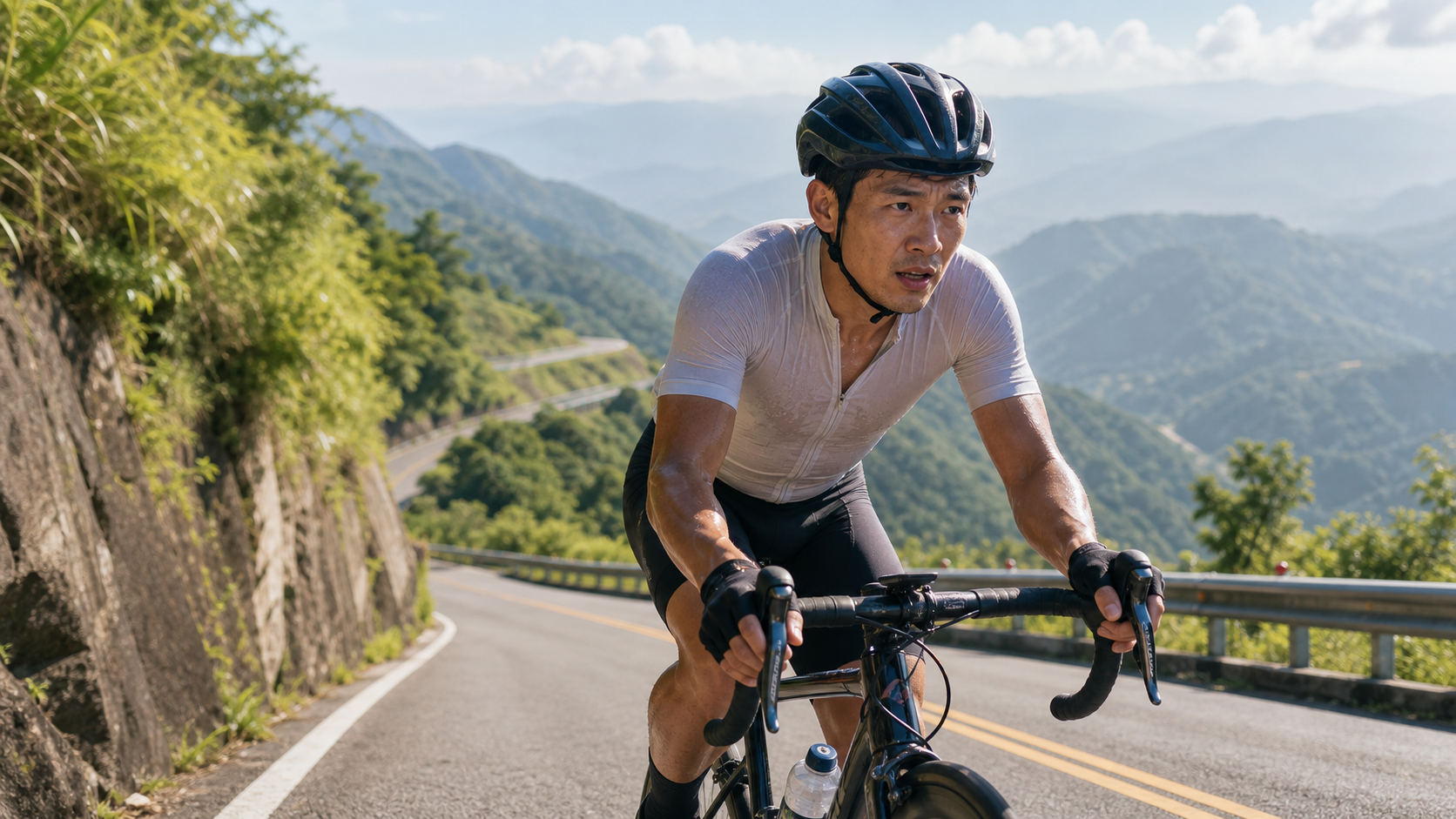
Taiwan’s summer (June–September) is dauntingly hot, but for many riders, this is precisely the season they most want to tackle climbs—summer vacation offers time, and since major races are mostly in autumn, summer is the final preparation window. However, climbing in temperatures above 35°C puts the body under challenges far greater than training in temperate climates. Without proper strategy adjustments, the least consequence is compromised training quality; at worst, it can lead to heat exhaustion or even heat stroke.
The Impact of High Heat on Climbing Performance
In hot environments, the body must simultaneously manage exercise-related heat dissipation and ambient high temperatures. The specific effects on climbing include:
| Aspect Affected | High Heat (>32°C) vs. Moderate Temperature (18–22°C) |
|---|---|
| Heart Rate | 10–20 bpm higher at the same power output |
| Sustained Power | May drop 5–15% |
| Sweat Rate | Increases 30–60% |
| Onset of Fatigue | 15–30 minutes earlier |
| Heat Stroke Risk | Significantly increased |
When core body temperature exceeds 40°C, the brain forcibly reduces muscle activity as a protective mechanism (Central Fatigue). This is not a matter of willpower but the activation of a physiological safety valve.
Risks Specific to Summer Climbing in Taiwan
Afternoon Thunderstorms in Mountainous Areas
Summer convective thunderstorms in Taiwan’s mountains typically erupt between 2–4 PM. Their characteristics include:
- Rapid formation, difficult to predict precisely 1–2 hours in advance
- Heavy rainfall and sudden drops in visibility
- Lightning risk
- Extremely slippery road surfaces for a short period after rain
Strategy: Complete the main climbs between 6–11 AM whenever possible, and descend before 1 PM
The Temperature Differential Trap at High Altitude
In Taiwan’s mountains, the vertical temperature gradient is approximately 6–7°C cooler per 1000m of elevation gain. With 35°C at the base in summer, the summit of Wuling may only be 15–20°C. Heavy sweating combined with low temperatures on descents makes the risk of hypothermia real.
Strategy: Keep a lightweight windbreaker in the rear jersey pocket and put it on immediately upon reaching the summit
Preparation Strategies for Climbing in High Heat
Timing Choices
| Departure Time | Pros and Cons |
|---|---|
| 5–6 AM | Lowest temperature (cool), empty stomach requires fueling, initially low visibility |
| 6–8 AM | The golden window—cool with good visibility |
| 8–10 AM | Acceptable, but heat begins to be felt |
| After 10 AM | High heat and intense sun make the challenge significantly harder |
An Enhanced Hydration Plan
Hydration needs for summer climbing are 1.5–2 times those of temperate climates:
- 2 hours before departure: drink 500ml of water
- During riding: drink 200ml every 15–20 minutes (don’t wait until thirsty)
- Summer sweat rates are high, so sodium-containing electrolyte replenishment is needed; excessive plain water can actually dilute blood sodium
- Carry two 750ml bottles—supply points on Taiwan’s mountain roads can be more than 30km apart
Electrolyte Recommendation: Replenish approximately 500–700mg of sodium per hour (via sports drinks or electrolyte tablets, not salt pills)
Equipment Choices
- Jersey: Choose light-colored, breathable fabrics with cooling technology
- Helmet: Prioritize models with more ventilation holes; avoid full-shell aero time-trial helmets
- Gloves: Thin or fingerless gloves to reduce heat buildup in the hands
- Sun Protection: Some riders use lightweight arm sleeves (which actually provide insulation) with a UPF50 UV rating
- Eyewear: Darker lenses reduce eye fatigue
Principles for Adjusting Intensity in High Heat
This is the point most riders are unwilling to accept, yet it is the most important: you must proactively lower your target intensity when climbing in summer.
Recommended intensity adjustments for hot days:
- 28–32°C: reduce target power by 5–8%
- 32–35°C: reduce target power by 10–12%
- Above 35°C: reduce target power by 15%, using heart rate as the primary monitoring metric
Even with reduced intensity, training benefits remain—heat itself is a training stress. It promotes Heat Acclimatization, gradually improving the body’s efficiency in hot conditions.
Heat Acclimatization Training
After 7–14 consecutive days of riding in hot environments, the body undergoes the following adaptations:
- Increased sweat rate (more effective cooling)
- Reduced sodium loss ratio in sweat (preserving electrolytes)
- Lower resting and exercise heart rates (improved cardiac efficiency)
- Increased plasma volume (enhanced cardiac output)
After heat acclimatization, heart rate at the same intensity can drop by 5–10 bpm, and perceived effort decreases noticeably.
Warning Signs of Heat Exhaustion
If any of the following symptoms appear, stop immediately and rest in the shade:
- Dizziness or worsening headache
- Extremely flushed skin, or conversely, cessation of sweating (a danger signal)
- Nausea or vomiting
- Inability to maintain a straight line while riding
- Confusion or sluggish responses in conversation
If sweating stops combined with extremely high body temperature and altered consciousness, it may be heat stroke—call for emergency assistance immediately.
Practical Tips
- The safest time for summer climbing in Taiwan is departing at dawn and completing climbs by late morning
- Check the weather forecast before riding; the Central Weather Administration app can show the probability of afternoon thunderstorms in mountainous areas
- Set up an emergency contact on LINE and inform family of your route and estimated return time
- 7-Eleven stores in Taiwan’s mountains carry ice water and sports drinks, serving as natural resupply points
- If caught in an afternoon thunderstorm in the mountains, take shelter immediately and wait 30 minutes after the thunder subsides before continuing
Conclusion
Taiwan’s summer heat is both a challenge and a training opportunity. By adjusting your mindset, lowering intensity expectations, and planning hydration and timing carefully, summer climbing is not only safe and feasible—it is an excellent chance to build heat acclimatization and lay the foundation for autumn races. Safety first, enjoy the process, and let every drop of sweat bear witness to your progress.
Related Reading
- A Summer Survival Guide for Taiwan Cyclists: Riding Strategies in Extreme Heat
- Heat Acclimatization Training: Performance Enhancement Strategies for Taiwan’s Hot Summer
- Heat Acclimatization Training for Cyclists: Boosting Performance in Taiwan’s Summer Heat
- Cycling Heat Acclimatization Training: Coping Strategies for Taiwan’s Summer High Temperatures
大武山後門26%歡樂陡坡!JJSC南台灣單車行Day2 / 被颱風追著跑 / 公路車 / CT Yeh
2 年前
2019 夏季KOM 5小 完賽心得 準備攻略 東進武嶺 夏季登山王之路 Taiwan KOM Challenge
7 年前
單車 一日北高 ( 雙城 ) 肥宅雙人瘋狂行 紀錄片 REACTO
10 年前
一日北高常見問題大集合 | 攻略 | 路線 | 訓練 | 補給 | 自行車 單車 | 一日雙城 | 雙塔 | TWB北高360 | 屁股痛
6 年前
一日北高/長距離團騎 常見問題補充篇 / 組團或跟團的眉角 / 壯車友容易被瘦車友慢性拉爆 / 原來屁股痛可能是這個原因...? / 風場配速法 / 公路車 / CT Yeh
2 年前
太平山單車員工旅遊 | 這樣玩CP值最高!| 公路車
5 年前
爬坡ITT實境)台中 魔王 松鼠坡 首航 6:12 大肚山 大三元 科福路
8 年前
單車 梅山36灣 坡度介紹 路段介紹 空拍 (相關遊記影片,請參考說明或我的頻道喔,歡迎訂閱)
6 年前