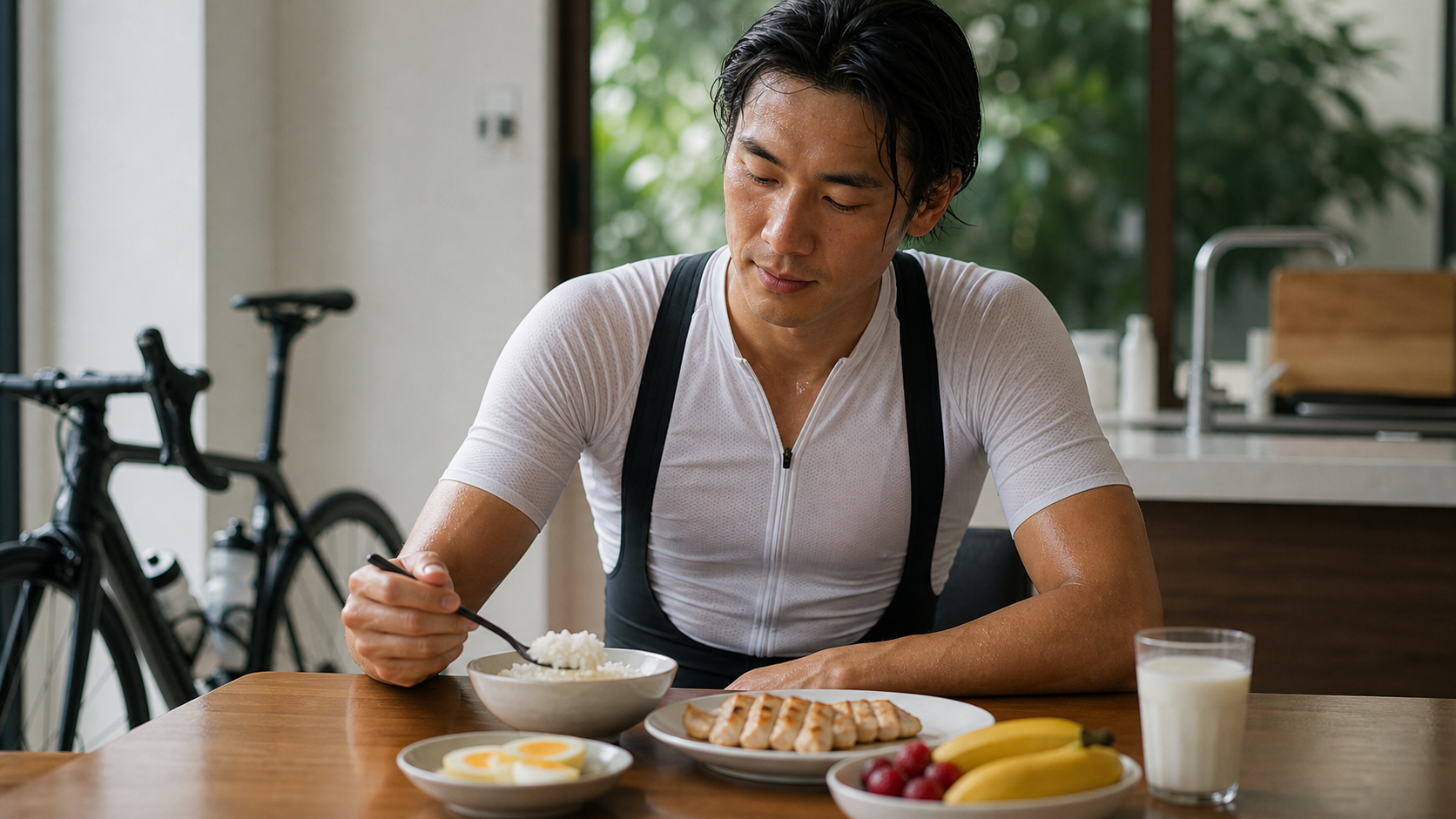
Introduction
Many cyclists shower first after a ride and only think about eating second. This sequence may cause you to miss the most critical “recovery window.” During the 30–45 minutes after exercise, muscle absorption efficiency for carbohydrates and protein peaks. The quality of your nutrition during this period directly affects whether you can ride at the same or even higher intensity the next day.
This article, grounded in exercise physiology, explains the scientific basis for post-ride recovery meals, the optimal carbohydrate-to-protein ratio, and practical options suited to the Taiwanese lifestyle.
Two Major Recovery Needs After Exercise
1. Muscle Glycogen Resynthesis
After a high-intensity or long-distance ride, muscle glycogen stores are largely depleted. The rate of muscle glycogen synthesis is fastest immediately after exercise (reaching 5–7 mmol/L/hr), but only when sufficient carbohydrates are consumed.
If carbohydrates are not consumed within 2 hours after exercise, the glycogen resynthesis rate drops to 50% of normal; if replenishment is delayed until 6 hours later, this accelerated window is almost entirely lost.
2. Muscle Protein Synthesis (MPS)
During cycling, muscle fibers endure the mechanical stress of repeated contractions, and some muscle protein is broken down. Consuming protein after exercise—especially high-quality protein rich in leucine—activates the mTOR signaling pathway, stimulating muscle protein synthesis.
Optimal Carbohydrate-to-Protein Ratio
Research shows that a carbohydrate-to-protein ratio of 3:1 or 4:1 in post-exercise recovery meals is effective for both glycogen resynthesis and muscle repair.
| Ratio | Best Suited For | Example Combinations |
|---|---|---|
| 4:1 (carbs:protein) | Consecutive days of training, rapid glycogen replenishment needed | White rice + small portion of chicken breast |
| 3:1 (carbs:protein) | Regular training days, higher muscle repair needs | Sweet potato rice + tofu + eggs |
| 2:1 (carbs:protein) | Low-intensity rides, light recovery on rest days | Yogurt + fruit |
Protein Intake
Recommended protein intake per recovery session: 0.2–0.4 g/kg body weight (approximately 20–35 g)
- Body weight 60 kg: 12–24 g protein recommended
- Body weight 70 kg: 14–28 g protein recommended
- Body weight 80 kg: 16–32 g protein recommended
Managing the Recovery Window Timeline
| Time Point | Recommended Action | Notes |
|---|---|---|
| 0–30 minutes after exercise | Quick replenishment (liquid-based preferred) | Whey protein shake + banana; or chocolate milk |
| 1–2 hours after exercise | Main meal | White rice + chicken + vegetables |
| 4–6 hours after exercise | Supplemental snack (for consecutive-day training) | Yogurt + oats |
If you cannot eat a full meal within 30 minutes, prioritize a liquid quick-recovery drink:
- Whey protein 25g + banana + water
- Low-fat chocolate milk 400ml (carbs:protein ≈ 4:1, a natural option)
- Soy milk 500ml + energy bar (available at Taiwanese convenience stores)
Practical Recovery Meal Plans for the Taiwanese Environment
Plan 1: Quick Recovery Drink (within 10 minutes)
Low-fat chocolate milk 350ml + 1 banana
→ Carbs 55g, protein 12g, ratio approximately 4.5:1
→ Advantages: readily available at convenience stores, well supported by research
Plan 2: 30-Minute Recovery Meal
One bowl of plain rice porridge + 2 boiled eggs + half a box of tofu
→ Carbs 60g, protein 22g, ratio approximately 2.7:1
→ Advantages: easy to digest, suitable for gastrointestinal fatigue after long distances
Plan 3: Complete Recovery Main Meal (1–2 hours later)
White rice 200g (cooked weight) + chicken breast 150g + stir-fried vegetables + braised egg
→ Carbs 80g, protein 35g, ratio approximately 2.3:1
→ Advantages: nutritionally comprehensive, suitable for a daily training cycle
Plan 4: Fully Plant-Based (for vegetarian cyclists)
Sweet potato 200g + tofu 200g + edamame 60g + brown rice
→ Carbs 75g, protein 25g, ratio approximately 3:1
→ Advantages: rich in branched-chain amino acids (edamame is high in leucine)
Common Mistakes and Cautions
- ❌ Going straight to sleep after riding: Muscle glycogen cannot be effectively replenished, and next-day fatigue will multiply
- ❌ Consuming only protein without carbohydrates: Common among cyclists trying to lose weight; without glycogen replenishment, next-day training intensity will suffer significantly
- ❌ Consuming large amounts of high-fat foods: The fat in fried foods and braised pork rice slows the absorption of carbohydrates and protein
- ✅ Replenishing fluids and electrolytes: Pair your recovery meal with 500–700 ml of an electrolyte drink to complete fluid balance
Practical Recommendations
- Keep a “recovery drink” by your bike: Consume it immediately after finishing your ride—don’t wait until after your shower.
- Calculate your protein intake rather than relying on feel, ensuring you reach the 20–30g threshold.
- Prioritize real food, then supplements: The overall nutrient profile of whole foods (vitamins, minerals) is superior to pure protein powder.
- Be more disciplined during multi-day training blocks: When sessions are less than 24 hours apart, recovery-window nutrition is especially critical.
- Add a small bedtime snack: If there are still 4–5 hours between training and sleep, consume another 20g of protein before bed (such as Greek yogurt) to support overnight muscle repair.
Conclusion
The moment training ends is not the start of rest—it is the start of recovery. A science-based post-ride recovery meal strategy allows every training session to effectively accumulate adaptation, rather than heading into your next workout still carrying residual fatigue. Starting today, make recovery meal planning an essential part of every training session, and let eating become a key driver of your progress.
Related Reading
- Post-Run Recovery Meals: Protein-to-Carbohydrate Ratio in the 30-Minute Golden Window
- The Golden 30 Minutes of Post-Run Recovery: Optimal Timing for Protein and Carbohydrates
- Post-Ride Recovery Strategies: Science-Based Massage, Stretching, and Hot/Cold Therapy
- Post-Run Nutrition: The Golden Ratio of Protein to Carbohydrates
CT暗黑廚房) 車友必備 宇宙無敵鮮蚵湯 幫助訓練恢復 天然食補 好市多 超肥鮮蚵 破PR
7 年前
#公路車 #Fitting 靠人工智慧APP 幫你調整單車
6 年前
靠單車減肥35公斤 心得分享與整理
7 年前
摔車後補裝備: 好市多新款單車安全帽& Specialized Romin 北高整路屁股都不痛的坐墊 | 一千元居然有MIPS | CT Yeh | 公路車
4 年前
下次拍照前要查清楚啦🤣 #cycling
7 個月前
一日北高/長距離團騎 常見問題補充篇 / 組團或跟團的眉角 / 壯車友容易被瘦車友慢性拉爆 / 原來屁股痛可能是這個原因...? / 風場配速法 / 公路車 / CT Yeh
2 年前
西進武嶺 免費訓練分析服務 Intervals | 練不夠還是練過頭?你哪一種類型選手?AI模型告訴你! | 備戰神器 | 公路車 訓練 | CT Yeh
4 年前
一日北高常見問題大集合 | 攻略 | 路線 | 訓練 | 補給 | 自行車 單車 | 一日雙城 | 雙塔 | TWB北高360 | 屁股痛
6 年前