Dietary Strategies for Vegan Cyclists: Complete Nutritional Supplementation for a Plant-Based Diet
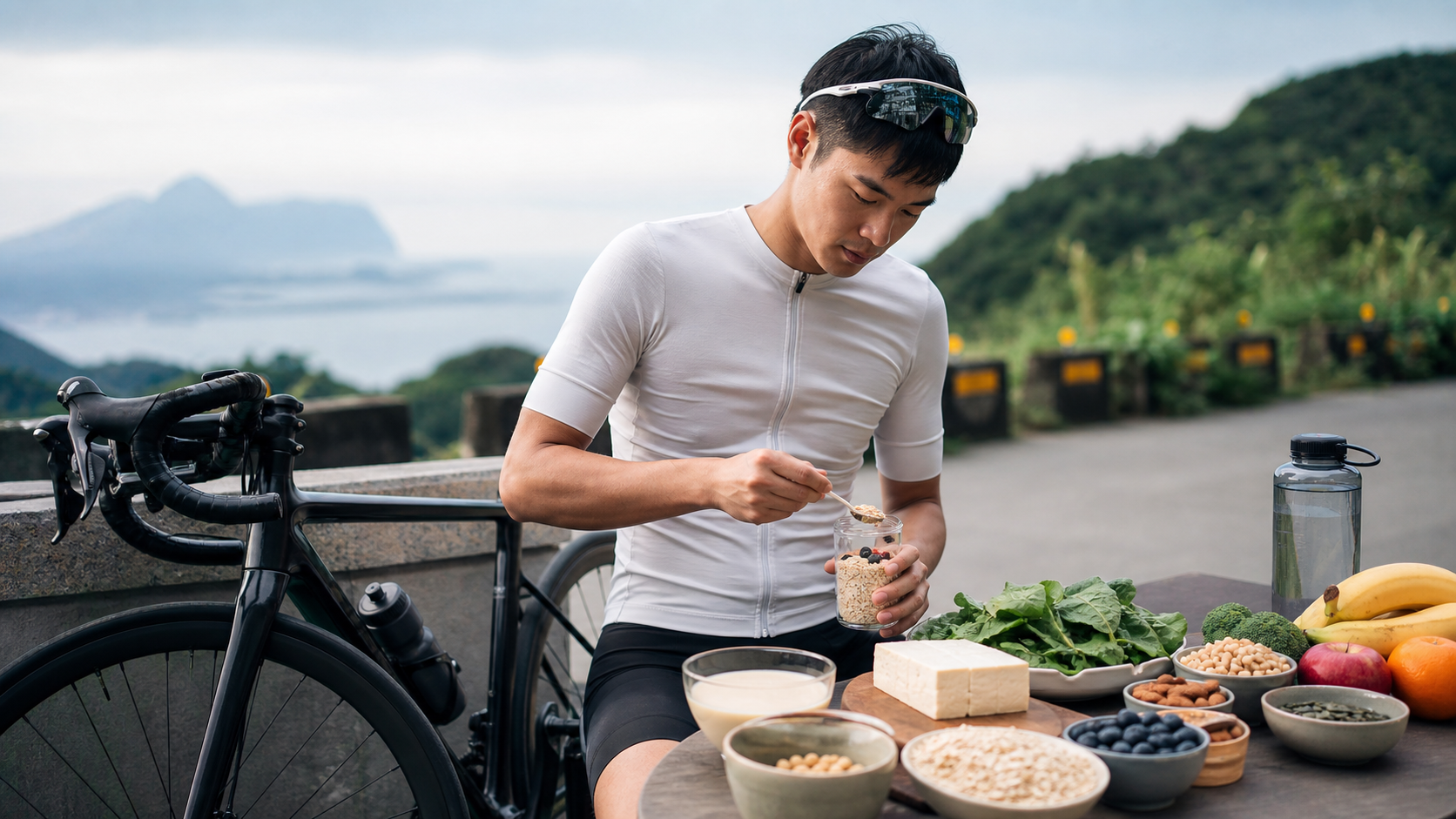
Introduction
Taiwan has one of the highest percentages of vegetarians in Asia, and with growing environmental awareness and health trends, more and more cyclists are choosing a fully vegan or flexitarian diet (lacto-ovo vegetarian, or plant-forward). The good news is: a plant-based diet can fully support high-intensity riding—many of the world’s top endurance athletes are vegetarians. The bad news is: without proper planning, deficiencies in certain key nutrients can quietly erode your training quality over the course of several months.
This article provides a complete dietary planning guide for Taiwanese vegetarian cyclists, ensuring that a plant-based diet delivers all the nutrition needed for riding.
The Most Common Nutritional Gaps for Vegetarian Cyclists
Six Potentially Deficient Nutrients
| Nutrient | Deficiency Risk | Impact on Performance | Quality Plant-Based Sources |
|---|---|---|---|
| Vitamin B12 | High risk for vegans | Anemia, nerve damage, fatigue | Supplementation required; fortified plant milks |
| Iron | Moderate to high | Anemia, reduced oxygen-carrying capacity | Tofu, black sesame, pumpkin seeds, spinach |
| Omega-3 Fatty Acids | Moderate | Slower inflammation recovery, heart health | Flaxseeds, chia seeds, walnuts |
| Calcium | Moderate for vegans | Decreased bone density, muscle contraction | Firm tofu, dried anchovies (lacto-ovo), sesame |
| Zinc | Moderate | Immune function, protein synthesis | Pumpkin seeds, cashews, tahini |
| Protein (Complete Amino Acids) | Low to moderate | Insufficient muscle repair | Soy products, edamame, quinoa |
The Complete Protein Solution
The biggest challenge with plant-based protein is the “complete amino acid profile.” Animal protein contains all 9 essential amino acids, while most plant proteins are lacking one or more of them (such as lysine or methionine). However, through the “complementary protein strategy,” vegetarians can absolutely obtain complete amino acids.
Complementary Protein Combinations in Taiwanese Vegetarian Cuisine
- Legumes + Grains: Red bean rice, soy milk + oatmeal, tofu + white rice (most common and efficient)
- Legumes + Nuts & Seeds: Edamame + pumpkin seeds, hummus + tahini
- Soy protein (complete): Firm tofu, edamame, tempeh, and soy milk themselves contain complete amino acids
Important Updated Concept: Modern research indicates that dietary variety across the whole day matters more than “complementing within the same meal.” As long as you consume a variety of plant proteins throughout the day, amino acids can still be utilized effectively.
Daily Protein Targets for Vegetarian Cyclists
- Regular training days: 1.4–1.6 g/kg body weight
- High-intensity training days: 1.6–2.0 g/kg body weight (plant protein has slightly lower digestibility, so aim for 10–15% more than the equivalent amount of animal protein)
The Vegetarian Challenge in Ride Fueling
Choosing Fuel Foods
Most energy bars and gels are vegetarian-friendly, but some contain:
- Gelatin: Used in gummy-type fuels; not vegetarian
- Whey protein: Acceptable for lacto-ovo vegetarians, not for vegans
- Honey: Strict vegans need to check for this
Recommended Fuel List for Taiwanese Vegetarian Cyclists:
- Rice balls (choose vegetarian flavors like sesame or plum)
- Bananas (natural plant-based energy)
- Mochi (vegan)
- Red bean toast (carbs + trace iron)
- Unsweetened soy milk (protein + calcium)
- GU energy gel vegan series (check the ingredients)
Strategies to Boost Key Micronutrients
Maximizing Iron Absorption
Plant-based iron (non-heme iron) has a much lower absorption rate than animal-based iron (approximately 2–10% vs. 10–25%). Ways to improve it:
- Pair with vitamin C foods: Iron-rich foods + orange juice, tomatoes, or kiwi can increase absorption by 3–6 times
- Avoid consuming iron absorption inhibitors at the same time: Coffee, tea (tannins), and calcium supplements should be spaced 1–2 hours apart
- Get regular serum ferritin checks: Recommended annually; for vegetarian athletes, the ferritin target is > 30 ng/mL
Vitamin B12 Supplementation (Essential for Vegans)
Vegans can barely obtain B12 from their diet and need supplements:
- Recommended dosage: 250 mcg daily, or 2,500 mcg weekly (due to different absorption mechanisms at high doses)
- Fortified foods: Some plant milks and breakfast cereals are fortified with B12, but the amounts are often insufficient to rely on alone
The Omega-3 Conversion Problem
ALA from flaxseeds must be converted into EPA and DHA in the body, but the conversion efficiency is only 5–15%. Long-term solutions:
- Use algal oil supplements (a direct plant source of EPA + DHA)
- Consume 2–3 g of ALA daily (1 tablespoon of ground flaxseed = approximately 2.3 g ALA)
A Complete One-Day Meal Example
Breakfast (3 hours before riding): Oatmeal + 250ml soy milk + 1 banana + kiwi (vitamin C)
Ride fueling: Vegetarian rice ball + banana + vegan energy gel
Post-ride recovery: 500ml soy milk + banana (quick replenishment)
Lunch: Tofu fried rice + spinach (iron) + orange juice (promotes iron absorption)
Snack: 30g pumpkin seeds + 100g edamame
Dinner: Quinoa rice + braised tofu + stir-fried greens + miso soup (sodium replenishment)
Before bed: Algal oil capsule + B12 supplement
Practical Advice
- Get regular annual blood tests: Hemoglobin, serum ferritin, B12, and 25(OH)D (vitamin D) are essential checks for vegetarian athletes.
- Prioritize whole foods over vegetarian processed products: Processed vegetarian items like vegetarian chicken or sausages are high in sodium and have inconsistent protein quality.
- Understand the importance of soaking legumes: Legumes contain phytate; soaking before cooking reduces phytate content and improves iron and zinc absorption.
- Don’t assume vegetarian food is automatically low-calorie: High-intensity training periods require sufficient calories; avoid under-eating.
- Try tempeh: A fermented soy product with excellent protein quality, trace amounts of B12, and it’s becoming increasingly easy to find in Taiwan.
Conclusion
A vegetarian diet and high-intensity riding are not only compatible, but can even offer additional advantages in certain areas (such as anti-inflammatory eating and gut health). The key is knowing where the potential nutritional gaps are and proactively filling them. With proper planning, a plant-based diet can fully support your training needs, giving you abundant energy and fast recovery on every ride.
Related Reading
- Vegetarian and Vegan Riders: How to Ensure Complete Nutritional Intake
- Nutrition Guide for Vegetarian Cyclists: Plant-Based Diets Can Also Deliver Top Performance
- The Complete Nutrition Guide for Vegetarian Cyclists: Ride to Great Results on a Plant-Based Diet
- Dietary Strategies for Vegetarian Runners: A Complete Supplementation Plan for Plant-Based Protein
靠單車減肥35公斤 心得分享與整理
7 年前
CT暗黑廚房) 車友必備 宇宙無敵鮮蚵湯 幫助訓練恢復 天然食補 好市多 超肥鮮蚵 破PR
7 年前
CT 喇低賽) 單車 比賽總是沒照片? 攝影師的觀點大公開 姿勢就是力量! 請加速1.25倍收看
7 年前
高雄綠園道鐵路自行車道 / 外地人能輕鬆駕馭 還是整路崩潰? / 2025 全線開通 春節實地探索一次!(附GPS連結)/ 公路車 / CT Yeh
1 年前
單車 一日北高 ( 雙城 ) 肥宅雙人瘋狂行 紀錄片 REACTO
10 年前
太平山單車員工旅遊 | 這樣玩CP值最高!| 公路車
5 年前
#公路車 #Fitting 靠人工智慧APP 幫你調整單車
6 年前
一日北高/長距離團騎 常見問題補充篇 / 組團或跟團的眉角 / 壯車友容易被瘦車友慢性拉爆 / 原來屁股痛可能是這個原因...? / 風場配速法 / 公路車 / CT Yeh
2 年前