Introduction
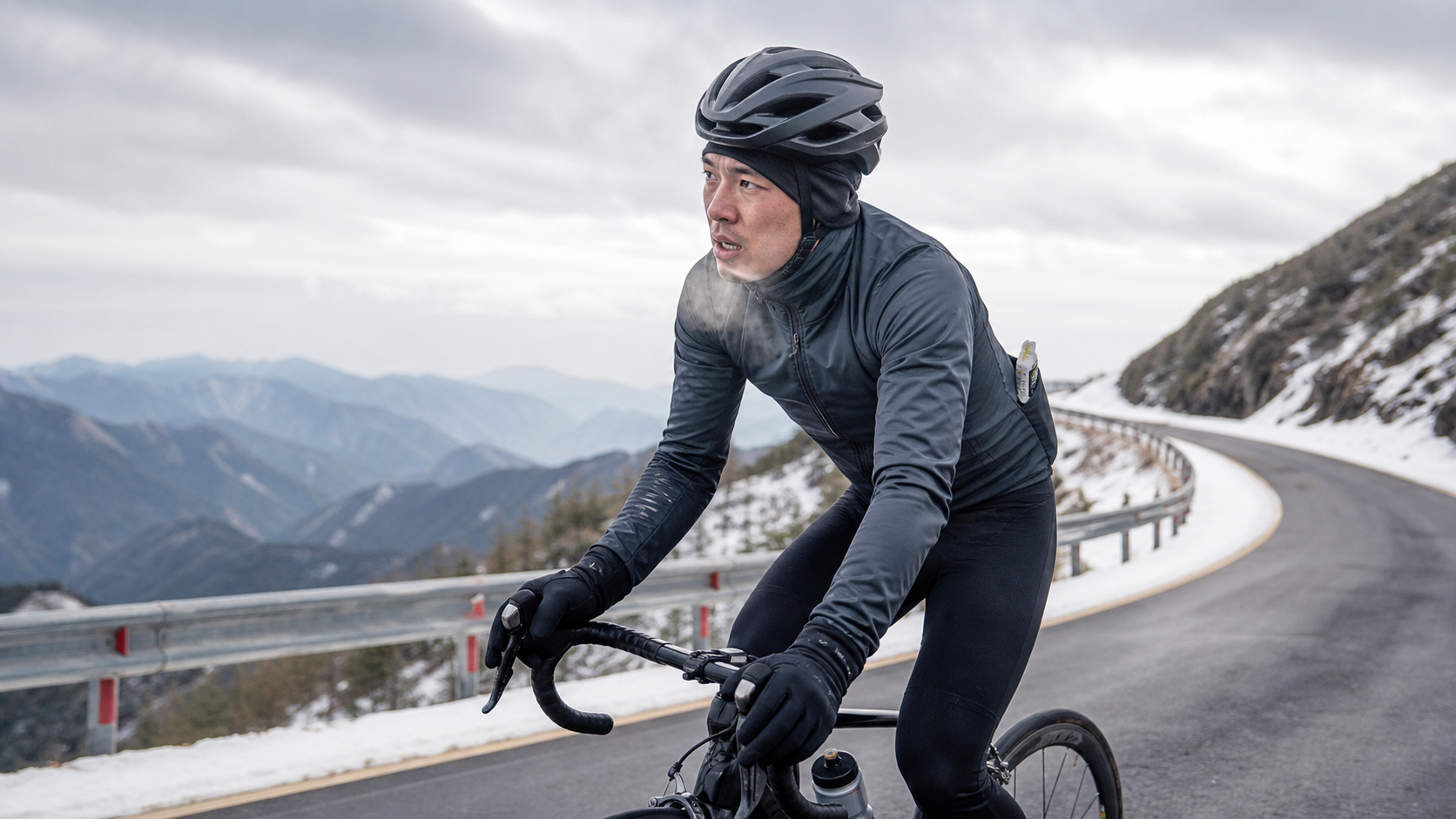
Winter cycling in Taiwan, particularly in the north (Taipei, Hsinchu) or on high-altitude routes (Wuling, Hehuan Mountain), can see temperatures drop to 5–15°C. Combined with the wind chill from riding, the perceived temperature can sometimes fall below 0°C. In such conditions, the body must not only supply energy for muscle work but also maintain a core temperature of around 37°C—this requires additional caloric expenditure and fundamentally changes the logic behind your fueling strategy.
Extra Energy Expenditure in Cold-Weather Riding
The Caloric Cost of Thermoregulation
When riding in cold environments, the body burns extra calories to maintain core temperature through the following mechanisms:
- Shivering: When you stop riding, wait at a summit, or descend, rapid muscle contractions generate heat, burning 200–400 kcal/hr more than at rest
- Vasoconstriction: Skin blood vessels constrict to reduce heat loss, but this process itself consumes energy
- Increased Lipolysis: In cold conditions, the body tends to tap into stored fat for fuel (brown fat activation), raising overall metabolic rate
Estimated Extra Caloric Expenditure in Cold Weather
| Temperature Conditions | Estimated Extra Caloric Burn (vs. 25°C) |
|---|---|
| 15–20°C (Cool) | + 50–100 kcal/hr |
| 10–15°C (Cold) | + 100–200 kcal/hr |
| 5–10°C (Chilly) | + 200–350 kcal/hr |
| < 5°C (Freezing) | + 350–500+ kcal/hr |
Note: These figures are influenced by a combination of clothing (insulation level), individual body fat percentage, wind speed, and riding intensity, and are for reference only.
Fueling Challenges in Cold Weather
Challenge 1: Reduced Appetite and Willingness to Fuel
In cold environments, some riders experience a decreased appetite or are reluctant to open their feed bags due to thick gloves. This reduces fueling frequency and accelerates the risk of energy deficiency.
Challenge 2: Reduced Carbohydrate Oxidation Efficiency
In cold temperatures, intestinal blood flow decreases, making carbohydrate absorption slightly less efficient than at normal temperatures. This means that even if you consume the same amount of energy gel, the actual absorption rate may be slightly lower.
Challenge 3: Liquid Fuel Freezing or Cooling Down
When temperatures drop below 10°C, sports drinks in bottles cool rapidly, reducing the desire to drink, and can even freeze (during high-mountain rides).
Challenge 4: Gloves Affecting Manual Dexterity
Opening energy gel packets and operating bottle caps with winter gloves on is far more difficult than in summer, compromising fueling efficiency.
Adjusting Your Fueling Strategy for Cold Weather
Increase Carbohydrate Intake
For cold-weather riding, it is recommended to increase carbohydrate intake by 20–30% over your summer baseline to compensate for the extra expenditure on thermoregulation.
| Riding Conditions | Summer Recommendation | Winter Adjustment |
|---|---|---|
| 2-hour moderate intensity | 60 g/hr carbs | 70–80 g/hr carbs |
| 4-hour long distance | 70 g/hr carbs | 85–100 g/hr carbs |
| High-mountain routes (< 10°C) | 60–70 g/hr | 90–110 g/hr |
Use Hot Drinks as a Fueling Medium
The secret weapon for winter riding: an insulated bottle filled with warm sports drink.
- Dissolve sports drink powder in warm water (around 40°C) and pour it into an insulated bottle
- This not only provides carbohydrate fuel, but the warm drink helps maintain core temperature and increases the willingness to drink
- Common options in Taiwan: warm instant electrolyte powder (such as the warm-drink version of Hydration Booster), warm soy milk (providing carbs and protein)
Adjusting Solid Foods
Solid foods can harden in cold temperatures (energy bars can become rock-hard). Solutions:
- Keep energy bars in the inner layer of your jersey: close to your body to stay warm
- Prioritize gel-type products: they won’t harden in the cold
- Carry local Taiwanese warm foods: savory pastries or sweet potatoes from regional specialties, or hot rice balls from convenience stores (hot when you set off, kept warm in the inner layer)
Special Fueling Strategies for High-Mountain Winter Rides (Wuling/Hehuan Mountain)
- Eat more before departure: The temperature at Cingjing Farm (approx. 1,750m), the starting point for the western ascent of Wuling, is already low; increase your meal size before setting off
- Force-feed every 30–40 minutes: Don’t wait until you’re hungry—set an alarm as a reminder (subjective hunger cues are often dulled in cold conditions)
- Emergency warming pack for the summit: Temperatures at the top of Wuling (3,275m) can be 0–5°C; carry high-calorie-density emergency foods (dark chocolate, nut candies)
- Fueling strategy for the descent: Your body cools rapidly on the descent; consume a mix of carbohydrates and fat before descending to maintain energy supply
Recommended Fueling Options for Winter Riding in Taiwan
| Fueling Item | Winter Suitability | Notes |
|---|---|---|
| Insulated bottle (warm sports drink) | ★★★★★ | Strongest recommendation |
| Gel-type energy products | ★★★★ | Won’t harden in cold |
| Rice balls (kept warm against body) | ★★★★ | Consume within 4 hours |
| Dark chocolate | ★★★★ | High calorie density, won’t melt in cold |
| Energy bars | ★★★ (needs insulation) | Keep in inner pocket |
| Standard energy gels | ★★★ | Become viscous in cold, harder to squeeze out |
| Cold sports drinks | ★★ | Reduces willingness to drink |
Practical Tips
- Eat 20–30% more before departure: Basal caloric needs are higher in winter; moderately increase pre-ride meal portions.
- An insulated bottle is essential winter gear: Warm drinks boost fueling willingness and help keep you warm.
- Set fueling timer reminders: Subjective hunger is unreliable in cold conditions; use a timer to force yourself to fuel.
- Carry high-calorie-density emergency food: Dark chocolate and nut candies are compact, calorie-dense, and can be lifesavers on cold rides.
- Fuel once more before descending: Energy expenditure drops but heat loss increases during the descent; a final intake before descending helps maintain core temperature.
Conclusion
The challenge of winter cycling isn’t just about cold-weather gear—your diet and fueling strategy need adjustment too. By understanding how low temperatures affect caloric needs, making good use of insulated bottles, and adjusting fueling frequency and portions, you can enjoy a quality riding experience even in the cold season. Taiwan’s winter mountain scenery and crisp climate offer a unique riding pleasure; with proper preparation, winter can be the most wonderful cycling season.
Related Reading
- Nutritional Strategies for Cold Environments: The Underestimated Energy and Fluids in Low Temperatures, and the Meaning of a Hot Meal
- Temperature Correction for Cycling Training: Methods for Adjusting Power Output in Hot Weather
- Heat Adaptation Training: Physiological Strategies to Improve Cycling Performance in Taiwan’s Summer
- Heat Adaptation Training: Performance Enhancement Strategies for Taiwan’s Hot Summer Environment
CT暗黑廚房) 車友必備 宇宙無敵鮮蚵湯 幫助訓練恢復 天然食補 好市多 超肥鮮蚵 破PR
7 年前
單車 一日北高 ( 雙城 ) 肥宅雙人瘋狂行 紀錄片 REACTO
10 年前
#公路車 #Fitting 靠人工智慧APP 幫你調整單車
6 年前
靠單車減肥35公斤 心得分享與整理
7 年前
單車賞雪 裝備準備及注意事項分享 | 公路車
5 年前
水金九不厭五分 10度寒流冷到不願停!feat. 卡卡 / 公路車 / CT Yeh
6 個月前
ThinkRider 智騎 XXPRO 訓練台,高階機種功能 只要 1/3價格!? 實測功率對比、噪音實測 / 公路車 / CT Yeh
1 年前
5 ℃ 櫻花之旅 / 75萬單車直接雨中洗車.../ 平菁街 / 北迴歸小隊 / 公路車 / CT Yeh
5 個月前