Introduction
The sprint finish of a road cycling race is the most thrilling moment of the entire event. Within just 200 meters, riders must cast aside hours of accumulated fatigue and unleash every last bit of neuromuscular energy. However, many amateur cyclists only understand sprinting as “pedal harder,” overlooking the importance of body position control and the timing of power output.
The Three Key Elements of Sprint Position
1. Low, Forward-Leaning Position and Head Placement
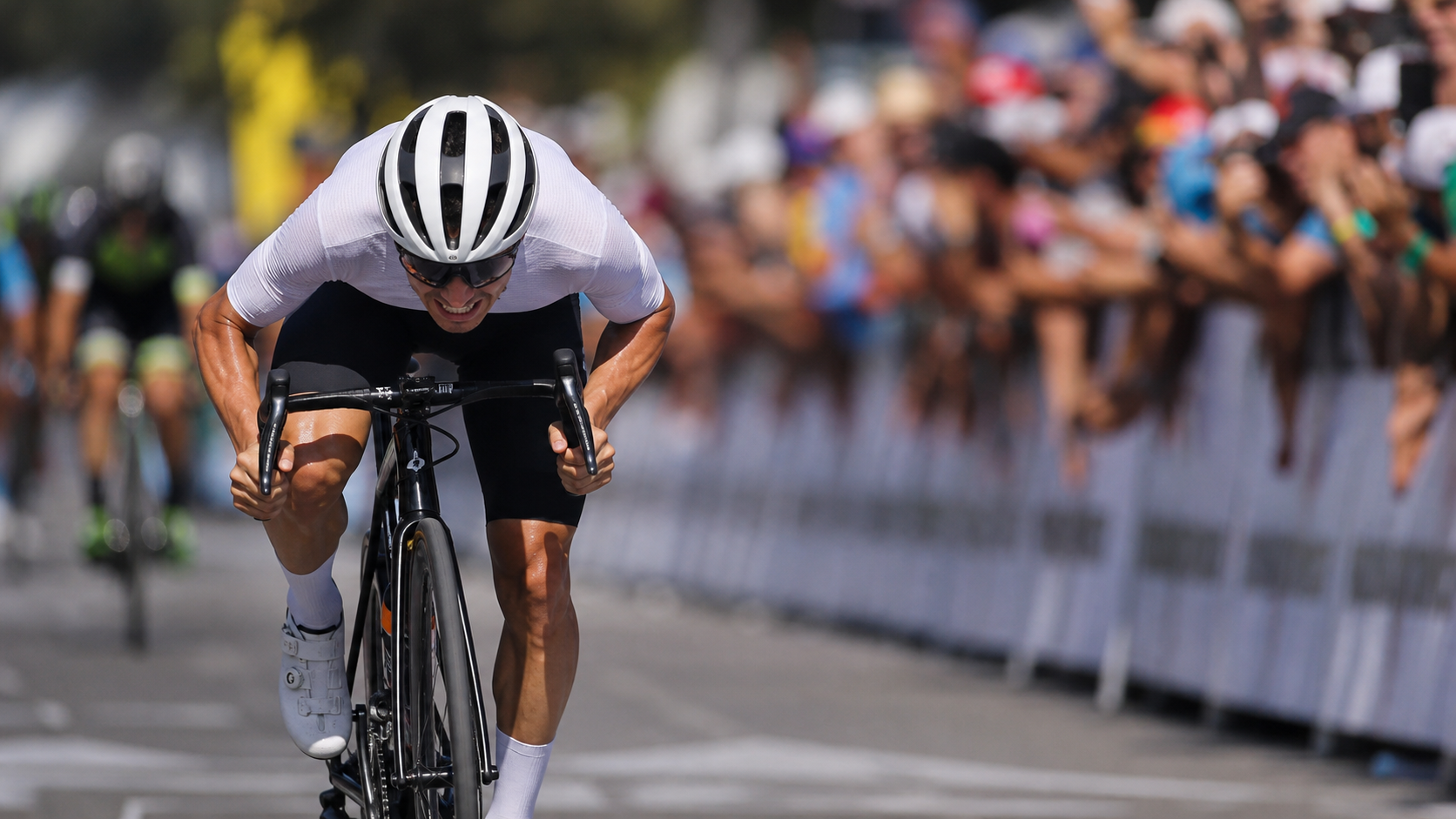
Professional sprinters keep their bodies as low as possible during the final sprint because aerodynamic drag is proportional to the square of speed. At sprint speeds above 45km/h, aerodynamic drag accounts for more than 85% of total resistance.
Key points for correct position:
- Keep the upper body as parallel to the ground as possible, with forearms resting on the drops
- Slightly lift the head, eyes looking straight ahead (never fully drop the head)
- Shoulders relaxed but stable, avoiding unnecessary lateral sway
- Sit toward the rear of the saddle to improve power output stability
2. Bike Throwing Technique and Weight Transfer
The bike throwing (rocking the bike) during a sprint is not random movement—it is a precise alternating transfer of weight from side to side, synchronized with the timing of the bottom dead center of the pedal stroke.
| Pedaling Side | Bike Direction | Core Function |
|---|---|---|
| Right foot pushing down | Bike leans left | Increases effective torque on the right leg |
| Left foot pushing down | Bike leans right | Increases effective torque on the left leg |
| Transition phase | Return to center | Maintains a straight line |
The amplitude of the bike throw should be moderate. Excessive rocking wastes lateral energy and poses a collision risk in a dense pack. Professional riders typically rock the bike within a range of 10–15 degrees.
3. Arm Counterforce and Handlebar Grip
During a sprint, the arms are not passive supports but an active counterforce structure. When the right foot pushes down hard, the right hand needs to pull upward on the handlebar as a reaction force, creating a tension network throughout the body that recruits more muscle groups into the pedaling motion.
Arm training tips:
- Grip the handlebar firmly but not tensely (whitened fingers indicate excessive tightness)
- Keep elbows slightly bent, avoiding locked elbows (which transmit vibration directly to the shoulders)
- Target pull-up and rowing movements to strengthen the back’s pulling muscles
Timing and Rhythm of Power Output
Determining the Optimal Launch Distance
The optimal sprint distance varies greatly between riders, depending on the following factors:
- Anaerobic energy reserves: Larger riders typically have explosive power but shorter duration, making them suited for short sprints within 150m
- Aerobic sprint capacity: Riders with higher VO₂max can launch their sprint from 200–300m out
- Terrain factors: Downhill sprints allow for an earlier launch; uphill finishes require holding back until closer to the line
Gear Selection for Acceleration
Pre-selecting the gear before the sprint is crucial. The ideal cadence during a sprint should be maintained at 100–115rpm for maximum power output.
| Phase | Recommended Cadence | Key Action |
|---|---|---|
| Before launch (300m out) | 80–90rpm | Gear preparation, maintaining high position |
| Initial launch | 90–100rpm | Begin bike throwing, accelerate rapidly |
| Mid-sprint | 100–115rpm | Full-power pedaling, stable position |
| Final 50m | Depends on exhaustion level | Grit through, keep head steady |
Practical Advice
- Use a timer to practice fixed-distance sprints: Set up 200m full-effort sprints on the road or on an indoor trainer, record peak power (5-second and 10-second averages), and track progress.
- Review your position on video: Have a friend film your sprint from the side, then compare your upper body angle and bike throw amplitude against footage of professional riders.
- Sprint training under fatigue: Add sprint intervals at the end of long rides to simulate the fatigued conditions of a race finish.
- Core training is essential: Planks, side planks, dead bugs, and other core exercises significantly improve torso stability during sprints, reducing wasted energy.
Conclusion
Road bike sprinting is a comprehensive display of technique, fitness, and decision-making. In the final 200 meters, beyond the explosive power of the legs, correct body position can substantially reduce aerodynamic drag, and effective bike throwing technique can enhance the power output efficiency of every pedal stroke. For cyclists in Taiwan, weekend group rides offer great opportunities to practice sprinting, building the muscle memory and mental preparation needed for racing—making that moment before the finish line your stage.
Related Reading
- Sprint Mental Preparation: Training Methods for Reading the Race and Decision Timing
- Sprint Positioning in the Final 3km of a Road Race: Lead-Out Position and Sprint Timing
- Road Bike Sprint Preparation on the Road: Complete Steps for Gearing, Cadence, and Weight Transfer
- Sprint Training Methods: Developing Neuromuscular Power for Road Cyclists
CT 喇低賽) 武嶺牽車 才是王道 西進牽車四小時內秘訣 攝手位置 如何判斷 防抽筋小秘訣
7 年前
2024 彰化經典百K 參賽直播 / 黃亭茵集團 / 公路車 / CT Yeh
2 年前
富士山KOM 賽事篇 VLOG!/ 小野田出沒!/ 完整路段分析 / 武嶺要騎多快才能拿環?/ 台灣選手 第20回Mt.富士ヒルクライム 参加!/ 公路車 / CT Yeh
2 年前
CT 喇低賽) 單車 比賽總是沒照片? 攝影師的觀點大公開 姿勢就是力量! 請加速1.25倍收看
7 年前
FTL 與 SYB 車隊專訪 西進武嶺 實用攻略分享! 2小時 如何練?!你不知道的眉角!新手準備武嶺必看 EP1 | 實力派女車友 | 精華版 | 公路車 | CTYeh
4 年前
多機位拍片神器 DJI Action 2 拍出速度張力感 | 類空拍機視角 4陣列麥克風超強降風噪 實測! | 公路車 | CT Yeh
3 年前
公路車 爬坡 破PR 紀錄 小技巧 分享
6 年前
Live) 備戰2019彰化經典百K 賽前攻略 (已完賽請看新影片
7 年前