Zone 2 Training for Runners: Heart Rate Range and Perceived Exertion for Low-Intensity Aerobic Work
Introduction
In recent years, “Zone 2 training” has become one of the hottest training concepts in running, triathlon, and endurance sport circles. Many of the world’s top marathoners, professional triathletes, and ultrarunners openly credit Zone 2 as the cornerstone of their training. But what exactly is Zone 2? What heart rate range should you aim for? And what should it actually feel like while you run? This article starts from the physiology and walks you through everything you need to know about Zone 2 training.
What Is Zone 2?
Zone 2 is the second intensity band in the heart rate training zone system, sitting between complete rest (Zone 1) and the lactate threshold (Zone 4). In this zone, the body relies primarily on aerobic fat metabolism for energy, mitochondria operate at peak efficiency, and blood lactate stays low (typically under 2 mmol/L).
The Five-Zone Heart Rate Model (Most Common)
| Heart Rate Zone | % of Max HR | Metabolic Characteristics | Perceived Effort |
|---|---|---|---|
| Zone 1 | 50–60% | Rest / Warm-up | Very easy |
| Zone 2 | 60–70% | Aerobic fat metabolism dominant | Can talk comfortably |
| Zone 3 | 70–80% | Mixed metabolism | Somewhat hard |
| Zone 4 | 80–90% | Near lactate threshold | Hard |
| Zone 5 | 90–100% | VO2max zone | All-out sprint |
Calculation example: with a maximum heart rate of 185 bpm, Zone 2 falls roughly between 111 and 130 bpm.
Finding Your Maximum Heart Rate
Maximum heart rate varies from person to person. Here are a few common ways to estimate it:
- 220 minus age (a rough estimate, with an error margin of ±10–15 bpm)
- Tanaka formula: 208 − (0.7 × age), which tends to be more accurate
- Field test: run a 3 km progressive build-up on a standard track, finish with an all-out 400 m sprint, and record your peak heart rate immediately after crossing the line
For a 40-year-old Taiwanese runner, the Tanaka formula estimates a maximum heart rate of about 180 bpm, putting Zone 2 in the 108–126 bpm range.
Perceiving Zone 2 Without a Monitor: The “Nose Breathing” Method
Heart rate monitors are precise, but sometimes runners don’t have the gear, or the reading is unreliable. Here are subjective ways to tell whether you’re in Zone 2:
The Talk Test
- ✅ You can speak a full sentence without needing to pause for breath
- ✅ Singing feels a bit difficult, but talking is completely fine
- ❌ You can only get out short phrases and are clearly breathing hard → you’ve moved past Zone 2
The Nose-Breathing Test
- Force yourself to breathe only through your nose; if you can sustain it comfortably, you’re generally at or below Zone 2
- Once you’re forced to switch to mouth breathing, your pace has likely exceeded the aerobic range
Sweat and Mood Indicators
- After a Zone 2 session you should feel “a little tired but pleasantly so,” not exhausted
- You should be able to run Zone 2 on consecutive days without accumulating fatigue
The Physiological Benefits of Zone 2 Training
- Mitochondrial biogenesis: Zone 2 is the optimal intensity for stimulating mitochondrial proliferation — more stimulus than Zone 1, without generating heavy metabolic stress
- Improved fat utilization: Sustained Zone 2 training makes the body more efficient at burning fat, reducing the odds of “hitting the wall” during a race
- Fast recovery: Compared with Zone 4–5 work, Zone 2 places minimal strain on the body and can be slotted in between high-intensity training days
- Capillary growth: Long, low-intensity sessions are one of the most effective ways to stimulate new capillary formation in muscle tissue
Common Zone 2 Pitfalls for Taiwanese Runners
Many runners in Taiwan run into the following challenges when trying to train in Zone 2:
- Running too fast: Taiwanese runners are used to judging training quality by pace, and Zone 2 pace can feel embarrassingly slow — this requires a mental adjustment
- Weather interference: Taiwan’s hot summers push heart rate up even at a very slow pace. The solution is to let heart rate — not pace — be the guide, and to slow down even further when the temperature is high
- Losing control on uphills: Heart rate naturally rises on climbs, so you need to actively slow down, or even walk, to keep it within Zone 2
- Slow-to-show results: Zone 2 training typically takes 3–6 months to produce visible cardiovascular improvement, so avoid expecting quick wins
Practical Recommendations
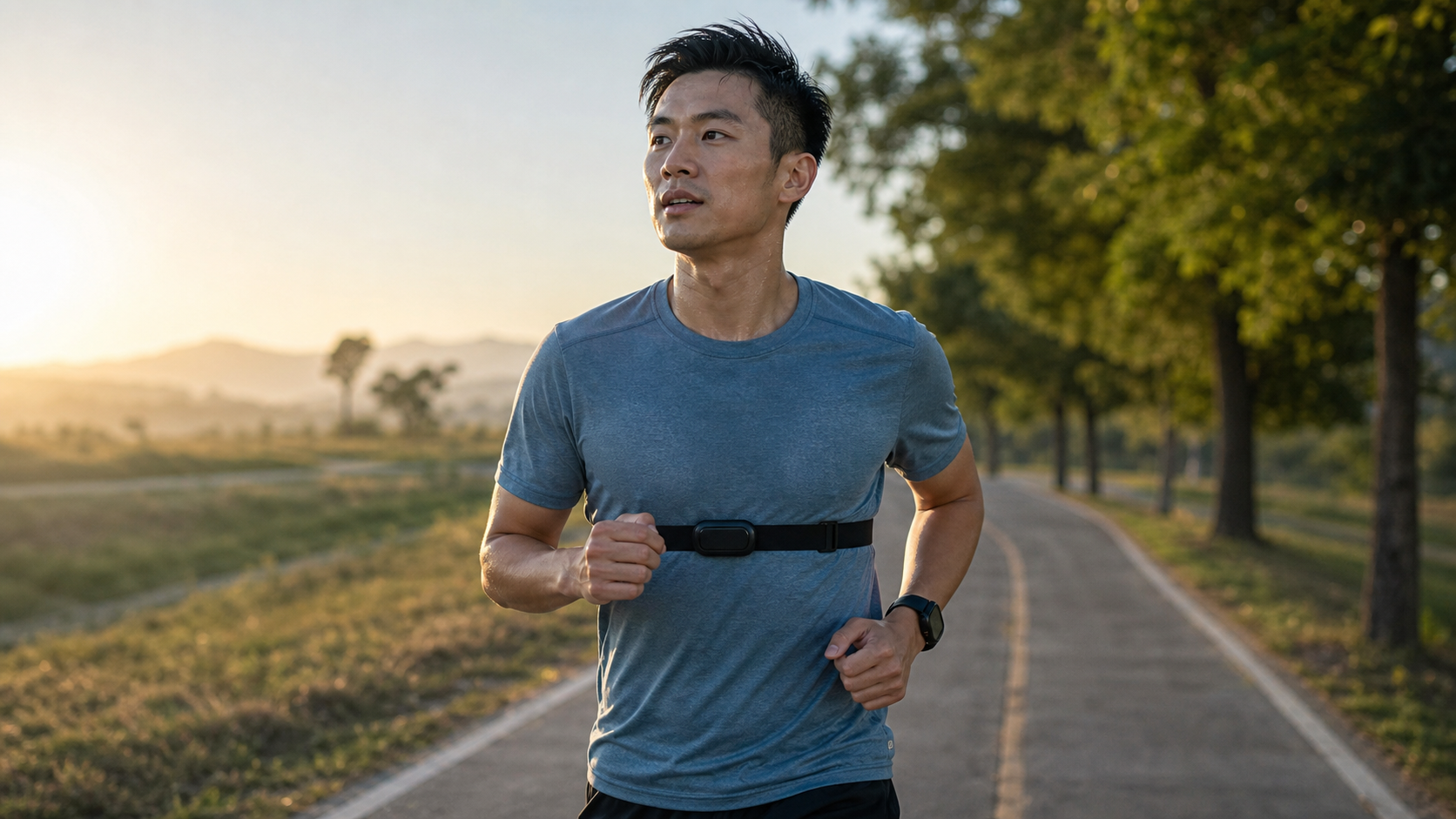
- Invest in a heart rate monitor: chest strap monitors are the most accurate; optical wrist sensors tend to have larger errors during running
- Weekly Zone 2 volume: 2–3 hours for beginners, 4–6 hours for advanced runners
- Pair it with 1–2 high-intensity sessions per week: Zone 2 builds the foundation, high intensity drives breakthroughs — neither can be skipped
- Use RPE as a backup gauge: a Rate of Perceived Exertion (RPE) of 6–7 out of 10 typically corresponds to Zone 2, and can supplement your heart rate monitor
- Run in the early morning during summer: temperatures in Taiwan are lowest around 5–6 a.m., making it easiest to stay within your Zone 2 heart rate
Conclusion
For many runners in Taiwan, Zone 2 training requires a shift in mindset — slowing down in order to eventually run faster and farther. This seemingly paradoxical idea is backed by solid exercise physiology. Whether you’re a beginner preparing for your first marathon or an advanced runner chasing a new PB, systematically building Zone 2 training into your weekly schedule is one of the most important investments you can make in your endurance.
Related Reading
- Aerobic Base Training for Cyclists: The Science and Practice of Zone 2 Heart Rate Training
- Aerobic Base Training for Cyclists: A 12-Week Plan to Build Zone 2
- The Science of Aerobic Power Development: Why Zone 2 Riding Is the Foundation of Progress
- Zone 2 Training: Why Low-Intensity Training Matters So Much
#公路車 #Vo2Max #最大攝氧量 測驗 體驗 | 心肺測試
6 年前
西進武嶺 免費訓練分析服務 Intervals | 練不夠還是練過頭?你哪一種類型選手?AI模型告訴你! | 備戰神器 | 公路車 訓練 | CT Yeh
4 年前
一起升級!海鷗盃LSD團練...JJSC Zone2招待 騎到手抖 / 公路車 / CT Yeh
1 天前
JE22 百里任務體驗,心跳不能過150,三小時內有可能...? 沒有天時地利難度有多高? / 公路車 / CT Yeh
1 年前
多機位拍片神器 DJI Action 2 拍出速度張力感 | 類空拍機視角 4陣列麥克風超強降風噪 實測! | 公路車 | CT Yeh
3 年前
FTL 與 SYB 車隊專訪 西進武嶺 實用攻略分享! 2小時 如何練?!你不知道的眉角!新手準備武嶺必看 EP1 | 實力派女車友 | 精華版 | 公路車 | CTYeh
4 年前
實景訓練台) 彰化經典百K 高強度喵團 90分鐘 跟著一起練功 2019 Indoor workout Changhua Classic 100 Taiwan
7 年前
戰略) Zwift Race 如何咬在第一集團 如何評估自己要開多少推力 (請開1.5倍速看)
7 年前