Mental Preparation for Sprinting: Training Methods for Reading Race Conditions and Timing Decisions
Introduction
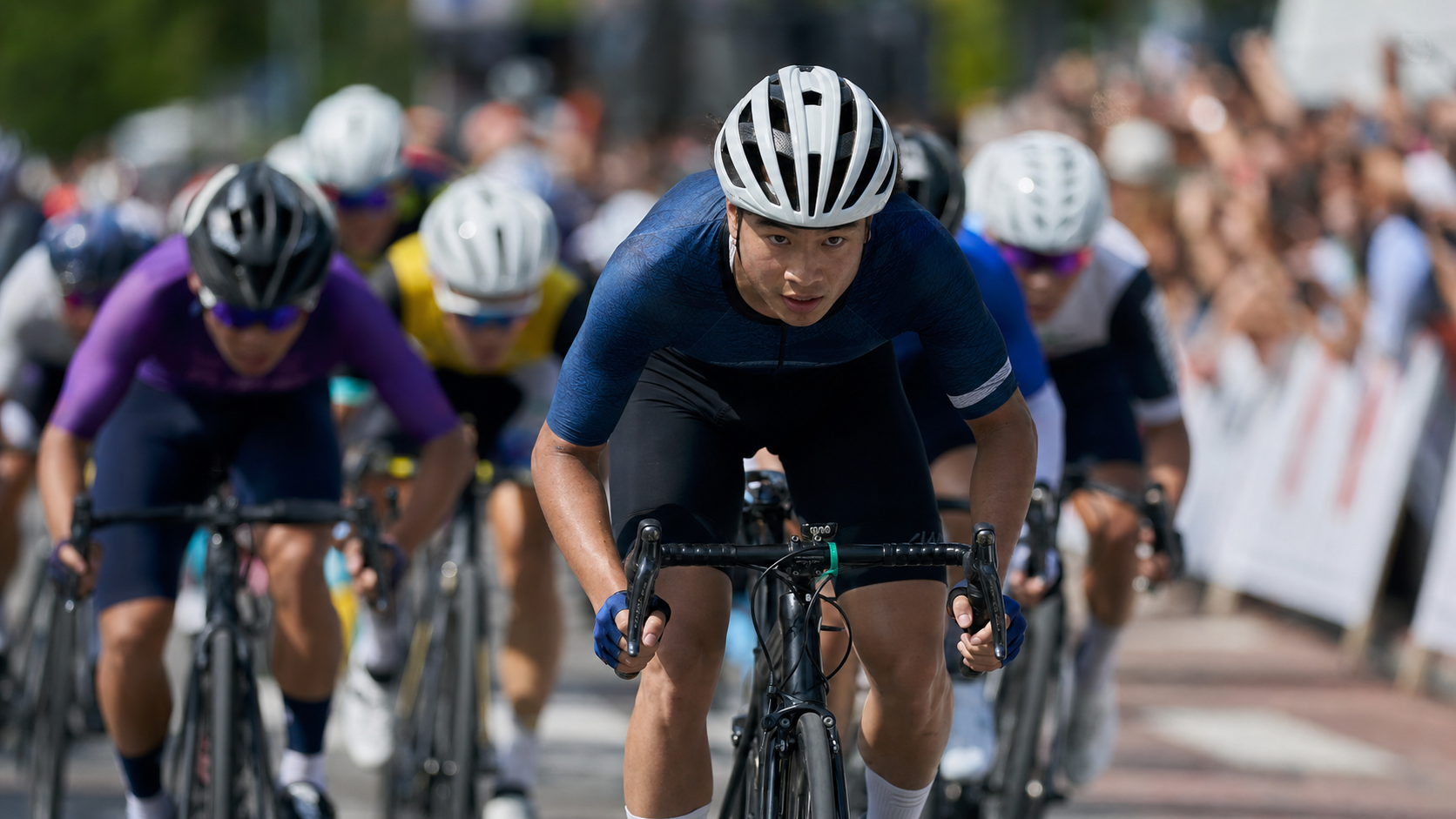
The final few hundred meters before the finish line in a road race is a dual test of both physical and mental strength. Many riders have perfected their physical preparation, yet miss out on victory due to hesitation, misjudgment, or psychological pressure at the critical moment. The mental preparation for cycling sprints is an often-underestimated ability that can be systematically trained. It includes: race reading, decision-making, pressure management, and situational visualization.
The Four Core Mental Abilities of Sprinting
1. Race Reading
In a fast-moving group, the ability to monitor multiple dimensions of information simultaneously is the sprinter’s primary skill:
- Identifying competitors: Identify the main sprint threats early in the race, remembering their jersey colors and riding characteristics
- Awareness of group dynamics: Sense changes in the group’s speed, anticipating acceleration points and moments when it slows down
- Reading terrain and road conditions: Identify corners, changes in road width, and gradients in the final kilometer in advance
- Wind awareness: Judge the wind direction on the finishing stretch, assessing the distance and direction of your launch
2. Decision Making
The decision window during a sprint is extremely short—often only 1–3 seconds. The core of decision-making training is to build “situational trigger responses,” allowing the brain to automatically trigger the correct action without deep thought:
| Situation | Trigger Condition | Default Response |
|---|---|---|
| A gap opens for the sprinter | The rider ahead moves right by more than 0.5m | Immediately follow through on the left to fill the gap |
| A strong sprinter launches | See their center of gravity drop as they rock the bike | Launch simultaneously, do not wait |
| Headwind conditions | Feel significant resistance | Delay the launch until within 150m |
| Squeezed with no space | Riders closing in on both sides | Immediately move outward to find space, postpone the sprint |
3. Pressure Management
Under high-pressure situations, activity in the brain’s prefrontal cortex (responsible for rational decision-making) is suppressed, allowing a more “instinctive” decision-making mode to take over. Methods for training pressure management:
- Breathing techniques: Take several long, deep exhalations (not inhalations) in the final minute before the finish, which helps reduce overactivation of the sympathetic nervous system
- Narrowing focus: Concentrate attention on a single target—the “rear wheel of the rider ahead”—blocking out surrounding noise and the crowd
- Positive self-talk: Short internal phrases such as “I’ve trained for this” or “Hold your position” to avoid negative thought loops
4. Mental Visualization
Research on elite athletes shows that detailed mental rehearsal can effectively improve race performance. For sprint-specific mental rehearsal:
Daily 5-minute rehearsal script:
- Close your eyes and imagine yourself in the final 5 kilometers of a race
- Feel the group’s speed, the noise, and the movements of the riders around you
- See the target opponent ahead, while you hold third position
- In the final kilometer, feel the adrenaline rising, but remain calm
- The moment to launch arrives—sprint at full power, watching the finish line draw closer
- Cross the finish line and feel the satisfaction of accomplishment
Sprint Mental Training Methods in Practice
Simulated Race Finishes
The most effective mental training is performing simulated sprints in a state of high fatigue:
Workout design:
After completing a 2.5–3 hour long ride:
- Simulate race finish conditions in the final 20 minutes
- Perform 3–5 simulated sprints with 2–3 training partners
- Set a specific scenario before each sprint (e.g., you are in third position, launch within 100m)
Mental Reinforcement for Late-Race Fatigue Sprints
When the body is already fatigued, mentally abandoning the thought of “giving up” is especially difficult. Recommendations:
- Set a “No-Retreat Point”: You may hesitate before launching, but once you start sprinting, never give up—maintain full effort throughout
- The “pain is information” framework: Reframe the burning sensation of sprinting as a positive signal that “the body is releasing energy at full capacity,” rather than a danger signal that requires stopping
Observational Learning
Watching sprint sections of professional races is not just for enjoyment—it is a conscious analysis:
- Analyze each sprinter’s “launch point”: where and under what circumstances they jump
- Observe whose launch was too early or too late, and what the outcome was
- Pay attention to failed sprints: why were they overtaken—was it a positioning issue or a timing issue?
Pre-Race Mental Preparation Protocol
| Time Point | Mental Preparation Action |
|---|---|
| The day before the race | 5 minutes of mental rehearsal, visualizing the perfect sprint process |
| Race morning | Confirm the tactical plan (target position, launch conditions) |
| At the start area | Identify the jersey colors of the main competitors |
| Final 5 km | Activate “race mode”: breathing adjustment, focus concentration |
| Final 1 km | Confirm your position, narrow focus to the rear wheel of the rider ahead |
| The moment of launch | Trigger the default response, sprint at full power |
Practical Advice
- Race journal: After each race, record the decision-making process of your sprint: the reasons for choosing your launch point, where your judgment was correct or incorrect, and directions for improvement next time.
- Find a mental training partner: Set up “simulated race scenarios” in advance with training partners, creating a pressure environment for each other during sprint training.
- Accept failed sprints: Every misjudgment is a learning opportunity. Do not let one failed sprint shake your confidence—even professional riders frequently make tactical errors.
- Start with criteriums: Criterium races across Taiwan offer frequent sprint opportunities; each lap is a mental judgment training session, making them the best platform for building sprint mental strength.
Conclusion
Sprint mental preparation is a long-term ability-building process that, like physical training, requires conscious practice and reflection. The insight to read the race, the decisiveness to commit, and the composure under pressure can all be progressively improved through systematic training methods. When, on some race day, you launch decisively at the right moment and cross the finish line ahead of all your rivals, that moment will make you realize that the return on your investment in mental preparation is no less than any physical training.
Related Reading
- Road Bike Sprint Technique: Body Position and Power Output in the Final 200m
- Pre-Race Mental Preparation: Techniques for Turning Nerves into an Advantage
- Mental Toughness Training for Cyclists: Focus in the Hardest Moments of a Race
- Sprint Training Methods: Neuromuscular Power Development for Road Cyclists
西進武嶺 自製新版AI配速表產生器 x 賽前攻略 抱佛腳! 沒有功率計也可以產生配速表嗎?有什麼其他眉角賽前要注意的呢? | 西進武嶺 / 東進武嶺 KOM 攻略 | 公路車 | CT Yeh
4 年前
西進武嶺 免費訓練分析服務 Intervals | 練不夠還是練過頭?你哪一種類型選手?AI模型告訴你! | 備戰神器 | 公路車 訓練 | CT Yeh
4 年前
CT 喇低賽) 武嶺牽車 才是王道 西進牽車四小時內秘訣 攝手位置 如何判斷 防抽筋小秘訣
7 年前
#公路車 #西進武嶺 配速配瓦實驗 坡度分析 四小時內攻略 建大盃 NeverStop #西進武嶺攻略
6 年前
單車AI教練!全新 ChatGPT4o 幫你分析訓練成果!排武嶺課表,分析騎車姿勢! 太神了! / 公路車 / CT Yeh / feat. 緯緯
2 年前
如何 搶 #中央山脈 報名 #公路車 #報名 #搶票
7 年前
FTL 與 SYB 車隊專訪 西進武嶺 實用攻略分享! 2小時 如何練?!你不知道的眉角!新手準備武嶺必看 EP1 | 實力派女車友 | 精華版 | 公路車 | CTYeh
4 年前
單車 一日北高 ( 雙城 ) 肥宅雙人瘋狂行 紀錄片 REACTO
10 年前